
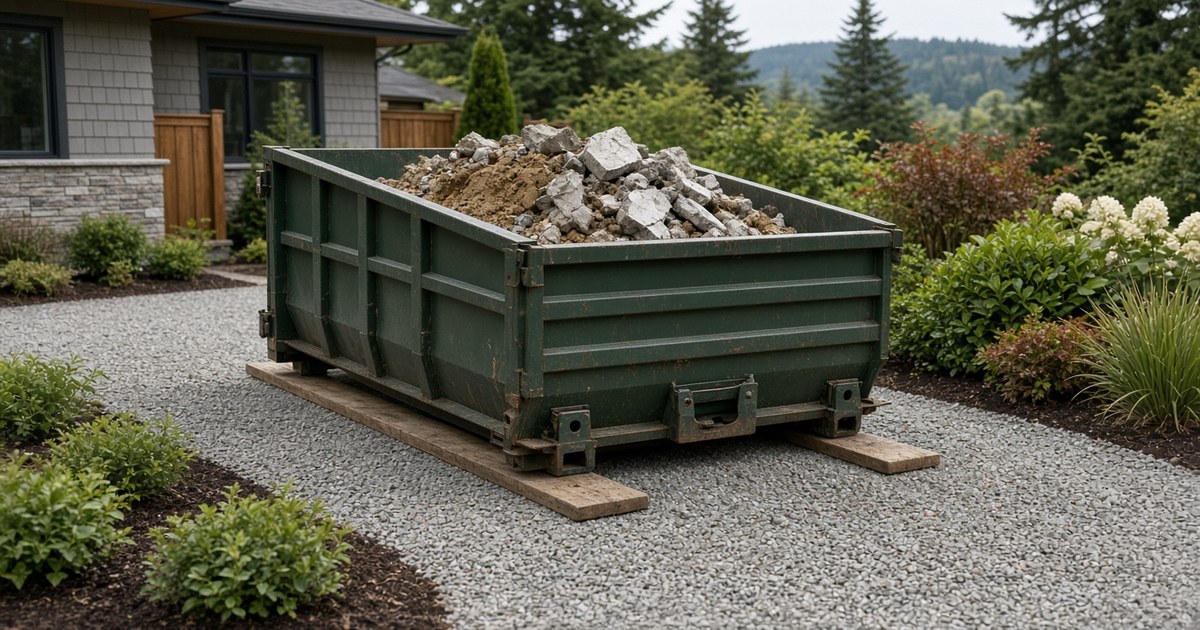
You cannot safely treat a large roll-off like empty air when the load is dirt or concrete. Dense debris hits weight limits before it fills the cube, so a smaller DIY bin is often the smarter Metro Vancouver choice. You load. Trash King delivers and hauls.
Call 604-433-5865 or email quotes@trashking.ca and say the job is heavy. Hours: Mon–Fri 9:00–19:00, Sat–Sun 9:00–17:00 (America/Vancouver). Ask about current delivery availability when you call.
Volume is not the same as weight
Volume is how much space the bin has. Weight is how heavy the material is. Household junk can fill a larger container and still behave like a normal mixed load. Soil, concrete, brick, and thick mortar do the opposite: they get heavy while the bin still looks half empty.
A half-full dirt bin can be a full-weight problem.
Size charts on trash bins show capacity classes. They are not permission to ignore density.
Materials that get heavy fast
Common dense streams for DIY renters:
- Dirt and excavated soil
- Concrete chunks and slab pieces
- Brick and block
- Thick tile with thinset
- Wet debris after rain (weight creep)
Roofing and some stone work can also surprise people. If you are unsure, describe the material instead of guessing a huge size “just in case.”
Light materials still matter for other jobs. This post owns the heavy case so you do not oversize for the wrong reason.
Why a smaller bin can be safer and smarter
A smaller bin for heavy debris:
- Encourages you to stop at a sensible fill for dense material
- Reduces the temptation to “top off” with more soil because empty cube remains
- Matches how weight-limited loads are planned in the real world
- Keeps the DIY load easier to level and inspect before haul
Oversizing for dirt is a common shopper instinct. It feels like buying headroom. For dense material, headroom in the walls does not create headroom in the weight budget.
Ask for guidance on the right class when your job is mostly mineral or soil. Confirm limits on the booking call rather than guessing from a blog.
How to describe heavy jobs when booking
Useful call language:
- “Landscaping soil only, roughly X truckloads of dirt from the backyard.”
- “Concrete from a small patio breakout, no household junk mixed in.”
- “Mostly tile and mortar from a bath gut. Not a light cleanout.”
Mention whether the material is dry or will sit in rain. Cover porous loads when weather is wet so weight does not climb overnight.
Coverage: greater-vancouver. DIY options: bin-rentals-for-junk-removal.
Loading tips for dense debris
- Load evenly. Do not dump all concrete in one end.
- Keep pieces manageable for safe lifting.
- Stop while the load still looks conservative if the material is mineral-heavy.
- Do not crown above the rim.
- Keep the truck approach clear for pickup.
Mixing a token amount of light scrap into a dirt load is different from hiding a soil project inside a “household junk” story. Be honest about the primary stream.
Homeowner examples (heuristics, not rules)
- A small garden bed soil pull that fits in a few wheelbarrow runs may still want a compact heavy-aware plan rather than a huge empty mixed bin.
- A patio breakout with concrete chunks should be described as concrete first, scrap second.
- A bath gut with floor and wall tile should be described as mineral-heavy, even if you also have a vanity box to toss.
These are planning heuristics. Confirm the right class and any segregation advice when you book. Live options remain on trash bins.
Rain, water, and weight creep
Wet soil and wet demolition fines gain weight. If the forecast is ugly, cover the load between work sessions. Do not leave the bin acting like an open tub for a storm, then wonder why a half-looking load feels wrong on haul day.
Dense jobs reward conservative filling and honest booking language more than they reward maximum wall height.
Next step
If the pile is dense, say so first. Call 604-433-5865 or email quotes@trashking.ca. Hours: Mon–Fri 9:00–19:00, Sat–Sun 9:00–17:00 (America/Vancouver). Ask about current delivery availability when you call.
FAQ
Why can’t I fill a large bin with dirt or concrete?
Because weight limits arrive before the cube is full. Dense materials make a large empty-looking bin a poor plan.
What size should I use for soil?
Often a smaller class matched to weight is smarter than the biggest bin on the lot. Confirm when you book with a plain description of the soil volume.
Can I mix dirt with household junk?
Ask before you mix. Primary heavy streams should be disclosed. Casual mixing can create handling problems.
What if the bin looks half empty?
For dense debris, that can still be a complete load. Do not keep adding soil just because you see open space.
Do you load the dirt for me?
No. DIY roll-off: you load. Trash King delivers and picks up.