
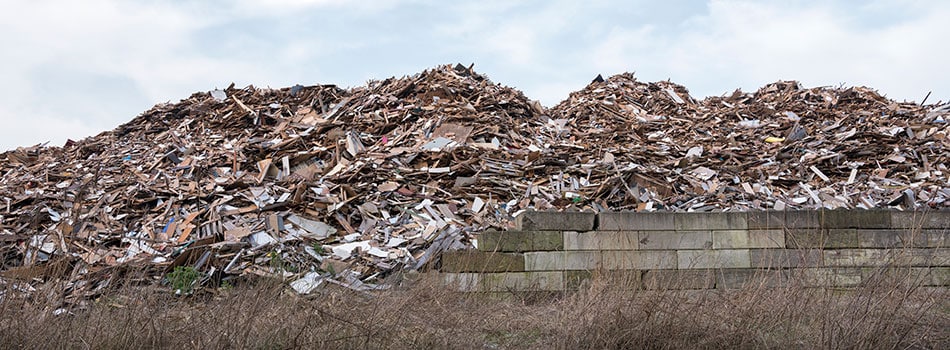
Planning wood waste after a Greater Vancouver reno, fence tear-out, shed cleanout, or framing job? Clean untreated lumber, painted trim, pressure-treated decking, plywood/OSB, and brush piles are not the same load. Trash King delivers DIY roll-off bins — you load the bin; we deliver and pick it up. Use the 3-way decision framework below, then confirm your mix when you book. See trash bins (including 20-yard and 10-yard size cues), renovation debris, drywall, materials we recycle, and residential / commercial hubs. Call 604-433-5865 or email quotes@trashking.ca. Ask about current delivery availability when you call.
Why clean vs treated wood matters
Recycling partners and disposal streams across Metro Vancouver often distinguish clean wood from painted, treated, composite, or garbage-contaminated piles. Saying “we recycle wood” is not the same as “this exact pile belongs in this DIY bin today.” A clean-wood plan fails when treated deck boards, particle board, or bags of household trash share the same container. Start by sorting types on site; then book the bin that matches the real load—not the ideal load. If your project also produces drywall or mixed reno debris, stage those materials with their own rules rather than burying them under lumber.
Homeowners and contractors across Greater Vancouver usually underestimate how fast a “simple wood pile” becomes mixed. Fence tear-outs bring pressure-treated posts. Deck rebuilds bring stained boards and hidden fasteners. Framing cleanouts bring clean studs beside painted trim and leftover household bags from the same garage. The decision framework on this page exists so you can separate what is generally suitable for a clean wood–minded DIY roll-off, what to confirm when you call, and what must stay out until status is clear—especially older-building uncertainty.
Trash King is a DIY roll-off service for Metro Vancouver. We deliver the bin, you load it, and we haul it away. We do not publish tipping fees, “reduced fee” promises, or facility-by-facility routing on this page. Those details change, and inventing them helps nobody. What stays stable: honest material lists, confirm-when-you-call language.
Generally suitable
Often discussed as clean-wood candidates when kept free of garbage and obvious contaminants (confirm for your load when you call):
- Dimensional lumber and studs that are unpainted, unstained, and untreated
- Clean framing offcuts and boards without heavy coatings
- Plywood/OSB offcuts only when confirmed as acceptable for the planned wood stream—do not assume every sheet product is clean wood”
- Some pallets and untreated wood packaging when free of plastics, stretch wrap, and trash
- Wood-and-nails style framing or fence lumber when confirmed as a clean wood stream for this job
- Tree branches and clean brush when planned as a wood/green stream (boundary with organics—confirm which path fits)
Nails and small fasteners attached to clean lumber are commonly expected. Loose garbage, food waste, and random bags are not. For sizing cues by project (fence, shed, framing cleanout), use trash bins—volume is not weight, and dense loads need a phone check.
Confirm or separate when you call
These situations often need a different plan or a clearer description before delivery day:
- Mixed reno wood plus household garbage, insulation, plastics, or drywall scraps
- Painted, stained, sealed, or uncertain finishes
- Pressure-treated decking, fencing, and landscape timber—especially if you hoped for a clean wood recycling path
- Plywood, OSB, veneer, particle board, MDF, and melamine composites
- Large volumes, wet wood, dirt-caked posts, or heavy beams
- Whether a “wood & nails” stream is available for this job versus a general construction/debris discussion
- Furniture, sheds, and built-ins with hardware, fabrics, or unknown coatings
Do not assume an automatic discount language or “always wood & nails” handling. Describe the mix honestly so we can advise before you load.
Do not load
- Treated lumber / pressure-treated decking and fencing in a clean wood recycling bin (a general construction/debris discussion may still apply—confirm when calling)
- Unknown older-building materials if asbestos or hazardous coatings/adhesives are uncertain—do not load until status is confirmed (especially pre-1990 remodels)
- Household garbage bags, food waste, and random trash contaminating a wood-only plan
- Hazardous liquids, oils, solvents, paints, and chemical containers
- Electronics, batteries, and e-waste (see electronics)
- Railway ties, creosote-treated timber, and other heavily contaminated wood when a clean-wood path is the goal
Strong rule: if you are unsure about older paint, adhesives, or building materials, leave them out until confirmed. Confirm-when-you-call beats guessing on load day.
How to load
Keep clean wood separate from garbage. Do not bury trash under boards hoping it “disappears.” Stack long lumber to pack efficiently and break down bulky pieces so nothing sticks above the fill line. Keep treated and painted piles staged apart from clean lumber when you can. DIY loading only—You load the bin; we deliver and pick it up. If drywall or roofing is part of the same project, stage those materials with guidance on drywall and roofing tear off.
Weight, contamination, and mixed loads
Volume is not weight. Wet wood, soil stuck to posts, and dense beams can push a load harder than a tall stack of dry studs. Contamination (garbage bags, food waste, random plastics) can kill wood-stream eligibility and force mixed-debris handling. Tell us whether the pile is pure lumber, wood-and-nails, or already mixed with renovation debris. For mixed construction piles, renovation debris or new construction waste may fit better than a clean-wood story. Scrap metal pulled off wood (hinges, brackets) can sometimes be staged toward metal recycling guidance—but do not invent a perfect sort mid-job if the site is already mixed; confirm the practical plan.
If rain is forecast, cover open piles so the load does not soak overnight. Water adds weight and can drag soil into the bin. Keep the fill line visible—overhanging boards and buried bags are the usual reasons a wood-focused plan turns into a mixed-debris conversation. When in doubt about older coatings, adhesives, or pre-1990 materials, pause loading until status is confirmed rather than hoping the receiving stream will “sort it out.”
Commercial and multi-suite sites should assign one person to police the pile. The most common failure mode is a clean morning plan that becomes a late-afternoon dumping ground for unrelated trash. A short briefing for trades and helpers—clean lumber here, treated there, garbage never in this bin—saves a reload conversation later.
How to book
Call 604-433-5865 or email quotes@trashking.ca with: clean vs treated vs composite mix, approximate volume, driveway vs street placement notes, and whether older-building materials need confirmation. Hours: Mon–Fri 9:00–19:00, Sat–Sun 9:00–17:00 (America/Vancouver). Ask about current delivery availability when you call. Size catalog: trash bins. We serve Greater Vancouver / Metro Vancouver only
Before you book — quick checklist
- Wood types on site (clean, painted, treated, composite)
- Mixed with drywall, roofing, insulation, or household garbage?
- Older-building materials that might need asbestos/haz confirmation?
- Approximate volume, pad placement, and who will load (DIY only)
Frequently asked questions
Can treated decking go in a wood recycling bin?
Usually keep treated lumber out of a clean wood recycling stream. A different construction/debris discussion may apply—confirm when you call rather than assuming.
Do you provide labour to tear down fences or load lumber?
No. Trash King delivers DIY roll-off bins—you load; we haul. You load the bin; we deliver and pick it up.
What size bin for a fence, shed, or framing cleanout?
Use trash bins for project size cues (including 10-yard and 20-yard). Dense, wet, or mixed loads need a phone check—volume is not weight.
Can I mix wood with renovation debris or household garbage?
Often that becomes a different stream than a clean-wood plan. Confirm; do not assume wood-only handling or savings language.
What if I’m unsure about older paint or building materials?
Do not load until status is confirmed—especially if asbestos or hazardous coatings could be involved.