
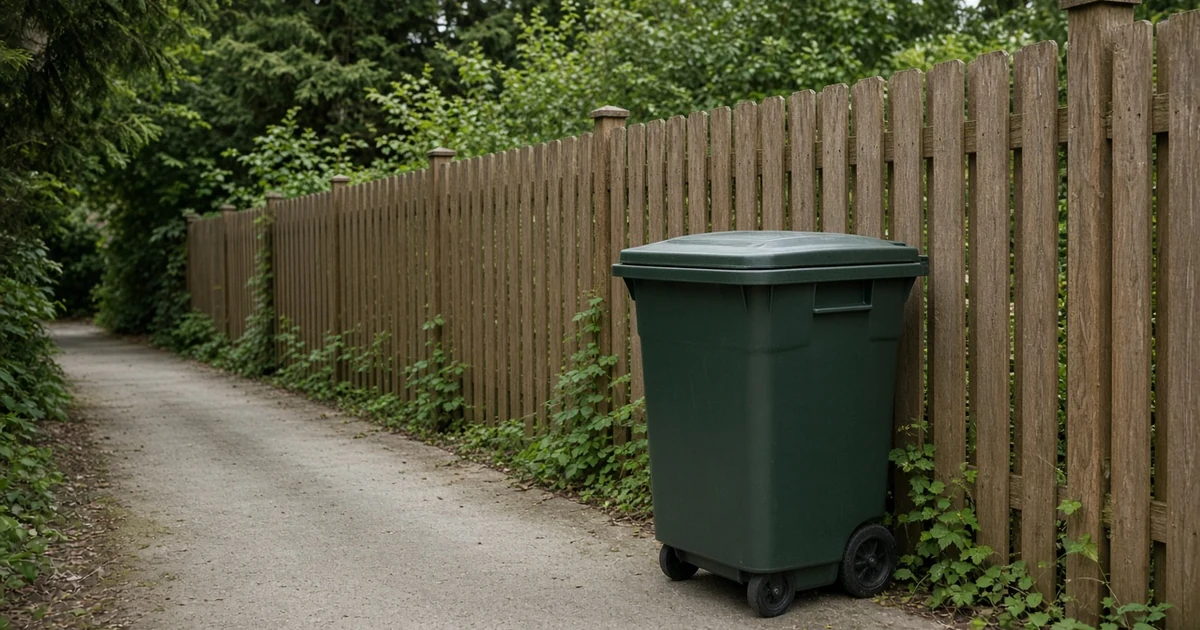
Rats and smells are a common complaint around garbage areas. The City of Vancouver says everyone has a role in rat and mouse prevention, whether you own or rent. It lists proper disposal of garbage and composting as the first step. This guide pulls together the City's tips for carts, kitchen containers and the yard, so your waste is stored in a way that does not attract pests. It follows City of Vancouver guidance only, so check your own city's page if you live elsewhere in Metro Vancouver.
Why waste attracts rats
The City says that to limit or control rats and mice, you must take away everything they need to survive, including food, water, shelter and ways to get around. Open garbage, loose food scraps and clutter provide all of these.
The garbage cart
The City advises using proper garbage cans with tight-fitting lids to store garbage. Keep the lid shut. Do not overfill the cart so the lid sits open.
If your cart is too full too often, the City's residential waste guide suggests using your green bin and recycling programs to reduce garbage, dropping extra items at the Zero Waste Centre, transfer station or landfill (fees apply), buying extra garbage bag stickers, or ordering larger bins. Our household garbage page covers more options.
The green bin outdoors
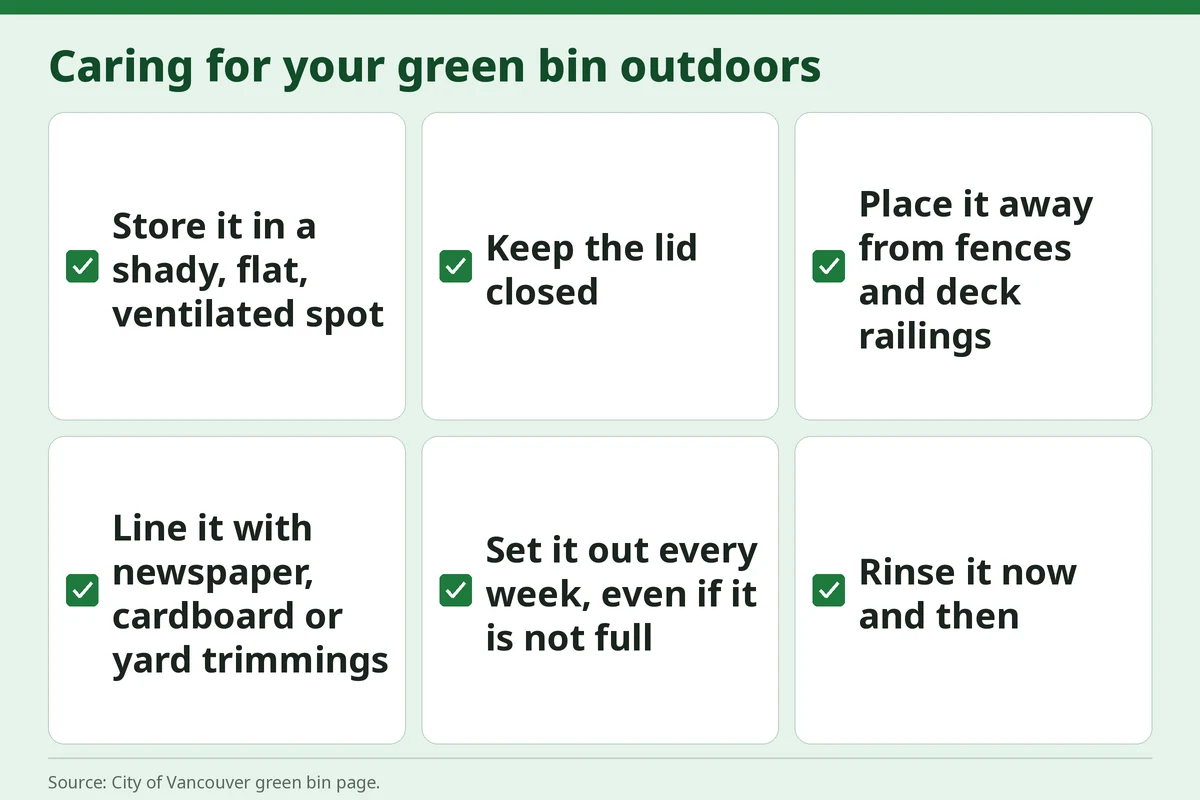
The City's tips for the outdoor green bin:
- Store it in a shady, flat and ventilated location.
- Keep the lid closed.
- Place it away from fences and deck railings so animals cannot get in or knock it over. Otherwise, secure it with a bungee cord.
- If animals chew on the bin, rub peppermint oil, hot sauce, cayenne or chili powder on the chewed spot.
- Line the bin with newspaper, cardboard or yard trimmings to absorb liquid.
- Alternate layers of food scraps with layers of leaves, grass clippings or dead plants. Let the leaves and clippings dry first.
- Set it out every week, even if it is not full.
- Eliminate maggots with salt or vinegar.
- Rinse it occasionally with a garden hose, mild detergent or a vinegar and water solution. Pour soapy water onto grass or gravel, not down outdoor drains.
The kitchen container
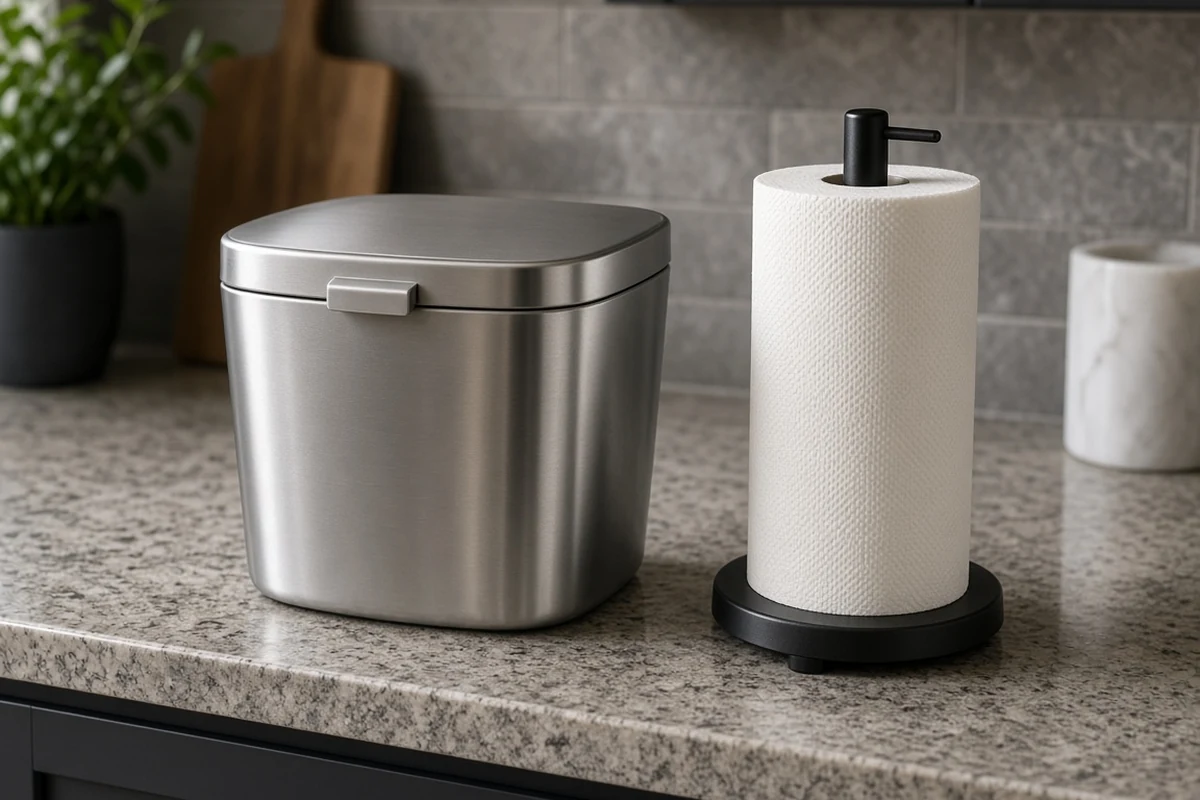
Indoors, the City suggests:
- Line it with newspaper, paper towel, paper bags or cellulose-lined bags.
- Drain excess liquid from food scraps down the sink.
- Wrap scraps in newspaper, paper towel or a paper bag.
- Shut the lid when not in use.
- Freeze smelly scraps until collection day.
- Empty it often.
- Rinse it, and sprinkle baking soda in the bottom.
Around the yard
The City's rat and mouse page lists these steps:
- Remove clutter and rubbish from your yard, garage or carport and basement.
- Move bushes, shrubs and mulch away from the building's foundation.
- Store firewood and piled lumber away from walls and about 1 foot off the ground.
- Keep grass trimmed, and do not pile grass clippings under shrubs or trees.
- Remove fallen fruits or nuts.
- Clean up pet food when your pet is finished eating, and do not put food outside for stray animals.
- Remove spilled bird seed from beneath feeders.
- Repair leaky pipes or taps.
- Seal holes and cracks in the foundation, walls, floors and roof.
When clutter is the problem
Piles of debris in the yard, garage or crawlspace give pests places to hide. If you have a backlog, clearing it out removes the shelter. A bin works for a big yard or garage cleanup.
The 20-yard is our usual starting size for junk, cleanouts and renos. More is on the 20-yard bin page. The 15-yard junk bin is sometimes available, but it is often sold out, so plan around the 20-yard. Ask when you book about other smaller sizes. Delivery and haul away are on us. You load the bin.
A bin on your own driveway or yard needs no permit, since that is private property. Some cities need a permit for a bin on the street, boulevard or lane, so confirm with your City before you book. Strata or HOA rules can still apply. The permit application goes to the City, and we time delivery to your permit dates.
A Trash King bin never takes paint, propane, tires, fuel or electronics. The full list is on our what not to put in a bin page.
Mattresses and box springs cost extra as an add-on. Mention them when you book.
Who to call
The City's rat and mouse page says that if the problem is in your home, tenants should contact their landlord first, and landlords should contact a pest control company. For City property or parks, report it online. For restaurants or food businesses, contact Vancouver Coastal Health.
FAQ
Does the green bin attract rats? The City says to keep the lid closed, store it away from fences and railings and keep food scraps wrapped and layered.
Should I stop using the green bin? No. The City says to put food scraps in the green bin, and says that disposing of garbage and composting properly is part of prevention.
Does clutter matter? Yes. The City lists removing clutter and rubbish as a step.
What size bin do I need for a yard cleanup? The 20-yard is the usual start for cleanouts. When booking, ask about other sizes.