
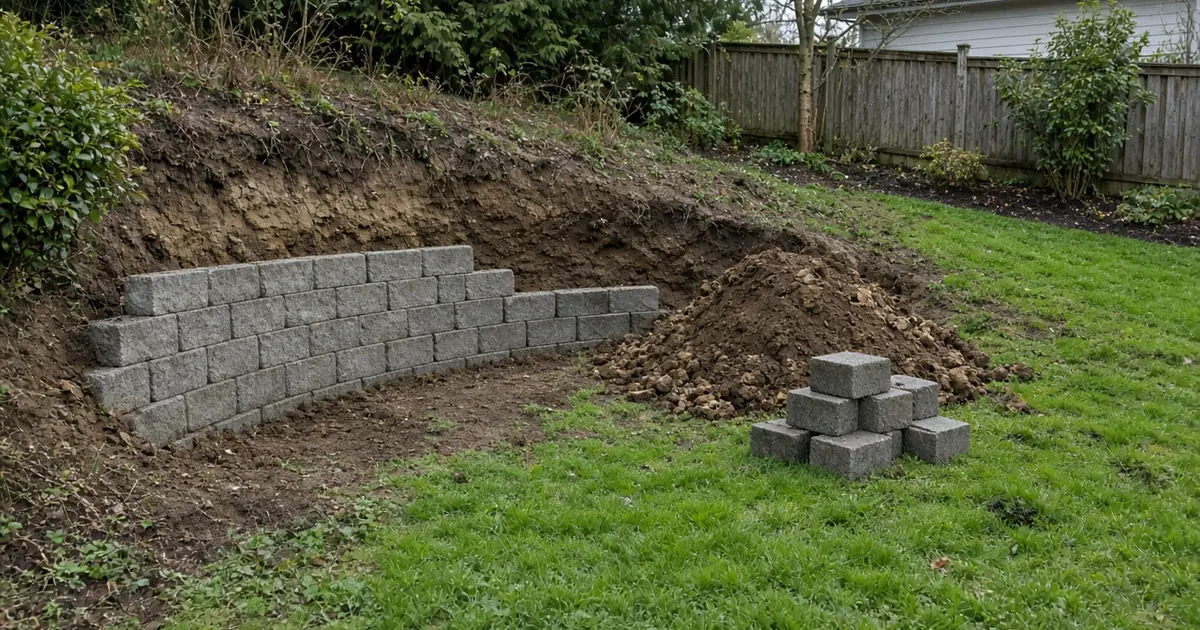
A failing retaining wall usually hides three separate materials: the wall itself, the soil it was holding back and whatever drainage sits behind it. Each one has a different route, so a few minutes of planning before the first block comes down will save you plenty of handling.
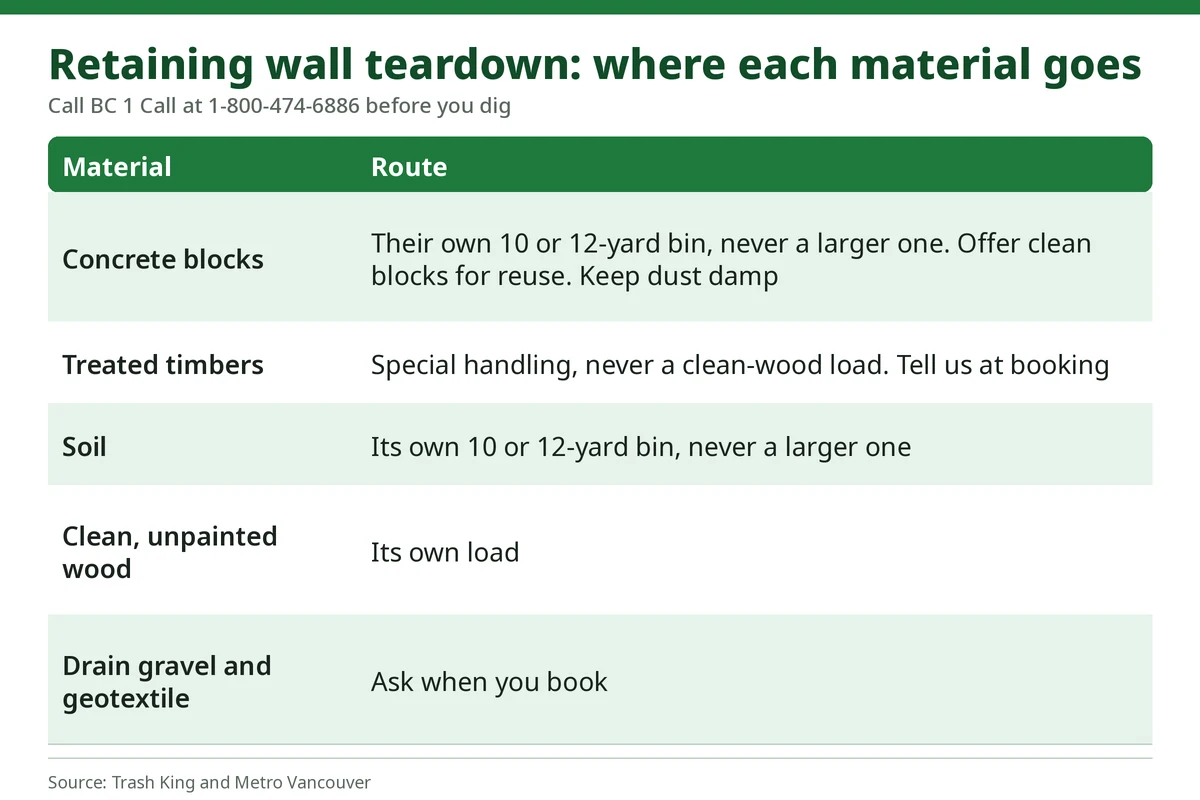
Call before you dig
BC 1 Call's homeowner page lists building retaining walls among the outdoor jobs that need a locate request. The service is free. You can submit online at any time or call 1 800 474 6886 during call centre hours. Utility members respond within three working days, and you are not clear to excavate until all the notified members have contacted you. Retaining walls can need a permit depending on their height and your city, so confirm with your City on permits before you start.
Concrete blocks
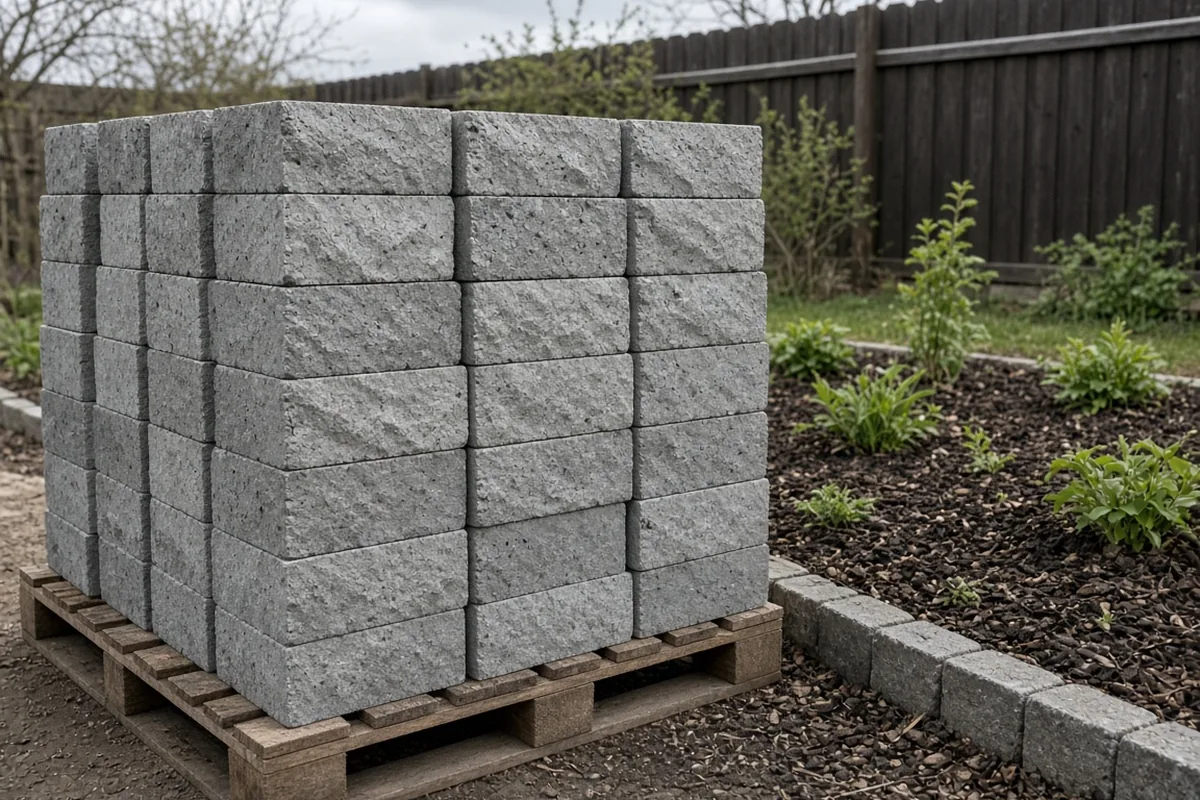
Segmental concrete blocks and poured concrete are heavy and are handled as concrete. Concrete goes in its own 10 or 12-yard bin, and never in a larger one. It stays out of junk, and it is kept apart from soil unless you book a mixed concrete and dirt bin (10 or 12-yard), which costs extra. Clean blocks in good shape are worth offering to a neighbour or a salvage business, since someone building a raised bed or a garden wall may want them. See our concrete page.
Concrete, brick and similar masonry can contain silica. Metro Vancouver's construction and demolition toolkit lists silica among hazardous materials found on sites, in concrete, concrete block, mortar, masonry, brick and fill dirt. Dust from cutting or breaking it is the concern, so follow your contractor's safety plan.
Timber walls
Old timber retaining walls are often treated wood. Treated wood needs special handling, and it never goes in a clean wood or yard load. Tell us at booking if your wall is timber. Metro Vancouver's disposal ban manual lists railroad ties and creosote treated wood as banned materials at its disposal sites, so ask the facility or your contractor about the route for yours.
Soil
Soil behind a wall can be a lot, and it has to go in its own bin. Dirt goes in a 10 or 12-yard bin and never in a larger one. Metro Vancouver lists soil, sod, gravel, concrete and asphalt over 0.5 cubic metres per load as banned inert fill at its disposal facilities. Our dirt page and our guide on concrete and dirt disposal explain how we keep the two apart.
If your job has a small amount of concrete and a small amount of dirt, ask about a mixed bin when you book.
Wood and the rest
Clean, unpainted wood goes in its own load. Our wood page explains it. The old drain gravel and geotextile are a booking question as well.
Plan the bins
We bring the bin, you or your contractor load it, and we take it away. Permits are not needed when the bin sits on your driveway. If the bin has to sit on the street or lane, some cities need a permit, so confirm with your City first. We will line delivery up with any permit dates.
FAQ
Do I call before I dig for a retaining wall? Yes. BC 1 Call lists building retaining walls as a project that needs a locate request. It is free.
Can I mix blocks and soil in one bin? Sometimes, for an added fee, in a 10 or 12-yard mixed bin. Otherwise concrete and dirt each go in their own 10 or 12-yard bin.
Can treated timbers go in a clean wood load? No. Treated wood needs special handling, and you should mention it when you book.
What about drain gravel? Ask when you book.