
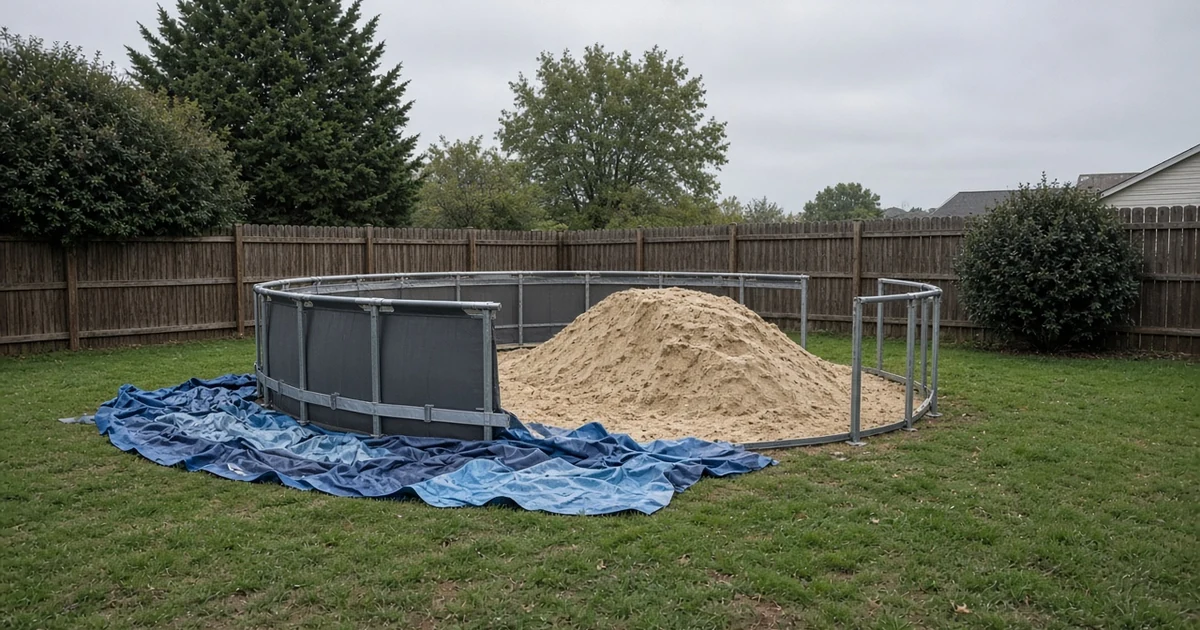
An above ground pool comes down in a few stages, and the first one, draining, is where most people go wrong. After that you are sorting three materials: a metal frame, a vinyl or fabric liner and whatever sits underneath, usually sand. Here is the order that works.
Drain it the right way
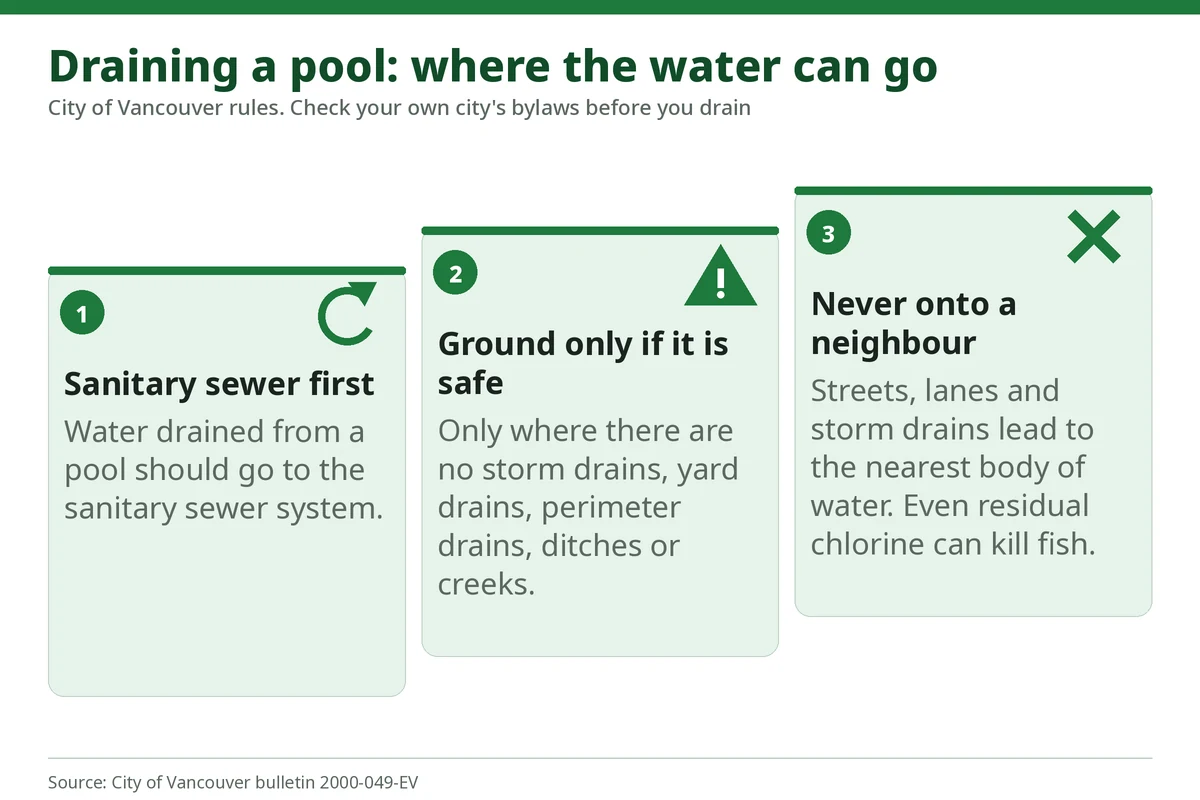
Pool water carries chlorine and other chemicals, and where it goes matters. The City of Vancouver's bulletin on pools, hot tubs and spas says water drained from a pool should go to the sanitary sewer system. It says that water from small backyard pools can be discharged to the ground only in areas with no storm drains, yard drains, building perimeter drains, ditches or creeks, and never where it would affect neighbouring properties. The bulletin warns that water sent to streets, lanes or storm drains ends up in the storm sewer system, which connects to the nearest body of water, and that even residual chlorine can kill fish. Metro Vancouver's wastewater guide for pools says the same thing in short form: never discharge water containing free chlorine to a storm sewer or watercourse such as a river, creek or stream.
These are Vancouver's and Metro Vancouver's rules. If you live elsewhere, check your own city's bylaws before you drain.
Leftover pool chemicals do not go in the garbage. The City's bulletin sends you to the BC Recycling Hotline, 604-732-9253, or rcbc.ca for where to take unused chemicals.
The frame
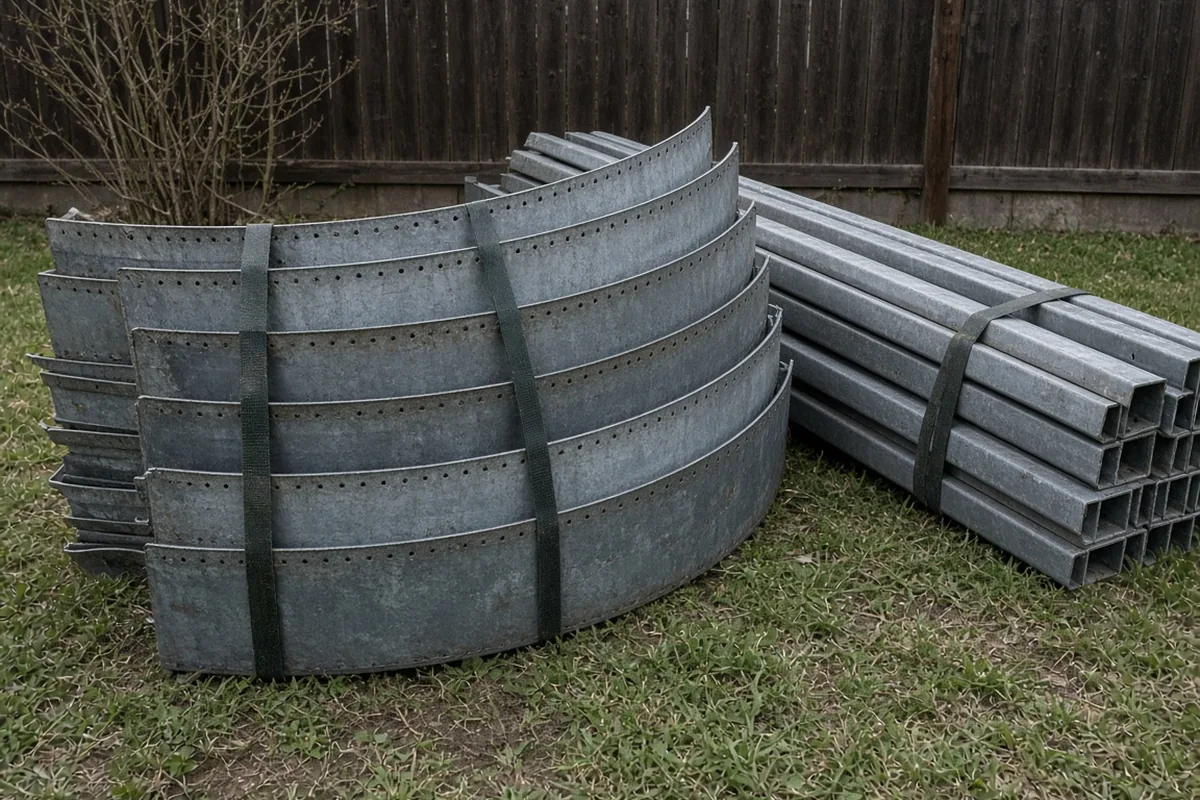
Steel or aluminum posts, rails and panels are scrap metal. Take the frame apart, bundle the pieces and call a scrap yard or recycler to ask what they accept and how they want it cut. Our metal recycling page explains how scrap metal moves.
The liner
Once the water is gone, a vinyl liner is heavy and awkward. Cut it into manageable sections so it can be bagged or folded. Whether a liner can go in a junk bin is something to ask when you book.
The sand base
Many above ground pools sit on a bed of sand. Metro Vancouver's guide lists filter media such as sand or glass pearls among the items in pool wastewater, which is a reminder that pool sand should be kept out of drains. Sand is not on Metro Vancouver's list of inert fill, which names soil, sod, gravel, concrete and asphalt, so do not assume it travels with a dirt load. Sand does not go in a dirt bin or a junk bin. It goes in its own 10 or 12-yard bin.
Large item pickup does not cover it
Surrey's large item pickup list does not include pools, and it lists hot tubs as not accepted. Plan on hauling the pieces yourself or using a bin.
Planning the bin
A 20-yard junk bin is the common start for decking and other debris around the pool. Ask when you book about the liner and the frame. We deliver the bin and haul it away. You handle the loading. If the bin stays on your driveway, no permit is needed. If the bin has to sit on the street or lane, some cities need a permit, so confirm with your City first. Give us your permit dates and we will time delivery to match. See our 20-yard bin page.
FAQ
Where do I drain an above ground pool? Vancouver says to the sanitary sewer. Backyard pool water can go to the ground only where there are no storm drains, yard drains, ditches or creeks, and never onto a neighbour.
Can pool chemicals go in the garbage? No. Call the BC Recycling Hotline at 604-732-9253 to find where to take them.
Is the frame scrap metal? Steel and aluminum frame parts are scrap. Ask a recycler how they want it prepared.
Can I put pool sand in a dirt bin? No. Pool sand goes in its own 10 or 12-yard bin.