
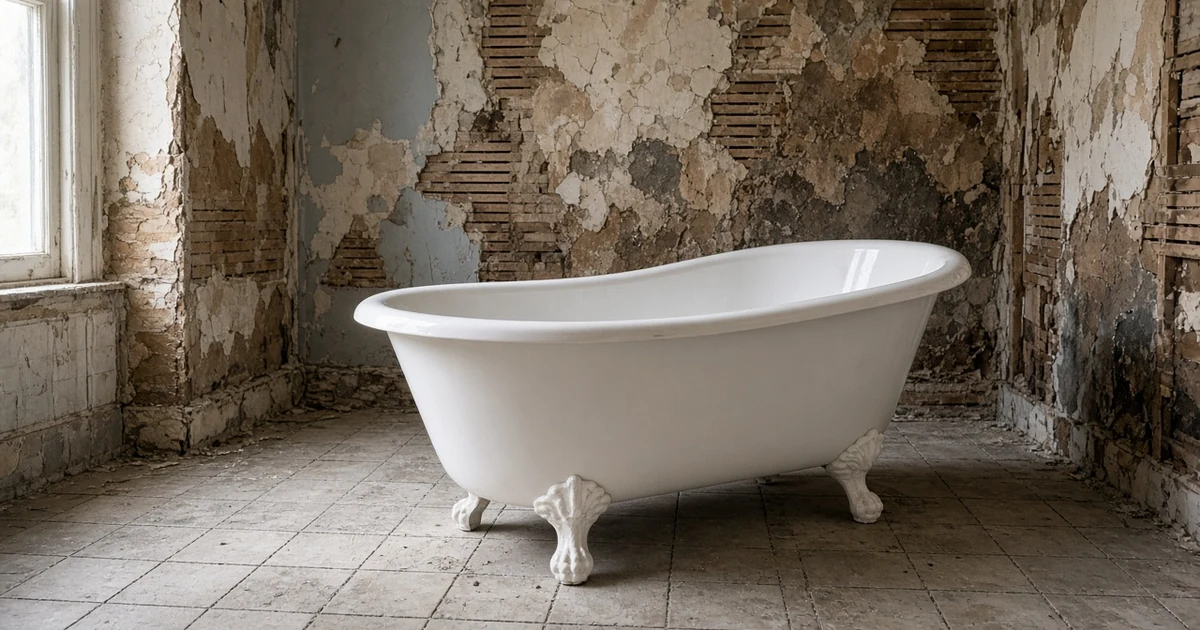
A cast iron bathtub is one of the heaviest things in a house. It is solid, awkward and nearly impossible to move without a plan. Homeowners usually choose between two approaches: carry it out whole with help, or break it into smaller pieces first. This guide is a DIY how to on both, plus where the metal can go and how a bin fits in. It is written for people doing their own work.
This is general information. Heavy lifting and breaking cast iron can injure you. If you are not comfortable with either, ask a professional.
First, test what is around the tub
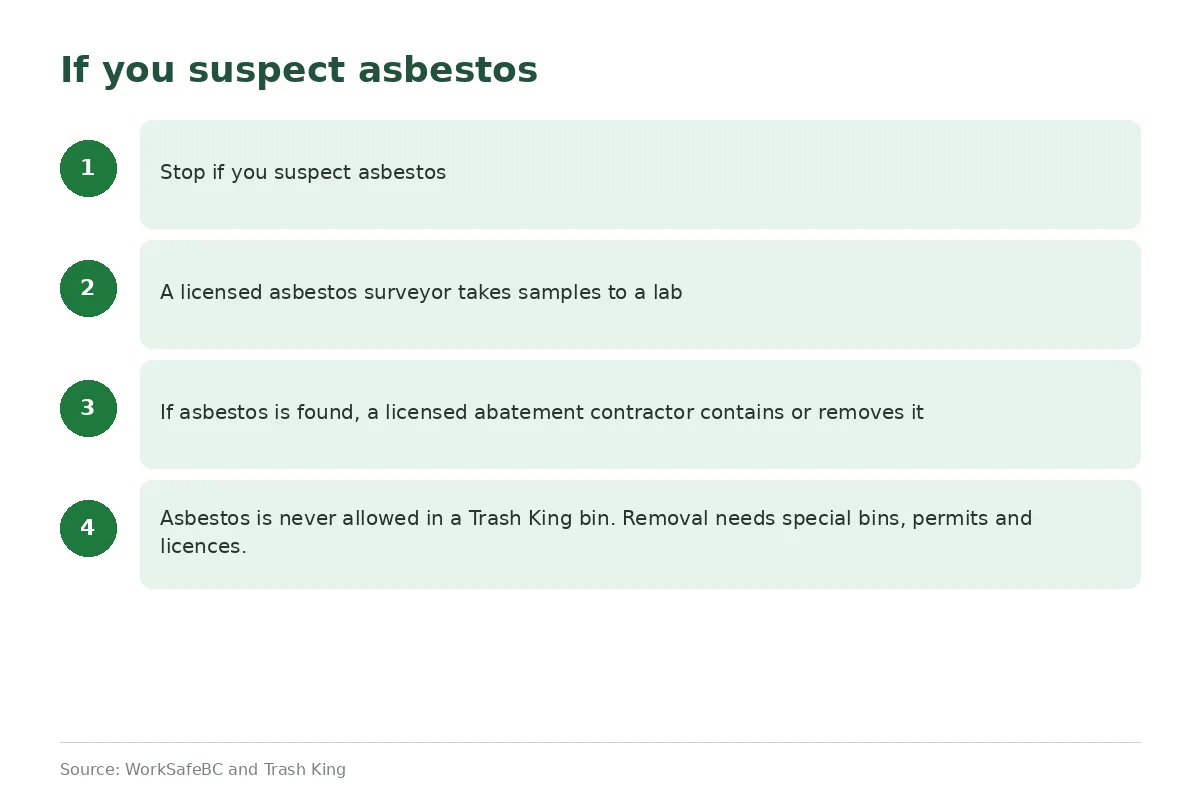
Old bathrooms can hide older materials in the walls, flooring and under the tub. WorkSafeBC says never to assume a building material is free of asbestos because you cannot tell just by looking, and that if you suspect asbestos you should stop work and have a qualified professional complete an asbestos survey. If you suspect asbestos in the surrounding tile, adhesive, flooring or wall material, have a qualified asbestos professional survey it before demolition.
Asbestos is never allowed in a Trash King bin. Removing it takes special bins, permits and licences.
Option 1: Take it out whole
Taking a tub out whole is possible when there is a clear path and you have help.
- Shut off the water and disconnect the drain and overflow.
- Clear the path. Measure the doorway and the route, and protect floors and corners.
- Free the tub from the wall and floor. Look for caulk, adhesive and any fasteners.
- Plan the lift with enough people and the right equipment. Use straps or a hand truck designed for heavy loads.
- Decide where the tub goes before you move it, such as a scrap yard, a bin or a vehicle.
A whole tub in a bin takes a lot of its space and a lot of weight. Ask when you book whether a whole tub suits the bin you have in mind.
Option 2: Break it up first
Breaking up cast iron is a loud, dangerous job. It throws sharp pieces and enamel chips. If you go this way:
- Wear safety glasses or a face shield, heavy gloves, hearing protection and sturdy boots.
- Cover the tub with a heavy blanket or tarp so fragments stay contained.
- Clear everyone else from the room, including pets.
- Work in a controlled way and stop if anything feels unsafe.
Pieces are easier to carry, but each piece is still heavy. Never lift more than you can handle.
Where cast iron can go
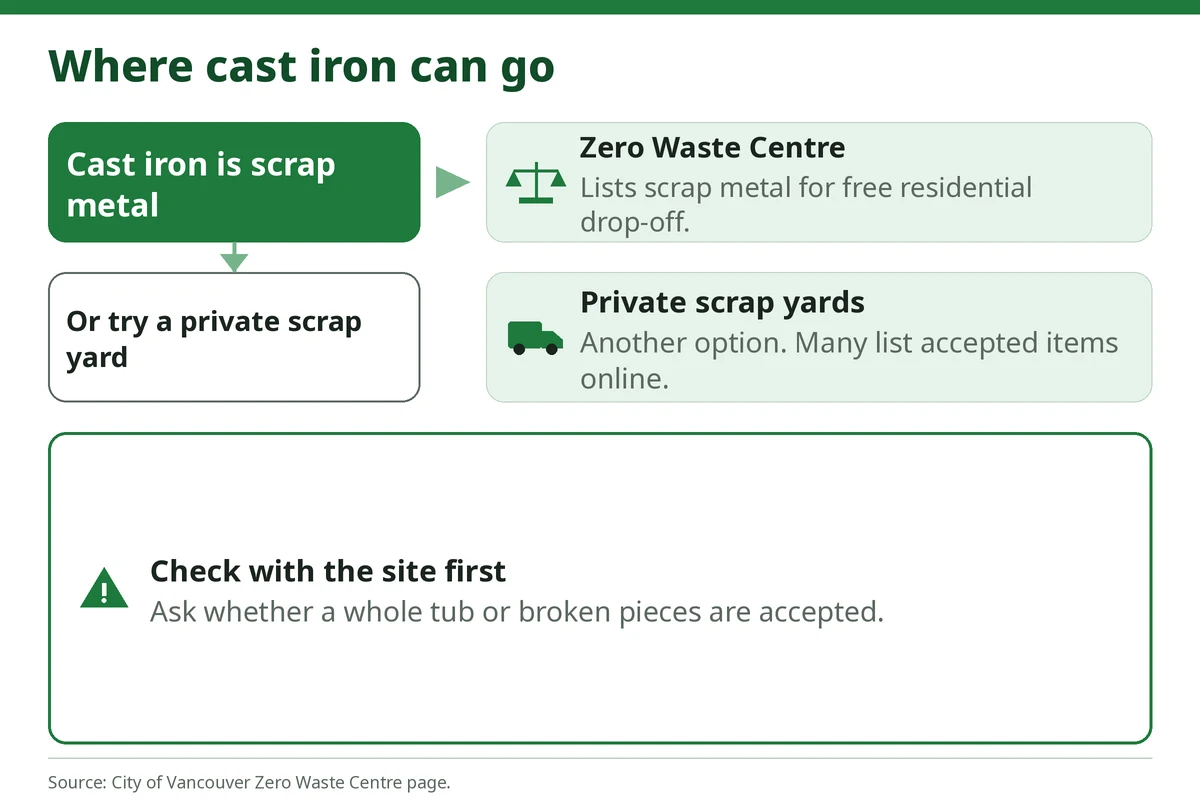
Cast iron is scrap metal. The City of Vancouver's Zero Waste Centre, at 8588 Yukon Street, lists scrap metal as accepted for free residential drop off, and the City says bathtubs, sinks and toilets are not accepted at its pop up recycling events. Metro Vancouver's recycling and waste centres list their accepted materials on their own pages. Check with the site first about whether a whole tub or broken pieces are accepted. Private scrap yards are another option, and many list accepted items online. Our metal recycling page covers the metal side.
Using a bin
If the tub is one piece of a bigger bathroom demolition, a bin handles the rest of the debris too. Many people planning junk, cleanouts and renos begin with the 20-yard. A 15-yard junk bin is at times available, but it is commonly sold out, so plan around the 20-yard. Ask us about other smaller sizes when you book. Trash King brings the bin to you and hauls it away. The loading is up to you. More is on the 20-yard bin page.
For a cast iron tub, tell us when you book. It is heavy, and the weight matters for loading and pickup.
Load the tub first and set it flat on the floor of the bin. Put lighter material on top. Do not stack heavy pieces above the rim.
For the rest of a bathroom job, see our bathroom remodel waste guide. Tile, drywall and other bathroom materials follow their usual rules. Drywall goes in its own separate bin. Concrete and dirt each go in their own bin. Clean wood is unpainted wood only.
On private property, like your driveway or yard, a bin takes no permit. For a bin on the street, boulevard or lane, confirm with your City first, since some cities need a permit. Strata or HOA rules may still apply on top of that. If yours does, the permit application goes to the City, and we time delivery to any permit dates.
A Trash King bin never takes paint, propane, tires, fuel or electronics. The full list is on our what not to put in a bin page.
If a mattress or box spring is part of the load, tell us when you book. It goes in as an add on for an extra fee.
Our renovation debris page covers how each material stream works.
A short checklist
- Check for asbestos before you start.
- Decide between whole and broken.
- Line up helpers and protective gear.
- Choose the destination before you move the tub.
- Tell us about the tub when you book a bin.
FAQ
Can a cast iron tub go in a bin? Yes, if it is part of a non hazardous load. Tell us about it when you book because of its weight.
Can I recycle a cast iron tub? It is scrap metal. Check with a scrap facility or Metro Vancouver site about whole tubs or pieces.
Is it safe to break up a tub myself? It is dangerous. Wear full protective gear, or hire a professional.
What size bin do I need? A 20-yard is the common start for renos, and you can ask about other sizes when booking.
Do I need a permit? Only if the bin goes on the street, boulevard or lane.