

A cracked mug, a broken plate or a chipped drinking glass looks a lot like a glass bottle. It is natural to put it in the glass recycling. But in Metro Vancouver, those items are not accepted there, and they can cause problems for the recycling that is. This guide covers what glass recycling does take, what it does not and how to dispose of the rest.
What glass recycling takes
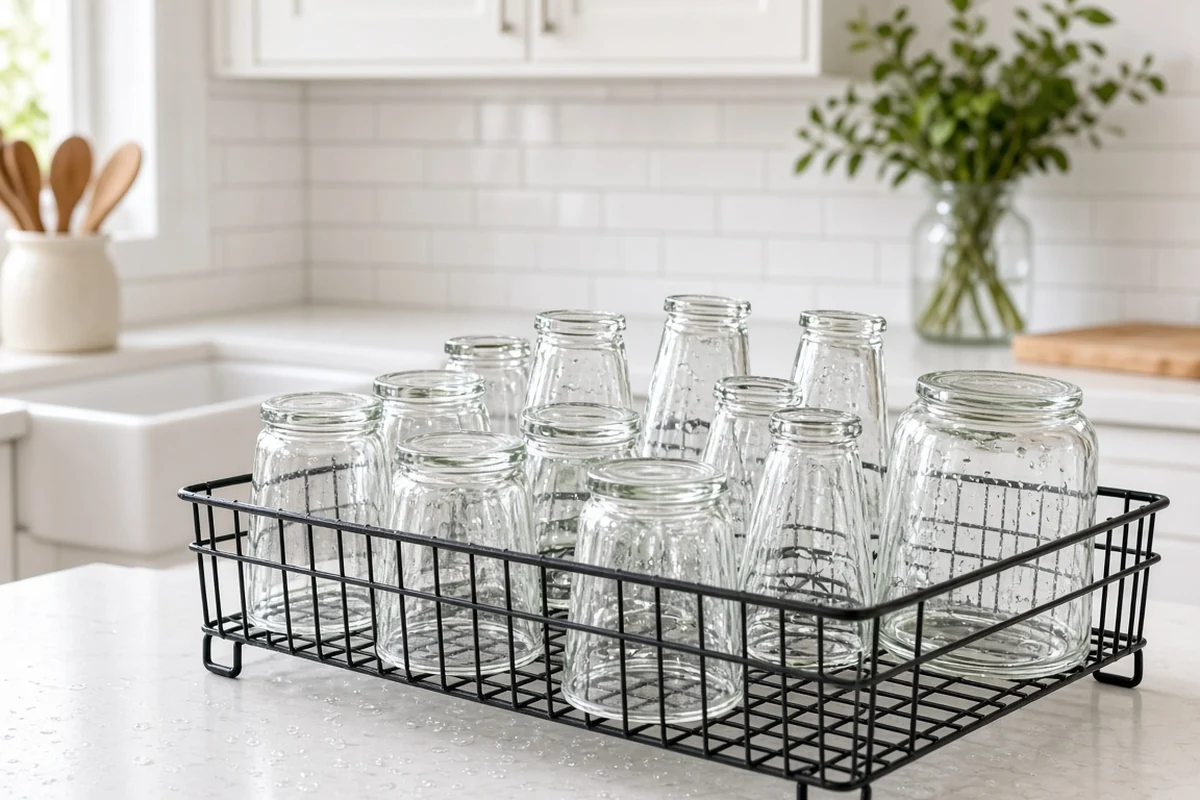
Recycle BC accepts clear and coloured glass bottles and jars. It asks residents to sort glass into its own container, separate from other recyclables at the curb where glass collection is available, or to deliver it to a drop off depot. Glass bottle and jar lids go with plastic, metal and carton containers instead. Check with your recycling collector for specific instructions.
Recycle BC explains why. Glass can easily break during collection, and when broken glass mixes with paper and other containers, it becomes difficult to properly sort and recycle those materials.
What it does not take
Recycle BC's glass page lists these as not accepted:
- Drinking glasses, dishes and cookware
- Whole or broken window glass or mirrors
- Ceramic products
- Light bulbs and light fixtures
So broken plates, cracked mugs, casserole dishes, vases, mirrors and drinking glasses all stay out of glass recycling. They are not packaging, and they are not the same material as bottles and jars. Deposit glass can be returned to a depot for the deposit refund.
Why it matters
Putting the wrong item in the glass stream makes the sorting job harder for the people handling it. Keeping dishes and ceramics out is part of keeping the system working.
What to do instead
Reuse or donate if it is whole
A complete plate or mug in good condition can often be donated. Check with a thrift store before you drop it off, because each has its own rules.
Pack broken pieces safely
If the piece is broken, protect everyone who handles it.
- Wear sturdy gloves and shoes.
- Pick up large pieces first and sweep small ones into a dustpan.
- Wrap sharp pieces in newspaper or cardboard, and tape the bundle.
- Put the bundle in a sturdy box or bag and label it so people know there is broken glass inside.
- Keep it separate from soft garbage bags that someone may squeeze or lift by hand.
Dispose of it as garbage
For ceramics, dishes, cookware and drinking glasses with no program, the answer is garbage. Your city's collection rules cover how to set out garbage, so check your own city's page. For larger amounts, a facility or a bin may suit better.
Larger amounts: a kitchen cleanout or an estate
If you are clearing out a kitchen, a home or an estate, you may have boxes of dishes, glassware and ceramics. A bin is a practical choice.
You handle the loading. Trash King delivers the bin and takes it away.
Many people planning junk, cleanouts and renos begin with the 20-yard. A 15-yard junk bin is at times available, though it is commonly sold out, so plan around the 20-yard. If you need another smaller size, ask when booking. If the job looks larger when you call, we may suggest a larger bin. Details are on the 20-yard bin page.
Wrap and box breakable items before loading, and place the boxes flat in the bin. Do not throw loose glass in from a height. Load to the rim only.
Good items first. Before you bin anything, set aside what a thrift store or friend could use.
No permit is needed for a bin on private property, like your driveway or yard. Some cities need a permit for a bin on the street, boulevard or lane, so confirm with your City before you book. Check any strata or HOA rules as well, since they can still apply. If yours does, apply with the City, and we will time delivery to any permit dates.
Leave paint, propane, tires, fuel and electronics out of the bin. They never go in a Trash King bin. Our what not to put in a bin page lists the rest.
Mattresses and box springs cost extra as an add on. Mention them when you book.
Our glass recycling page covers the glass that does belong in the recycling stream.
A quick sorting table
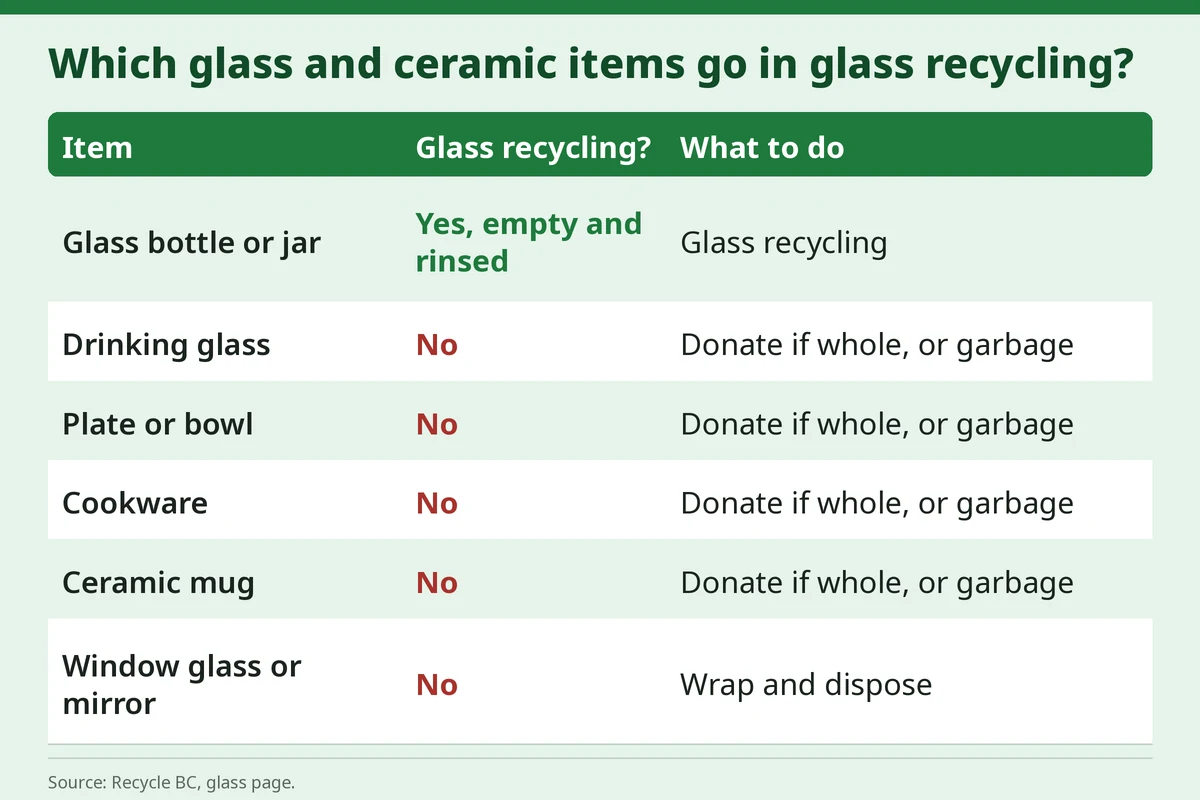
| Item | Glass recycling? | What to do |
|---|---|---|
| Glass bottle or jar | Yes, empty and rinsed | Glass recycling |
| Drinking glass | No | Donate if whole, or garbage |
| Plate or bowl | No | Donate if whole, or garbage |
| Cookware | No | Donate if whole, or garbage |
| Ceramic mug | No | Donate if whole, or garbage |
| Window glass or mirror | No | Wrap and dispose |
FAQ
Can I put a broken plate in glass recycling? No. Recycle BC lists dishes as not accepted.
Are ceramic mugs recyclable with glass? No. Recycle BC lists ceramic products as not accepted.
Are mirrors and window glass recyclable with bottles? No. Recycle BC lists whole or broken window glass and mirrors as not accepted.
How do I throw out broken dishes safely? Wrap them in newspaper or cardboard, tape the bundle and label it.
Can I put dishes in a Trash King bin? Yes, if they are packed safely and are part of a non hazardous load.