
Clothes pile up. Some are still good, some are torn, some have been in a bag in the closet for years. Metro Vancouver has places for almost all of them, but the right place depends on condition. This guide covers where each kind of clothing and textile can go, using Metro Vancouver's and the City of Vancouver's own pages.
Start with condition
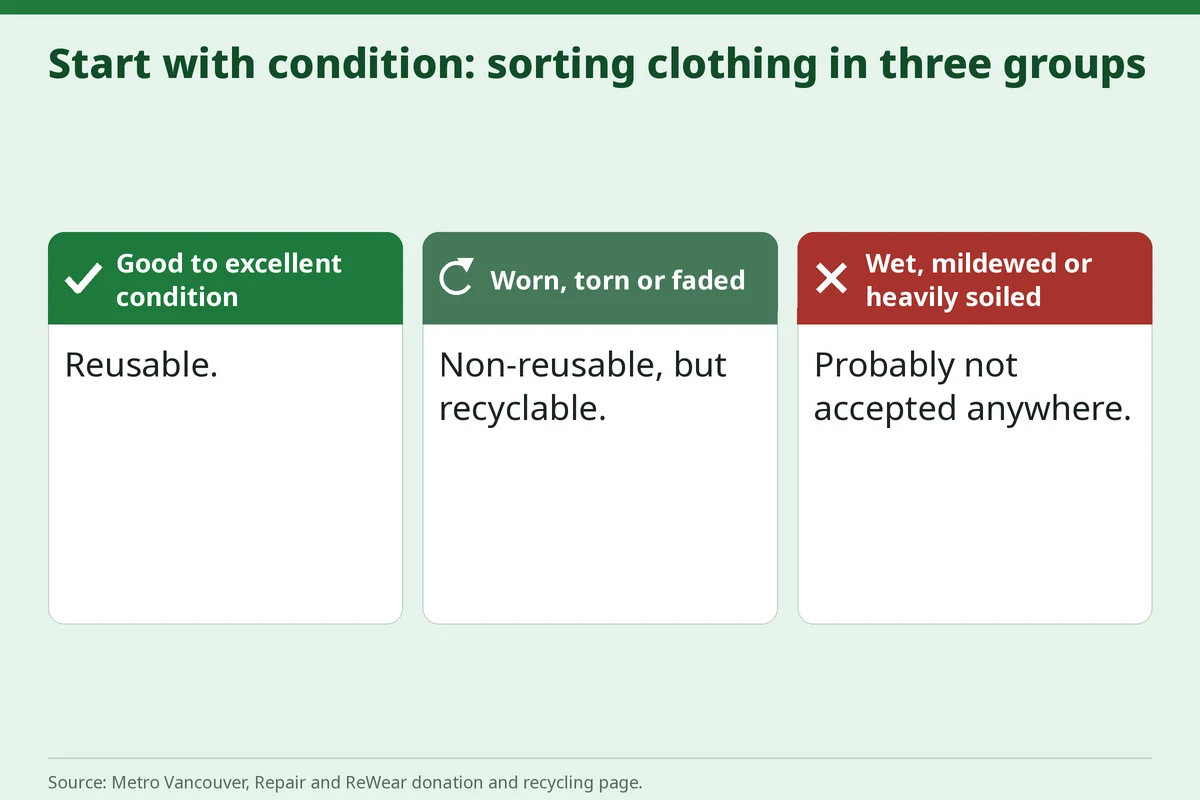
Metro Vancouver says the best way to reduce clothing waste is to buy less and repair more. When you do need to part with items, donation and recycling can keep them out of the garbage. Sort your pile into three groups:
- Good to excellent condition. Reusable.
- Worn, torn or faded. Non reusable, but recyclable.
- Wet, mildewed or heavily soiled. Probably not accepted anywhere.
Reusable clothing
Metro Vancouver's donation page says organizations through its reusable clothing search are looking for quality items in good to excellent condition. These locations may have restrictions, so check the organization's website or call ahead. Thrift stores and clothing provider charities are examples, and the page says you can also find a place to consign clothing in good condition. Most of these will also take jewellery, purses, wallets, hats and sunglasses in good condition.
Shoes can be donated too, even single shoes, but they have to be in good condition. Metro Vancouver says there are no recycling markets for torn, worn and holey shoes at this time.
Non reusable clothing
Metro Vancouver says organizations found through its non reusable search accept most items, except heavily soiled, paint stained or oil stained clothing. Items should be clean and dry when dropped off or prepared for pick up. The page adds that even holey socks can go to these locations. Most also take accessories in good condition.
Bedding, towels and other textiles
For bedding, towels and tablecloths you no longer use, Metro Vancouver suggests searching "textiles" on Metro Vancouver Recycles and choosing the right condition (reusable or non reusable).
City of Vancouver options
The Vancouver Zero Waste Centre, at 8588 Yukon Street, lists clothing and textiles as accepted for free residential drop off. The City's pop up recycling events accept clothing and textiles for both reuse and recycling, with strict guidelines. Items must be washed, dried and tied in a bag. The City says accepted items include clothes that are worn again or torn, ripped, full of holes, lightly stained, worn out or faded, missing buttons, with broken zippers or singles of paired items. Clothing or textiles will not be accepted if they are wet, mildewed, contaminated, stained with oil or paint, infested with moths or bed bugs or not in a bag.
Pick up and apartment programs
Metro Vancouver's page lists pick up services for unwanted clothing and apartment recycling room clothing bin programs in the region. Participating organizations listed include BC Children's Hospital Auxiliary, Big Brothers, Canadian Diabetes, CheckSammy, Green Inspirations and Re Vivify, among others. Check each organization's website for details. If you live in an apartment, ask your building manager whether a clothing bin program is available.
What happens to donated clothes
Metro Vancouver's page notes that about 20 to 25 per cent of donated clothing is resold or reused locally, because the volume donated is higher than the demand for local reuse. The rest is sold to used clothing brokers, who sort it and sell it to markets where it can be used, and some of it ends up in the garbage. That is one more reason to donate clean, good condition items and to buy less in the first place.
What to do with items nobody takes
Wet, mildewed or heavily soiled clothing usually ends up as garbage. Check Metro Vancouver Recycles first, because new programs appear from time to time.
Big wardrobe cleanouts
If you are clearing a whole closet, a storage unit or an estate, clothing is only part of the load. You will probably have furniture, boxes and other household items too.
- Sort clothing by condition and bag it.
- Wash and dry what you can.
- Drop off or arrange pick up.
- Put the rest in a bin.
Trash King drops off the bin and takes it away afterward. You fill it. A 20-yard bin is the usual place to start for junk, cleanouts and renos. The 15-yard junk bin is at times available, but it is commonly sold out, so plan around the 20-yard. Ask when you book about other smaller sizes. More is on the 20-yard bin page.
A bin on private property, like your driveway or yard, takes no permit. Some cities ask for a permit when a bin sits on the street, boulevard or lane, so check with yours before delivery. Strata or HOA rules may still apply on top of that. If yours does, apply with the City, and we set delivery for any permit dates.
Trash King bins never take paint, propane, tires, fuel or electronics. Our what not to put in a bin page has the complete list.
Add a mattress or box spring to the load as an add on for an added fee, and let us know when you book.
See our household garbage page for more on bins for home cleanouts.
FAQ
Can I donate torn clothes? Metro Vancouver says non reusable clothing locations accept most items, except heavily soiled, paint stained or oil stained clothing. Items should be clean and dry.
Can I donate single shoes? Metro Vancouver says single shoes can be donated if they are in good condition.
Does the Vancouver Zero Waste Centre take clothes? Yes. The City lists clothing and textiles as accepted for residential drop off.
How should I bag clothing for a City of Vancouver pop up event? Washed, dried and tied in a bag, per the City's guidelines.
What happens to donated clothes? Metro Vancouver says about 20 to 25 per cent is resold or reused locally.