
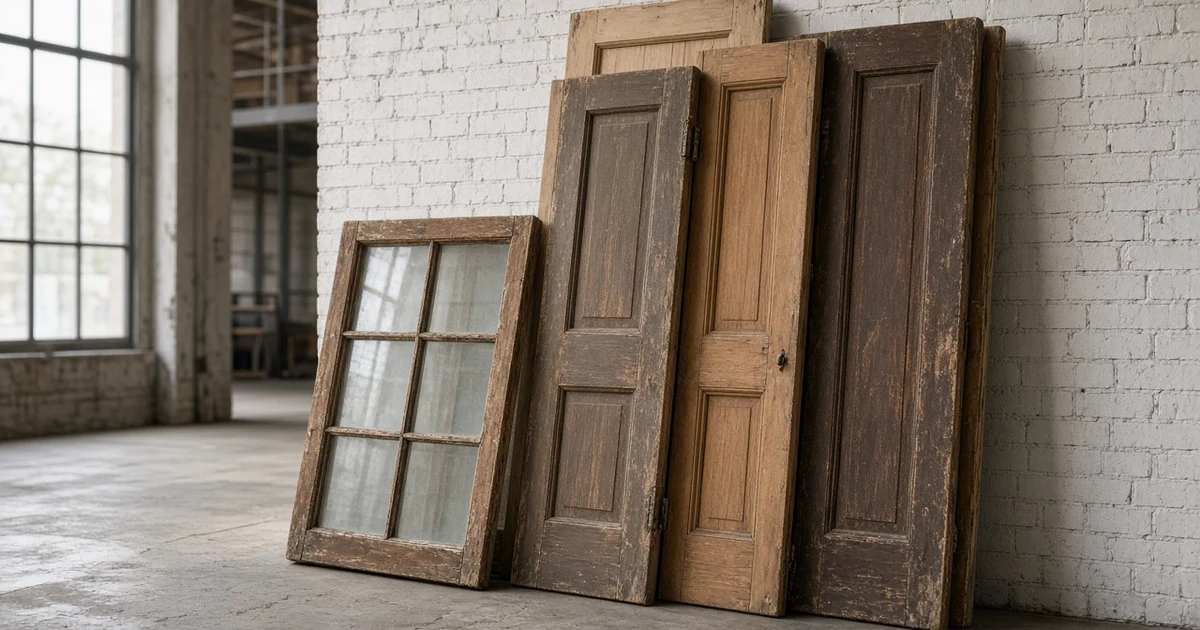
Renovation and demolition projects create a lot of material that still has value, such as doors, cabinets, fixtures and old growth lumber. Before it all goes in a bin, check whether someone can reuse it. This guide covers Habitat for Humanity's ReStore and Rebuild Hub, the salvage rules that apply to some Vancouver demolitions and when a bin makes sense for what is left. For the wider renovation picture, see our renovation debris page.
Habitat for Humanity ReStore
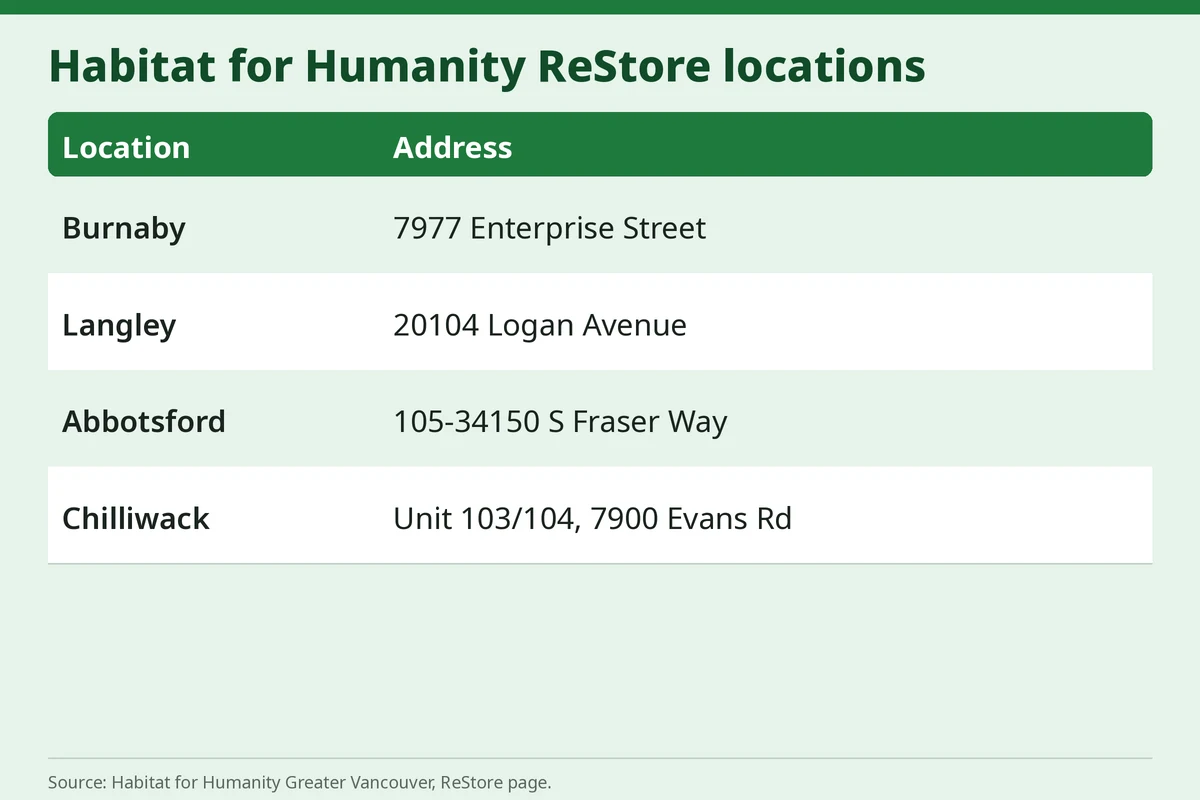
Habitat for Humanity Greater Vancouver lists ReStore locations in Abbotsford, Chilliwack, Burnaby and Langley. Its page gives these addresses:
| Location | Address |
|---|---|
| Burnaby | 7977 Enterprise Street |
| Langley | 20104 Logan Avenue |
| Abbotsford | 105-34150 S Fraser Way |
| Chilliwack | Unit 103/104, 7900 Evans Rd |
The page also offers a donation request and a way to schedule a pickup or drop off. Call or check the site first to confirm what each ReStore accepts, because acceptance depends on condition and the store's needs.
The Rebuild Hub
Habitat describes The Rebuild Hub as an alternative to demolition. It helps homeowners with deconstruction, whether for a full house or parts of a renovation, and it receives the deconstructed goods. Habitat says homeowners can receive a tax receipt for the value of the goods. For contact details, the City of Vancouver lists the Rebuild Hub at 604-681-5618 or info@rebuildhub.ca.
The City of Vancouver says it has partnered with the Rebuild Hub, which coordinates free appraisals of house contents before demolition or deconstruction. If the appraiser identifies materials of value and you want to donate, the Hub will confirm in advance which materials it can accept and issue a tax receipt. The City says there is no obligation to donate after the appraisal, and that if you have a large donation, the Hub may be able to pick up items from your site once they are removed from the house.
Vancouver's Green Demolition By-law
If you plan to demolish a house in the City of Vancouver, the City's demolition permit page sets out reuse and recycling requirements under the Green Demolition By-law. In summary, the City says:
- Demolishing a house built before 1950 requires a minimum of 75% of materials by weight to be reused or recycled, excluding hazardous waste.
- A house before 1950 that the City deems a character house requires 90%.
- Demolishing a heritage listed house or a house built before 1910 requires a minimum wood salvage of 3 metric tonnes.
- A recycling and reuse plan is submitted with the permit application, and a compliance report with receipts is submitted after demolition.
- A deposit is required with the permit, and it is refunded if you meet the requirements.
Check the City's page for current figures and details, since requirements and fees can change. Hazardous building materials must be identified and removed by a qualified abatement contractor before demolition work begins, according to the City.
The City describes deconstruction as stripping and dismantling a building to maximize salvage for reuse, and says fully deconstructed projects can achieve a 95% or higher diversion rate.
What to set aside before you demolish or renovate
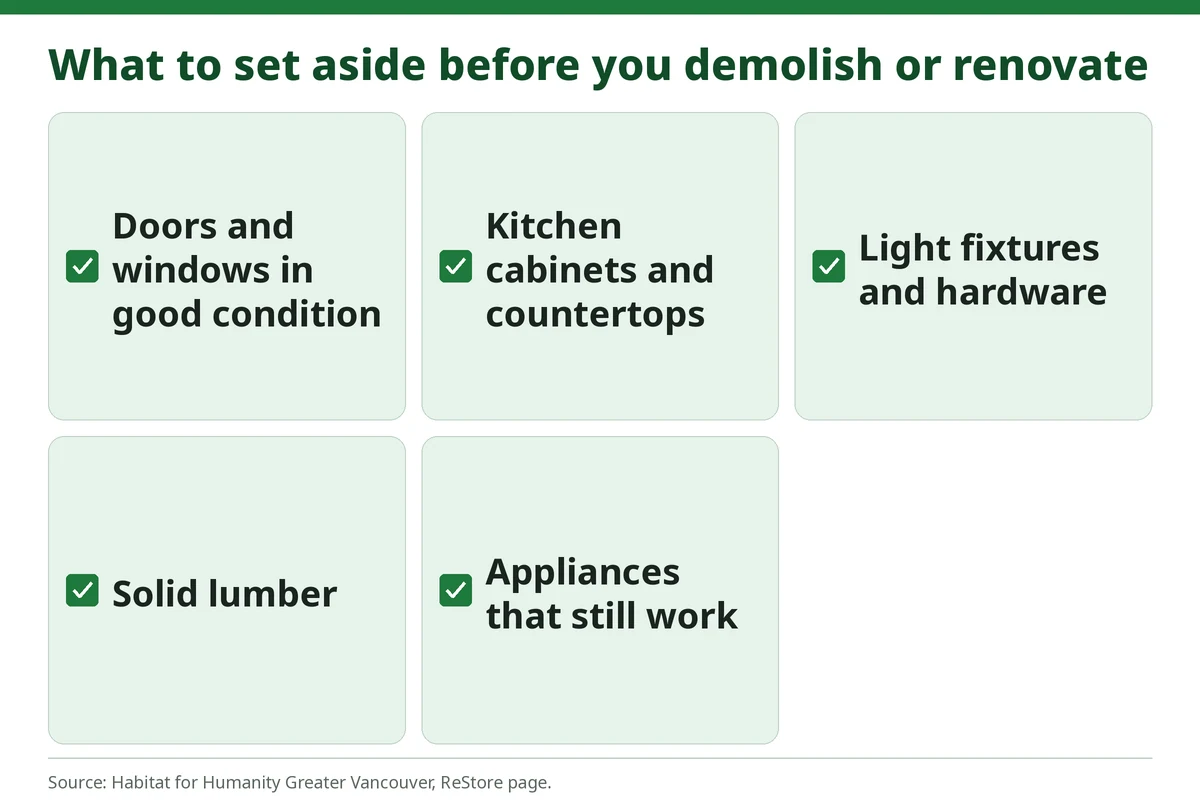
Some common reusable items:
- Doors and windows in good condition
- Kitchen cabinets and countertops
- Light fixtures and hardware
- Solid lumber
- Appliances that still work
Remove and store them before demolition starts. Ask the receiving organization what it accepts and in what condition.
What is left
Once the reusable items are out, the rest is waste. Drywall goes in its own bin. Concrete and dirt each go in their own 10 or 12-yard bin, unless you book a mixed concrete and dirt bin, which costs extra. Clean wood means unpainted wood only, and nails are fine. Treated wood needs special handling and must be mentioned when you order.
Many people planning junk, cleanouts and renos begin with the 20-yard. A 15-yard junk bin is at times available but is commonly sold out, so plan around the 20-yard. Ask when you book about other smaller sizes. Details are on the 20-yard bin page.
The bin comes to you from Trash King, you load it, and Trash King hauls it away.
Permits depend on where the bin sits. Your driveway or yard is private property, so a bin there takes no permit. For a bin on the street, boulevard or lane, confirm with your City first, since some cities need a permit. Your strata or HOA can still set rules of its own. If yours does, apply with the City, and we set delivery for any permit dates.
Some items can never go in a Trash King bin: paint, propane, tires, fuel and electronics. Check our what not to put in a bin page for the full list.
If a mattress or box spring is part of the load, tell us when you book. It goes in as an add on for an extra fee.
FAQ
Does Habitat ReStore take renovation materials? Habitat lists donation requests and pickup or drop off scheduling. Confirm what is accepted before you bring anything.
Can I get a tax receipt? Habitat says homeowners can receive a tax receipt for the value of goods donated through the Rebuild Hub. The City says the Hub issues a receipt documenting the value of items.
Does the Green Demolition By-law apply to renovations? The City's page covers demolition permits. Check with the City for your project.
What bin size should I start with? For renos, the 20-yard is the common start. Other sizes? Ask when booking.