
A couch left in a laneway. Garbage bags piled beside a public bin. A mattress dropped behind an apartment building. Most people would call that a nuisance. In Metro Vancouver it is also illegal, and the rules and penalties are set city by city. This guide covers what counts as illegal dumping, what two big cities say about fines, how to report it and how to get rid of bulky items the right way.
What counts as illegal dumping
Metro Vancouver's solid waste page puts it plainly. Abandoning household items on public or private property is illegal dumping. Its examples include a desk left in a laneway, a mattress placed behind an apartment building and bags of garbage dropped next to a public bin. The page says it costs taxpayers millions of dollars each year to clean up.
The City of Vancouver uses similar language. Deliberately abandoned or dumped waste on public or private property is considered illegal dumping, and the City says it is harmful to the environment and costs taxpayers over a million dollars each year.
One point is easy to overlook. Dumping is not only about driving to a forest road. Leaving an item on a boulevard or at the back of a lot where nobody has arranged a pickup can also count.
Fines depend on the city
There is no single regional fine. Each municipality has its own bylaw. Two examples from the cities' own pages:
City of Vancouver
The City says illegal dumping is an offence under its Street and Traffic By-law 2849. A person or the registered owner of a vehicle caught illegally dumping may have to:
- Clean up the waste and restore the area
- Repay the City for removing the waste and restoring the area
- Pay a by-law ticket of $500 for each offence
- Face prosecution leading to a fine of up to $10,000
City of Surrey
Surrey's illegal dumping page is headed "Up to $10,000 fine for illegal dumping." The City also says items placed at curbside without a scheduled pickup may be considered illegally dumped and are subject to bylaw notices or fines. It has increased patrols and installed surveillance cameras at illegal dumping hotspots.
Other cities
Every city sets its own penalties and enforcement. If you live somewhere else in Metro Vancouver, check your own city's bylaw page for the current amounts. Fine amounts change, so get the current figure straight from your city's bylaw.
How to report illegal dumping
Reporting steps are also city specific.
Vancouver. The City asks you to write down as much as you can if you witness dumping on City property. That includes the licence plate number, descriptions of the vehicle and people, the items being dumped (without touching them), and the date, time and location. The City says you must be willing to complete and sign a witness statement. After you report, a by-law officer investigates within 4 business days. Depending on the situation, the officer may contact the alleged offender, secure the area or issue a notice with directions to fix the problem within a set time. If there is not enough evidence to connect an offender, the file may be closed.
Surrey. The City lets you report online or by phone at 604-591-4152.
Elsewhere. Use the municipal service channel for your city. Metro Vancouver's page also lists a contact for general questions at 604-432-6200 or icentre@metrovancouver.org.
How to avoid it, step by step
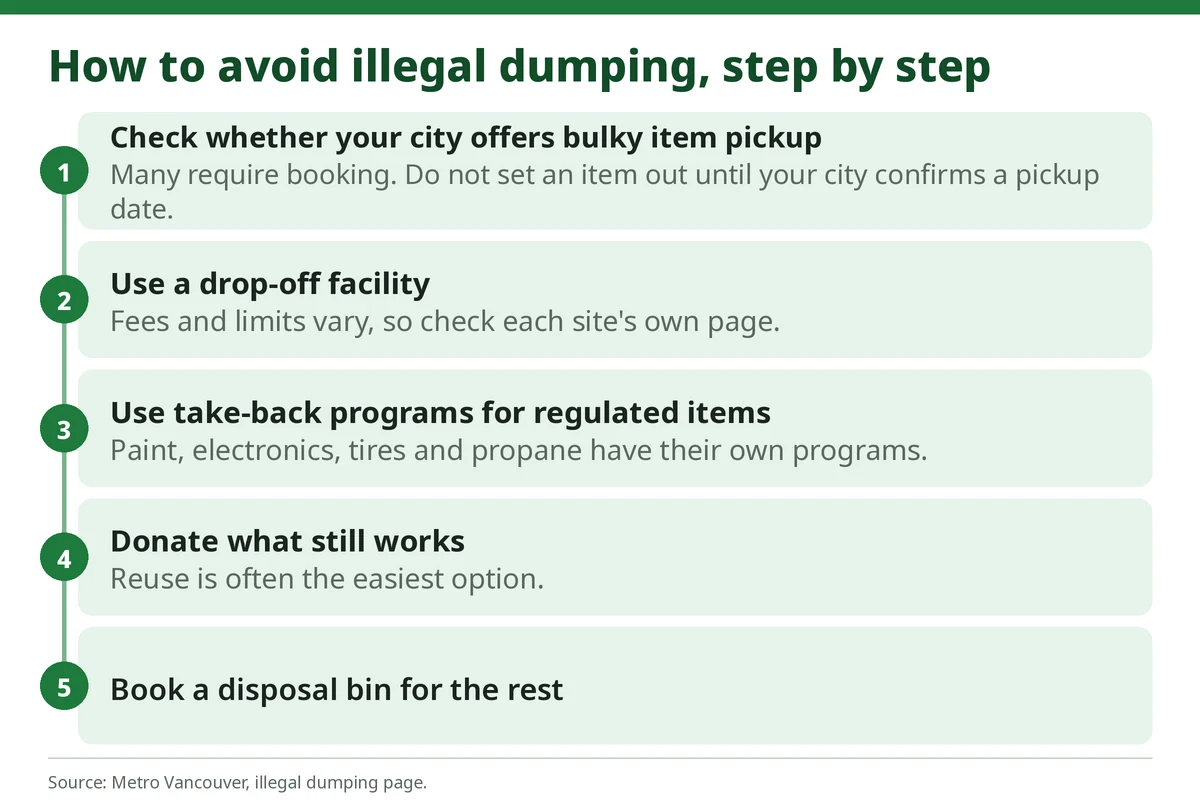
The easiest way to avoid a fine is to know where each item is allowed to go before it leaves your property.
- Check whether your city offers bulky item pickup. Some cities do and many require booking. Do not set an item out unless your city has confirmed a pickup date.
- Use a drop off facility. The Metro Vancouver recycling and waste centres and the City of Vancouver sites take many items. Fees and limits vary, so check each site's own page.
- Use take back programs for regulated items. Paint, electronics, tires and propane have their own programs.
- Donate what still works. Reuse is often the easiest option.
- Book a disposal bin for the rest.
Surrey also runs Disposal Days. According to Metro Vancouver, they offer free and discounted drop off options for items at both Surrey recycling and waste centres, so check the City of Surrey's website for dates.
Where a bin fits
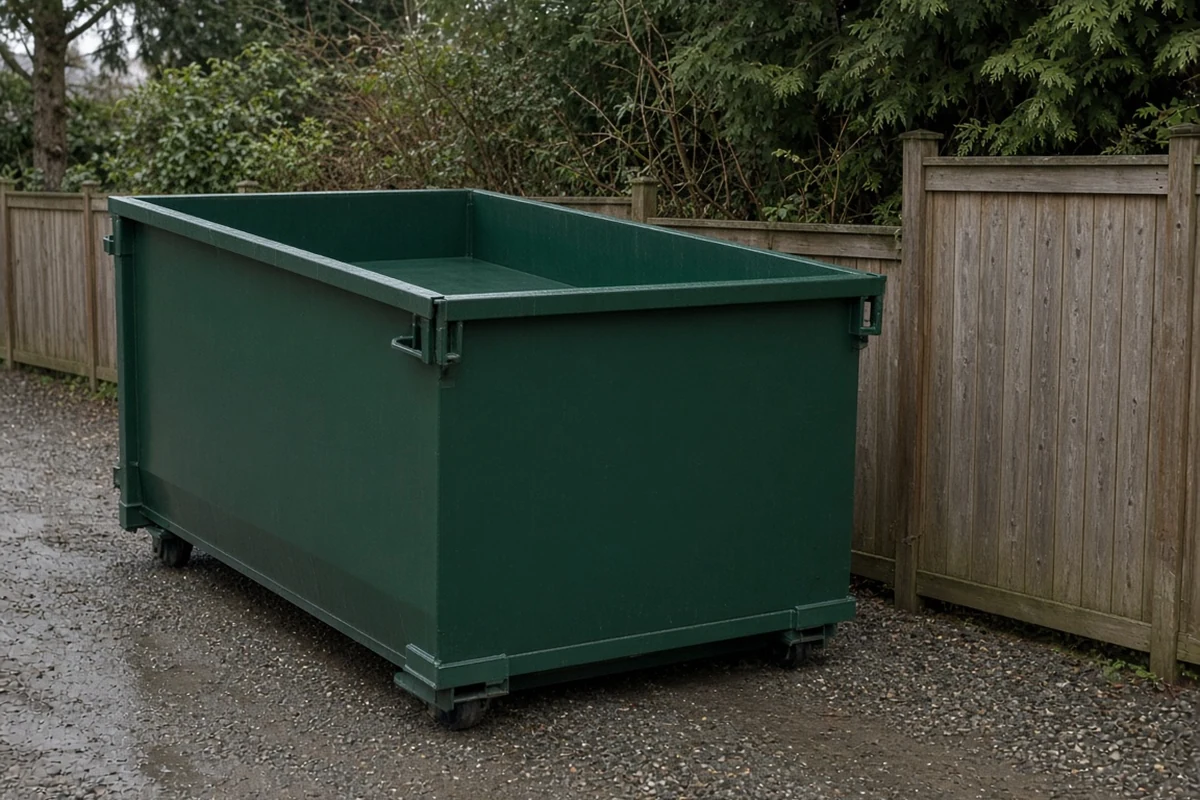
If you have a basement full of furniture or a yard full of junk, a bin lets you load everything in one place on your own schedule. Nothing is left on a boulevard, in a lane or beside a public bin.
Begin with the 20-yard for junk, cleanouts and renos, since it is the common starting size. The 15-yard junk bin is at times available, but it is commonly sold out, so plan around the 20-yard. Ask when you book about other smaller sizes. If the job looks bigger when you call, we may suggest a larger bin. Trash King brings the bin to you and hauls it away. The loading is up to you. More is on the 20-yard bin page.
A bin on private property, like your driveway or yard, takes no permit. Some cities need a permit for a bin on the street, boulevard or lane, so confirm with your City before you book. Strata or HOA rules may still apply on top of that. If yours does, apply with the City, and we set delivery for any permit dates.
Some items can never go in a Trash King bin: paint, propane, tires, fuel and electronics. Check our what not to put in a bin page for the full list.
Need to get rid of a mattress or box spring? It can go in as an add on for an extra fee. Mention it when you book.
If you are not sure whether an item is allowed, ask when you book. We can point you to the right program for anything that cannot go in the bin. See our household garbage page for more.
What not to do
- Do not leave bags next to a public bin.
- Do not leave items on a lane, boulevard or at the back of a lot.
- Do not put your items on someone else's property.
- Do not drop loads at a "free" pile on private property.
- Do not hire an unknown hauler who cannot tell you where the load is going. Under Vancouver's bylaw, the registered owner of a vehicle caught dumping may be held responsible, so ask where your load will end up.
FAQ
What is illegal dumping? Metro Vancouver describes it as abandoning household items on public or private property.
How much is the fine in Vancouver? The City of Vancouver lists a $500 by-law ticket for each offence and says prosecution can lead to a fine of up to $10,000.
What about Surrey? Surrey's page says up to $10,000. See that page for the current wording.
Can I leave items out for a free pickup? Surrey says items placed at curbside without a scheduled pickup may be considered illegally dumped. Check with your city before you set anything out.
Where should I take bulky household junk? To a facility, a take back program or a disposal bin, depending on the item.