
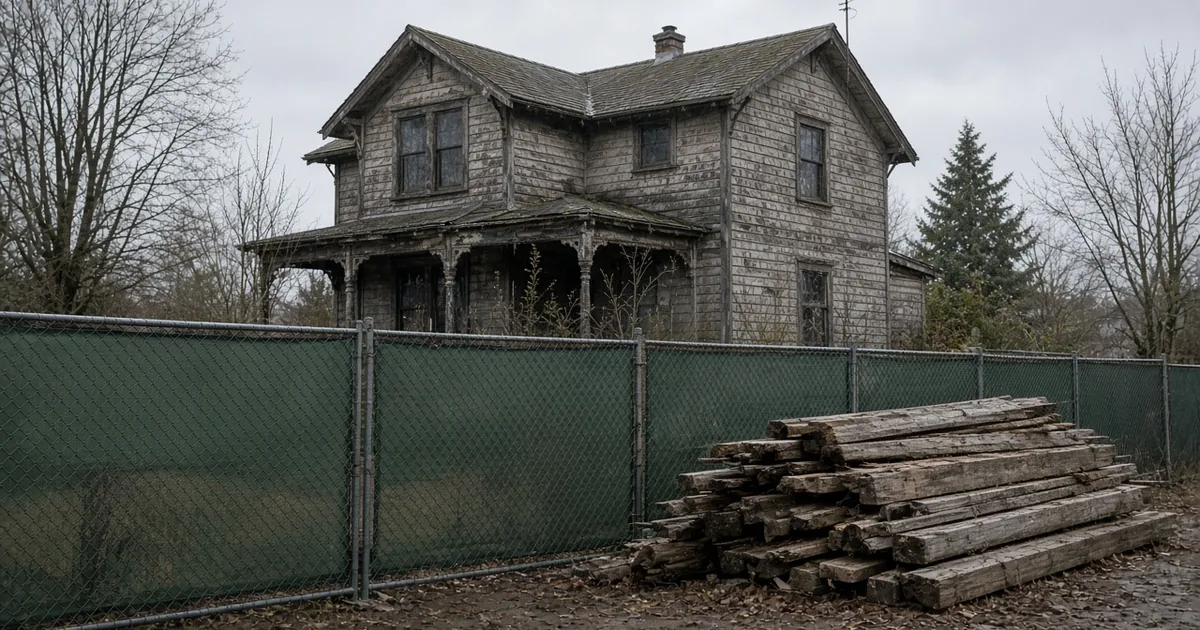
If you are tearing down a house in Vancouver to rebuild, the waste is built into the permit. The City of Vancouver sets minimum reuse and recycling targets for older homes, and it will ask you to show you met them. This guide covers what the City's demolition permit page states and how to plan for it. It is general information, so confirm the City's page and your permit conditions for your own house.
Who it applies to
The City says a minimum salvage (deconstruction) requirement applies when you demolish a heritage listed house or one built before 1910. Minimum reuse and recycling requirements apply when you demolish a house built before 1950, or when you choose to meet them for a house built in or after 1950. The City's demolition permit page says that if you are demolishing as part of building a new house or laneway house, you submit the demolition permit application together with the new house application.
The targets
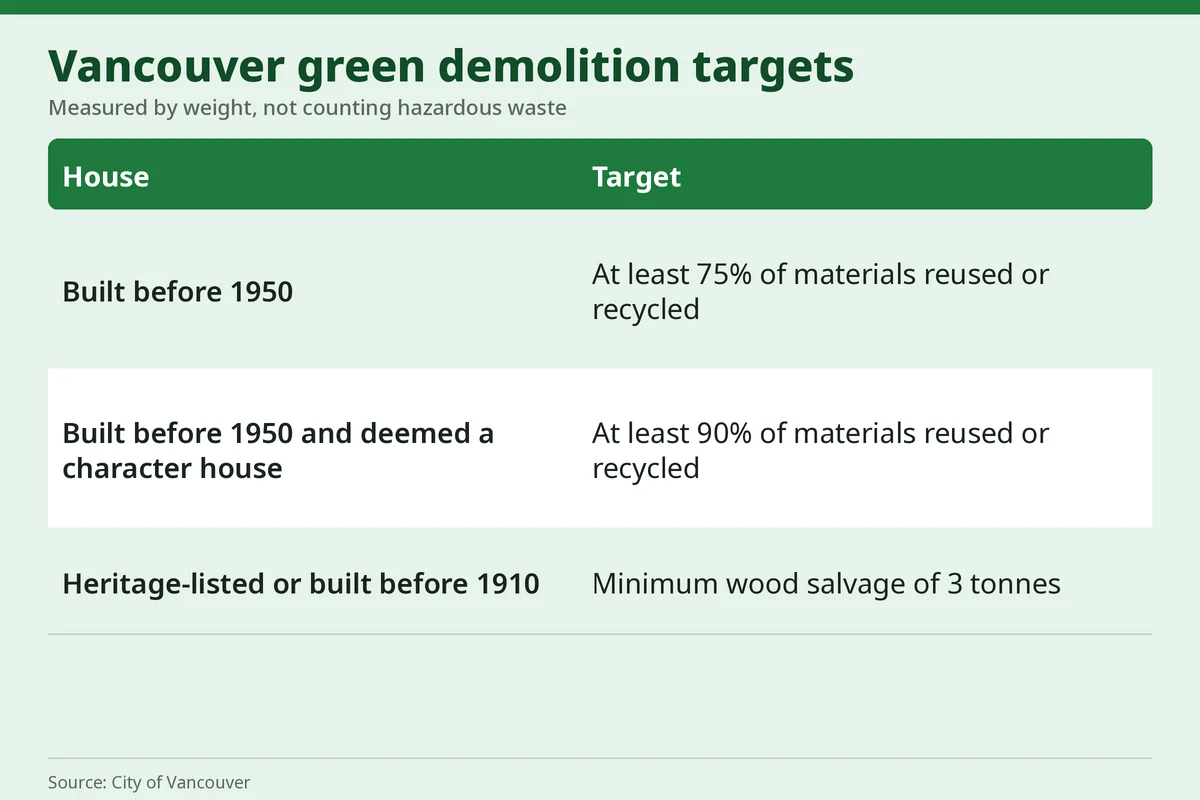
The City measures reuse and recycling by weight.
- Houses built before 1950: at least 75% of materials by weight must be reused or recycled, not counting hazardous waste.
- Houses built before 1950 and deemed character houses: at least 90%.
- Heritage listed houses and houses built before 1910: a minimum wood salvage of 3 metric tonnes.
The City says traditional demolition recycles roughly 40 to 50% of materials, so reaching 75% takes planning. Fully deconstructed projects can reach 95% or more.
What you submit
The City lists these steps:
- A recycling and reuse plan with your building or development permit application.
- A hazardous building materials assessment and, if the report calls for it, abatement by a qualified contractor before demolition. The City says salvage of non structural components and abatement work may start only after the demolition permit is issued.
- A tree barrier and pre demolition inspection before the permit is issued.
- A green demolition deposit. The City page lists $15,310, refundable if you meet the requirements.
- A recycling and reuse compliance report, with receipts that show where all materials were taken, once demolition is done.
The City says you cannot request a building inspection until a compliance report is submitted, when your project has a recycling requirement.
Planning the waste
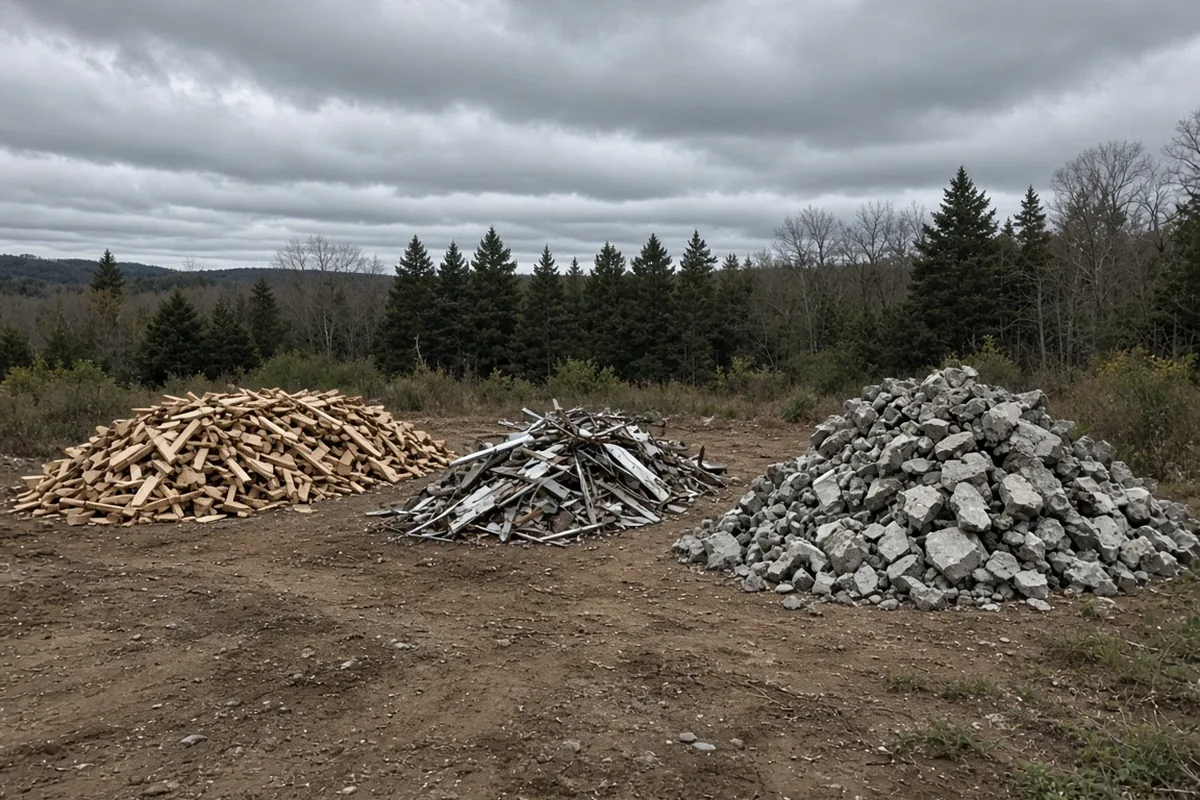
The City's compliance report works from receipts, so the easiest way to hit the numbers is to keep streams separate and keep every receipt. Metro Vancouver's construction toolkit points the same way, noting that source separated loads are typically charged lower tipping fees than mixed loads.
Concrete and dirt each go in their own 10 or 12-yard bin, though a mixed concrete and dirt bin, also a 10 or 12-yard, is sometimes possible for an added fee. Clean, unpainted wood is its own stream. Metal goes to scrap. Mixed leftovers go in a junk bin. Ask when you book which of these streams we can supply for a whole house teardown. Our guides to renovation debris and new construction waste cover the bin side, and our posts on DIY demolition debris and laneway house builds show other projects.
On your property, a bin takes no permit. On the street or lane, the bin needs a City permit, and we will match delivery to your permit dates. Your demolition and building permits are separate and come from the City.
FAQ
What recycling rate does Vancouver require for a pre 1950 house? At least 75% by weight, or 90% for a character house, not counting hazardous materials.
What is the green demolition deposit? The City's page lists $15,310, refunded if the reuse and recycling requirements are met.
What proof does the City want? A recycling and reuse compliance report with receipts that show where all the materials were taken.
Does the by-law apply to a house built in 1960? Not automatically. The City says you can volunteer to meet the requirements for a house built in or after 1950.