
The walls are painted and the invoice is paid, but there is a pile of offcuts in the yard, drywall scraps in the garage and a stack of old fixtures by the fence. It happens on small jobs and big ones. Here is how to deal with leftover reno debris on your own property, starting with what to check before you touch anything.
This is general information. For questions about your contract, ask the contractor or a professional.
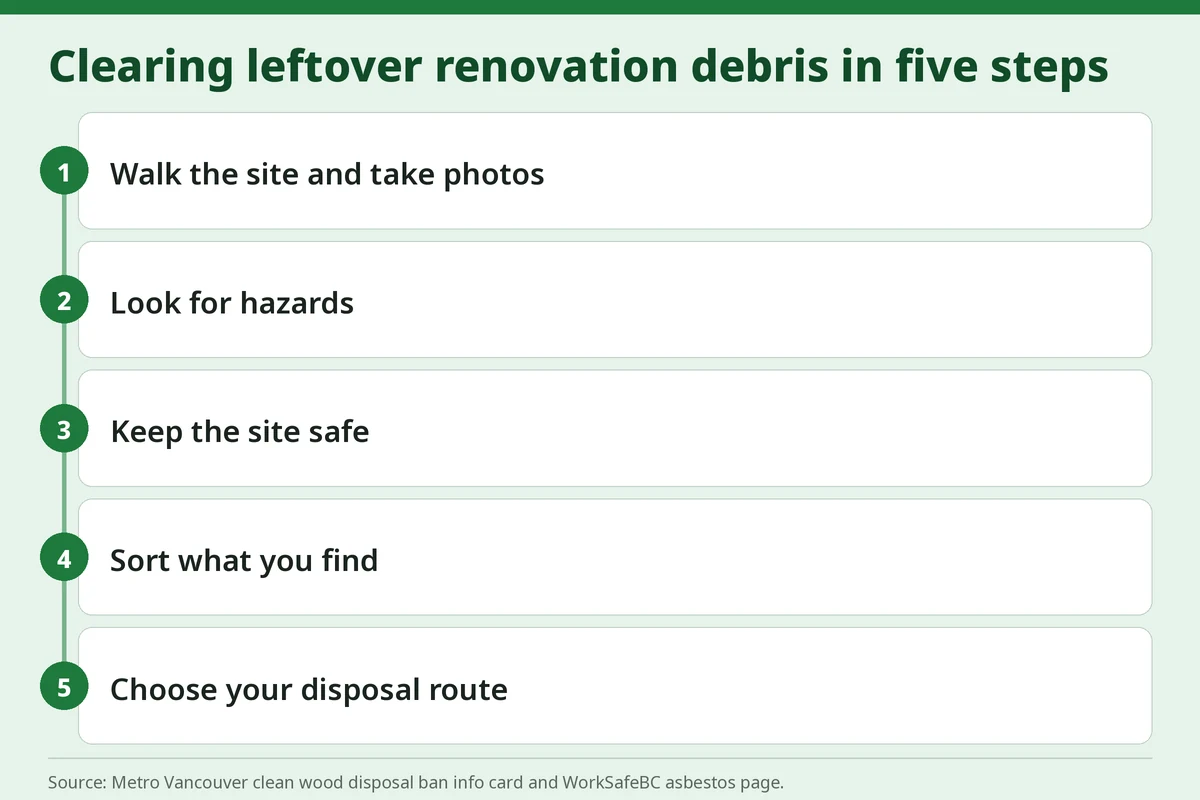
Step 1: Walk the site and take photos
Before anything moves, take photos of what is there. They help if you need to talk to the contractor later, and they make the cleanup easier to plan.
If your contract mentions debris or cleanup, read it. If you are unsure, ask the contractor in writing whether they plan to come back. Do not assume. Some contractors do return for a final cleanup.
Step 2: Look for hazards
Some leftover material is not safe to handle casually.
- Possible asbestos. WorkSafeBC says never to assume a building material is free of asbestos, since you cannot tell just by looking. If you suspect asbestos, do not touch or move it. WorkSafeBC adds that a qualified asbestos professional should complete a survey. Asbestos never goes in a Trash King bin. Removal is a job for a licensed contractor and needs special bins, permits and licences.
- Chemicals. Paint, solvents, adhesives, sealants and fuel cans never go in a Trash King bin.
- Batteries and electronics. Cordless tool batteries and old electronics never go in a bin.
- Sharp items. Nails, glass and offcuts can injure you. Wear gloves and sturdy shoes.
If you find something you cannot identify, leave it and ask a professional.
Step 3: Keep the site safe
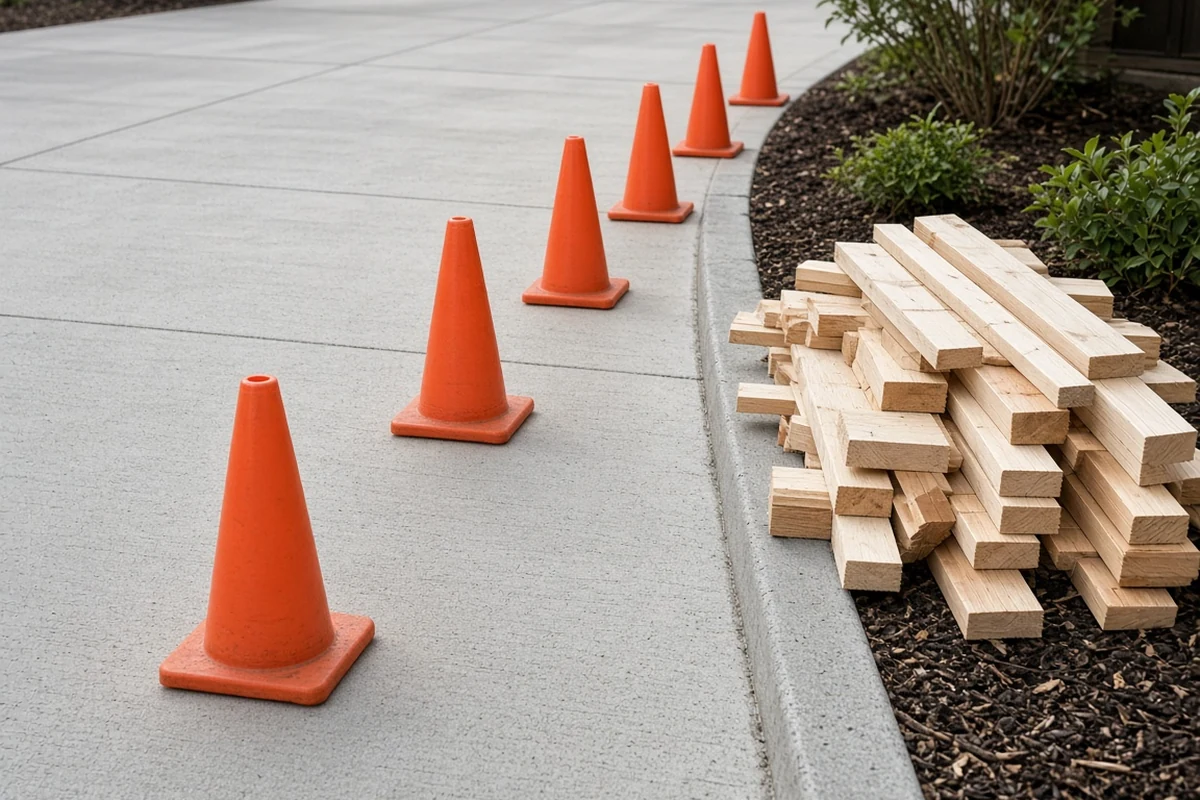
WorkSafeBC’s OHS Regulation, section 20.120, says material and debris must not be allowed to accumulate on floors or on the ground outside the building if workers will be endangered. That rule is written for workplaces, but the idea applies to your yard too. Debris left in walkways is a tripping hazard for you, your family and visitors. Stack or contain loose material and keep paths clear.
Step 4: Sort what you find
- Reusable. Leftover tile, paint (to a program), lumber and fixtures. Ask the contractor if any of it is yours to keep.
- Metal. Offcuts of pipe, flashing and wire can go to scrap metal. See our metal recycling page.
- Clean wood. Unpainted wood only. Nails are fine. Metro Vancouver’s clean wood card defines clean wood as unpainted, unstained, untreated and glue-free. Treated wood is handled differently, so mention it when you order. It stays out of clean-wood and yard loads.
- Drywall. Keep it apart, since it needs its own bin. Our drywall bins take board date stamped 1990 or newer, or older or undated board with a lab report showing no asbestos.
- Concrete and dirt. Each goes in its own bin. Never mix them with each other or with junk.
- Mixed debris. Packaging, flooring scraps, insulation offcuts and general waste.
Step 5: Choose your disposal route
For a few bags, a facility trip may be enough. The Vancouver South Transfer Station, for example, lists fees by material and says new drywall is limited to half a sheet or a 4 foot by 4 foot piece, with a declaration form required. Check each site’s own page for fees and limits.
For a bigger pile, a bin saves trips. This is a good fit for a DIY cleanup after a contractor.
Trash King brings the bin to you and hauls it away. The loading is up to you. Start with the 20-yard for junk, cleanouts and renos, since it is the usual starting size. A 15-yard junk bin is sometimes available, but it is often sold out. Plan around the 20-yard. Ask when you book about other smaller sizes. Find the details on the 20-yard bin page.
Each material needs its own bin, so a mixed-junk bin is not the same as a drywall, concrete, dirt or clean-wood bin. Tell us what you have when you call. Our renovation debris page explains how each stream works.
Your driveway or yard is private property, so a bin there needs no permit. A bin on the street, boulevard or lane does need a City permit (the Township for Langley, Fort Langley and Aldergrove addresses). Strata or HOA rules can still apply. Apply with the City, and we will time delivery to your permit dates.
Paint, propane, tires, fuel and electronics never go in a Trash King bin, and our what not to put in a bin page has the full list.
A mattress or box spring can go in as an add-on for an extra fee, so mention it when you book.
Tips for loading
- Break down large offcuts so they lie flat.
- Do not overfill. Load to the rim only.
- Keep drywall dust and insulation scraps contained.
- Keep bins away from drains if you can.
- Remove tarps before pickup. Bins have drainage holes.
What to ask your contractor next time
- Who handles debris, and where does it go?
- Is a bin included, and who orders it?
- What happens with hazardous material?
- When is the final cleanup?
Get those answers in writing before the work starts and you avoid a surprise at the end.
FAQ
Can I put leftover paint in the bin? No. Paint never goes in a Trash King bin. Use the paint take-back program.
What if I suspect asbestos? Leave it where it is. Do not touch or move it, and have a qualified asbestos professional complete a survey, as WorkSafeBC advises. Asbestos never goes in a Trash King bin. A licensed contractor handles removal, which needs special bins, permits and licences.
Can I mix drywall and general debris? No. Drywall always gets a bin of its own. Our drywall bins take board date stamped 1990 or newer, or older or undated board with a lab report showing no asbestos.
Which bin size should I start with? Plan on the 20-yard for reno debris, since that is the usual start. For other sizes, ask when booking.
Do I need a permit? Only if the bin goes on the street, boulevard or lane.