
Old wallpaper and dark wood panelling are some of the most common reno projects in older homes. They come off in layers, they make a lot of waste and they sit on top of walls that may hold more than you expect. This guide starts with the first job, which is testing, and then covers where each type of waste goes.
Test first
Before you scrape, sand or pry anything, find out what is in the wall.
WorkSafeBC says asbestos was used in more than 3,000 building materials from the 1950s to 1990s, and it names drywall, textured ceiling coat, insulation, vinyl flooring and window putty among the materials that often contained it. It says it is hard to know if you have asbestos because it is often mixed with other materials. Its asbestos topic page says never to assume a building material is free of asbestos, since you cannot tell just by looking at it, and that if you suspect asbestos, you should stop work immediately and have a qualified asbestos professional complete an asbestos survey.
WorkSafeBC also says newer homes can have asbestos if they were built with older materials. So do not rely on the age of the house alone.
Its homeowner campaign explains the steps. Hire a licensed asbestos surveyor, who will take samples of possible asbestos-containing materials and send them to a lab. If asbestos is found, hire a licensed asbestos abatement contractor. Anyone you hire to deal with asbestos must be licensed in BC.
For this project, that means asking the surveyor to look at what is under your wallpaper or behind your panelling, including adhesive and plaster, before you start. Do not guess.
Asbestos-containing material never goes in a Trash King bin. Asbestos removal needs special bins, permits and licences, so it stays with the licensed contractor.
Wallpaper
Once the walls have been cleared for work, wallpaper is straightforward.
- Score and soak the paper, or use the method that suits the type.
- Scrape gently so you do not gouge the wall.
- Collect the scraps as you go in a heavy bag or bucket.
- Clean the wall.
Wallpaper scraps are garbage. They are paper mixed with adhesive and backing, and they do not go in recycling. Keep them out of the green bin too.
Wood panelling
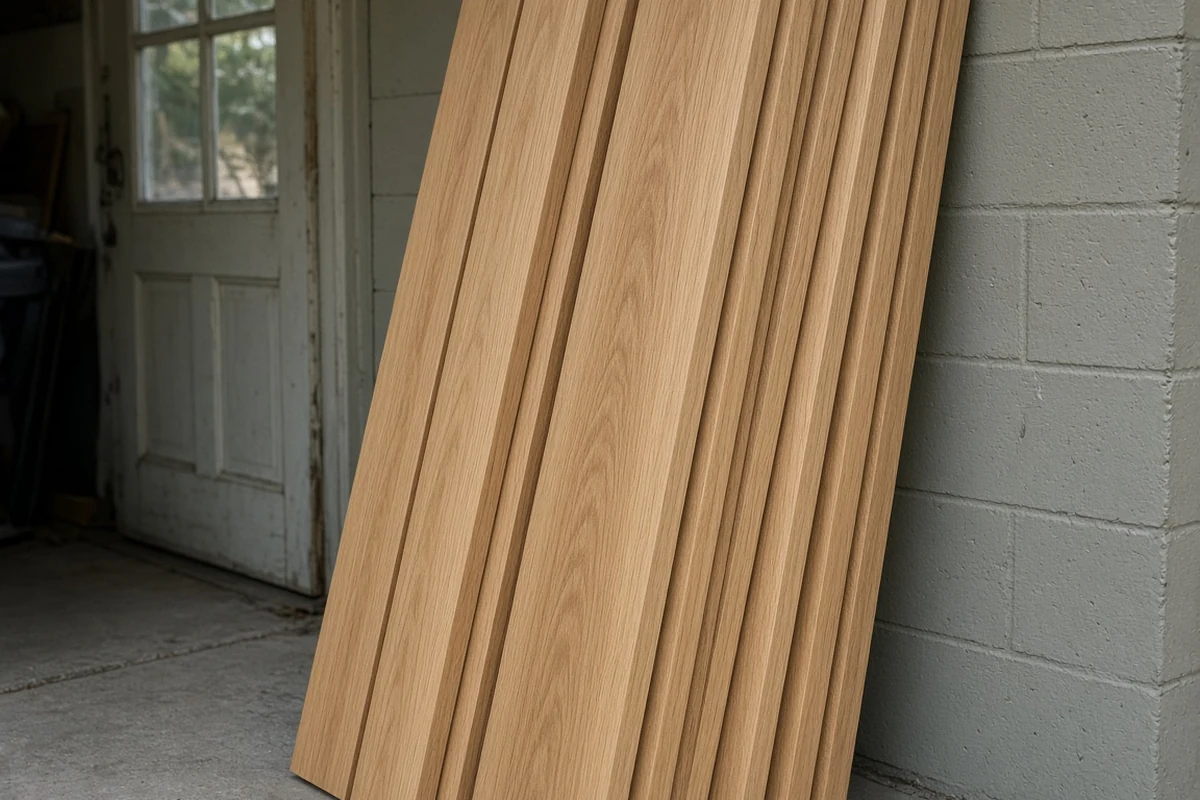
Panelling comes in several types: solid wood boards, plywood sheets with a wood-grain face and thin veneered or printed boards. Some are nailed, some are glued.
Is panelling clean wood?
Not usually. Metro Vancouver defines clean wood as solid wood, lumber and pallets that are unpainted, unstained, untreated and free of glue. Panelling that has been glued to the wall, or finished with stain or varnish, does not qualify. The City of Vancouver’s Transfer Station page says wood with glue, including plywood, particleboard, oriented strand board and laminated wood, is disposed of as garbage whether finished or not.
For our bins, glued panelling is garbage, not clean wood. Clean wood is unpainted wood only, and nails are fine. Tell us when you order if any of the wood is treated, since it needs special handling. It stays out of clean-wood and yard loads.
Plaster, drywall and debris
If you take panelling off and find plaster, lath or old drywall behind it, that is more debris. Drywall goes in its own separate bin, as long as it is date stamped 1990 or newer or has a lab report showing no asbestos. Plaster and lath go in a mixed bin only after an asbestos test comes back clear. If the surveyor finds asbestos, stop and follow the professional’s plan.
Sorting by waste type
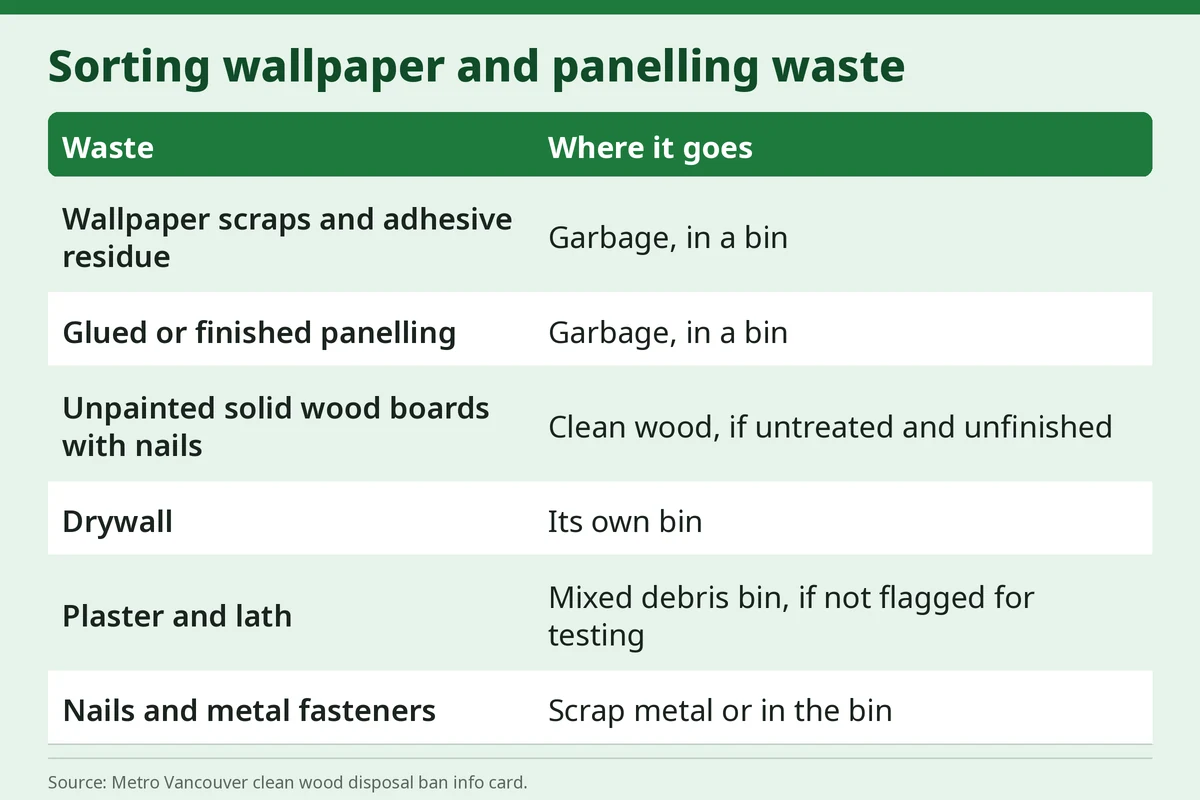
| Waste | Where it goes |
|---|---|
| Wallpaper scraps and adhesive residue | Garbage, in a bin |
| Glued or finished panelling | Garbage, in a bin |
| Unpainted solid wood boards with nails | Clean wood, if untreated and unfinished |
| Drywall | Its own bin (dated 1990 or newer, or a clear lab report) |
| Plaster and lath | Mixed debris bin, only after a clear asbestos test |
| Nails and metal fasteners | Scrap metal or in the bin |
Dust and cleanup
Scraping and prying make dust. Keep the area ventilated, wear a suitable mask and cover floors. If you suspect asbestos in the wall at any point, stop and test before you continue.
Choosing a bin
A room of panelling or wallpaper makes more waste than most people expect. Panelling is bulky and does not stack well until you break it down.
We deliver the bin, you load it, and Trash King hauls it away. The usual starting point for junk, cleanouts and renos is the 20-yard. You can read more on the 20-yard bin page. A 15-yard junk bin is sometimes available but is often sold out, so plan around the 20-yard. Ask about other smaller sizes when you book.
Permits depend on where the bin sits. Your driveway or yard is private property, so a bin there needs no permit. On the street, boulevard or lane, you need a City permit (the Township for Langley, Fort Langley and Aldergrove addresses). Your strata or HOA can still have rules of its own. The permit application goes to the City, and we time delivery to your permit dates.
Paint, propane, tires, fuel and electronics never go in a Trash King bin, and our what not to put in a bin page has the full list.
A mattress or box spring can go in as an add-on for an extra fee, so mention it when you book.
See our renovation debris page for how each material stream works.
FAQ
Do I need to test before removing wallpaper or panelling? WorkSafeBC says never to assume a building material is free of asbestos and that homeowners need to get their home tested before a renovation.
Is wood panelling clean wood? Only if it is unpainted, unstained, untreated and glue-free. Glued panelling is garbage.
Can I put wallpaper in recycling? No. Treat wallpaper scraps as garbage.
Where does drywall go? In its own separate bin, if it is date stamped 1990 or newer or has a lab report showing no asbestos.
What size bin should I order? The usual start for renos is the 20-yard. Ask about other sizes when you book.