
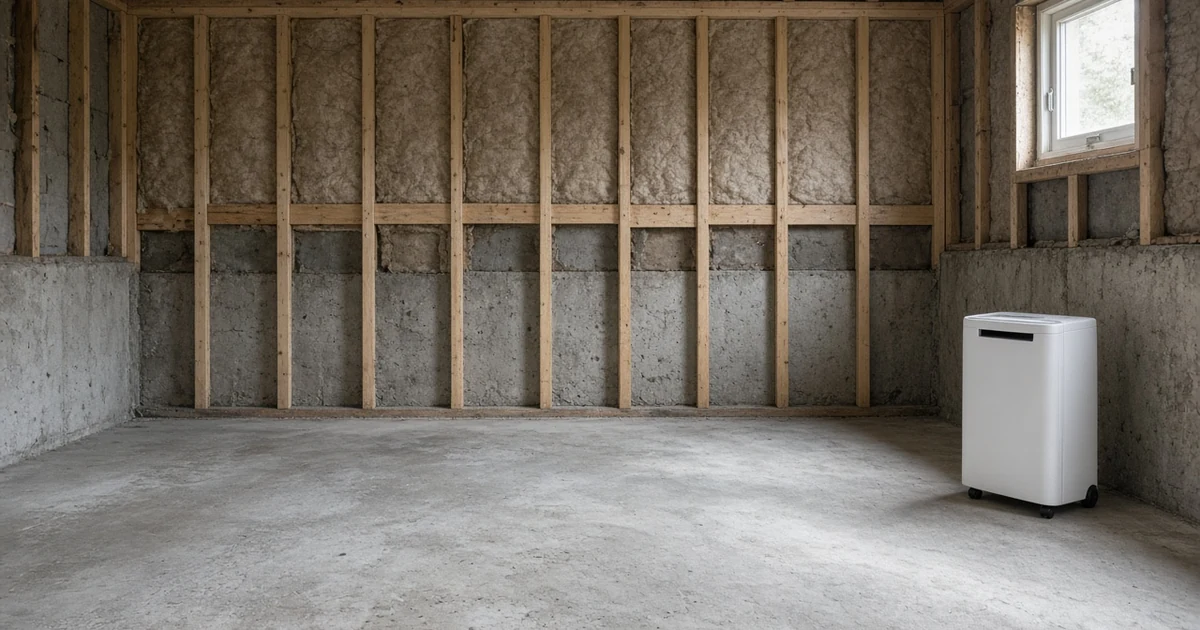
After a leak or flood, wet drywall and carpet need to come out fast. They are heavy, awkward and bulky too. This guide covers the disposal side of a cleanup: what to check first, how to sort, and how a DIY bin works when you load it yourself. It is not a restoration guide. For insurance questions, mould or contaminated water, speak with your insurer or a qualified restoration professional.
Test first for older drywall
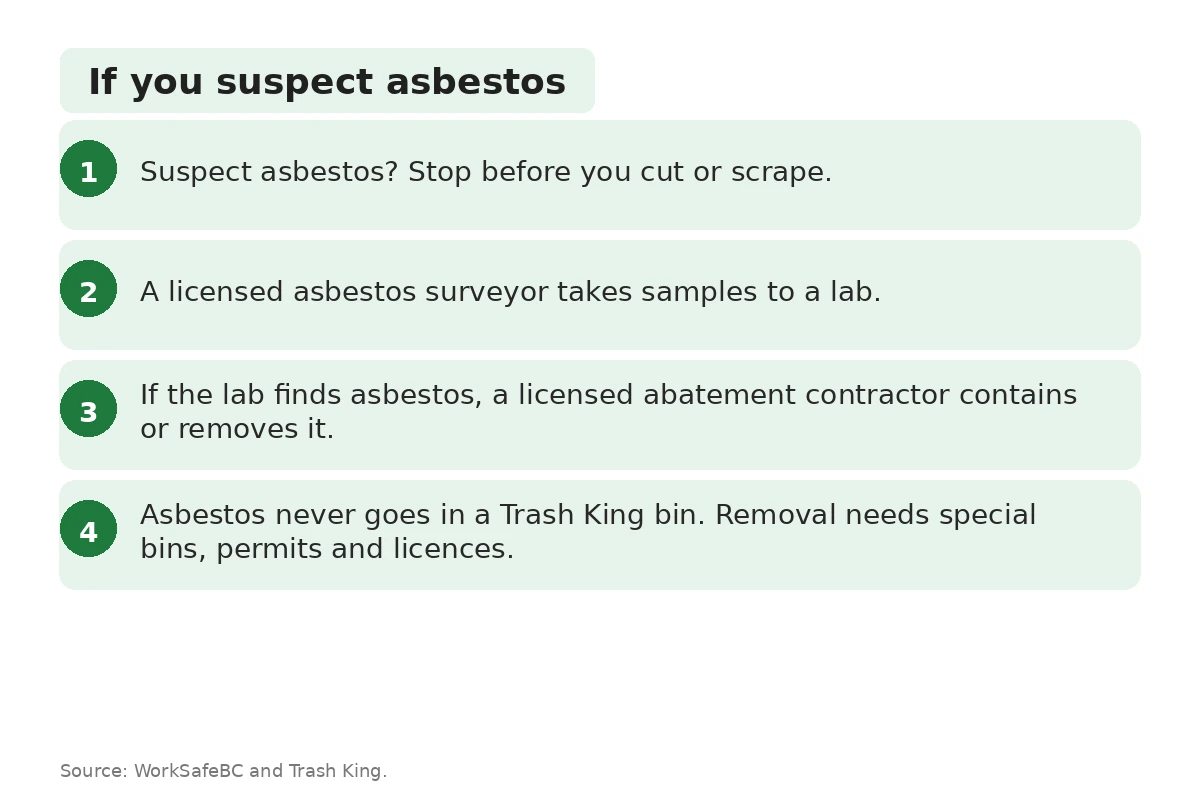
Before you cut out or scrape older drywall and textured ceilings, check what they contain. WorkSafeBC says asbestos was used in more than 3,000 building materials from the 1950s to 1990s, and it names drywall and textured ceiling coat among the materials that often contained it. It says it is hard to know whether a material contains asbestos because it is often mixed with other materials, and that newer homes can contain it if built with older materials.
WorkSafeBC says homeowners should hire a licensed asbestos surveyor, who takes samples to a lab, before a renovation or maintenance work that could disturb asbestos. If asbestos is found, a licensed abatement contractor must contain or remove it. Anyone hired to deal with asbestos in a BC home must be licensed.
Asbestos-containing material never goes in a Trash King bin. Removal needs special bins, permits and licences.
Drywall recyclers ask for proof too. New West Gypsum Recycling in New Westminster treats drywall dated before 1990, or with no date stamp, as a separate load that needs a lab report showing no asbestos. Our drywall bins follow the same line: board date stamped 1990 or newer, or older or undated board with a clear lab report.
Sorting what comes out
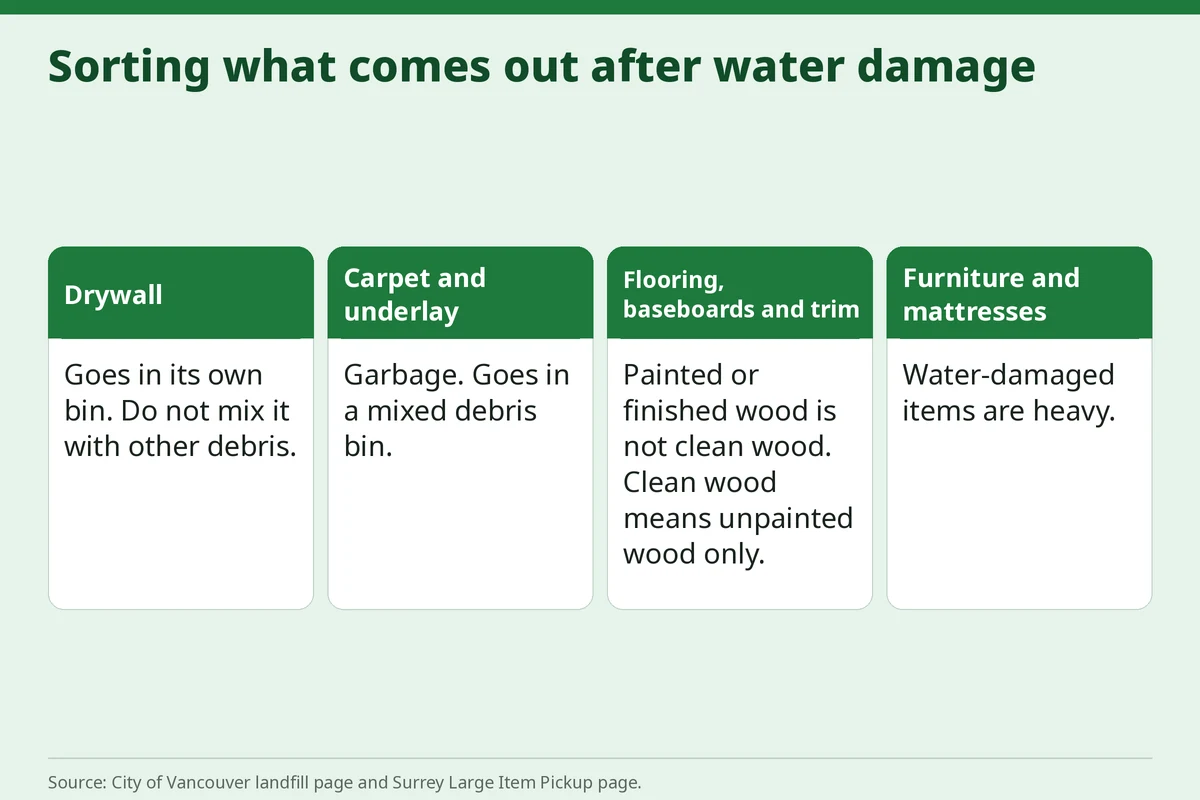
Keep materials separate as you work.
- Drywall: It goes in its own bin, if it is date stamped 1990 or newer or has a lab report showing no asbestos. See our drywall page. Do not mix it with other debris.
- Carpet and underlay: These are garbage and go in a mixed debris bin. The City of Vancouver’s pop-up recycling events do not accept carpet and rugs, and Surrey’s Large Item Pickup lists carpets and rugs as not accepted.
- Flooring, baseboards and trim: Painted or finished wood is not clean wood. Clean wood means unpainted wood only, and nails are fine.
- Furniture and mattresses: Water-damaged items are heavy. Mattresses and box springs can go in as an add-on for an extra fee, so mention them when you book.
Why wet loads are different
Wet material weighs much more than dry material, so a load of soaked drywall and carpet can reach the weight limit before the bin looks full. Our rainy-season bin tips post explains how rain and wet loads affect a bin. Remove tarps before pickup. Bins have drainage holes.
Drywall at a facility
If you plan to take drywall to a facility instead, the City of Vancouver’s landfill page says it accepts used residential drywall delivered by a resident, with a maximum of 10 bags per day and 5 days per year, and packaging requirements apply. It says used drywall from businesses and contractors is not accepted. Check the page for the current fee and policy. Metro Vancouver’s Disposal Ban Program Manual lists gypsum among the banned materials in garbage loads.
Using a DIY bin
Trash King drops off the bin and hauls it away afterward. You fill it. The 20-yard is our usual starting size for junk, cleanouts and renos. A 15-yard junk bin is sometimes available, but it is often sold out, so plan around the 20-yard. For any other smaller size, just ask when booking. Details are on the 20-yard bin page.
For a water damage job, order a bin for drywall alone if there is a lot of it, and handle the carpet and other debris separately. Break drywall into manageable pieces. Load wet material low and flat.
A bin on private property, like your driveway or yard, needs no permit. A bin on the street, boulevard or lane needs a City permit (the Township for Langley, Fort Langley and Aldergrove addresses). Strata or HOA rules may still apply on top of that. You apply with the City, and we set delivery for your permit dates.
Some items can never go in a Trash King bin: paint, propane, tires, fuel and electronics. Check our what not to put in a bin page for the full list.
A short checklist
- Document the damage and call your insurer if needed
- Test older drywall and textured material before you cut or scrape
- Keep drywall separate from other debris
- Plan for weight when loading wet material
- Order the bin before the demolition starts
FAQ
Does drywall go in the same bin as carpet? No. Carpet goes with mixed debris and drywall gets a bin of its own. Our drywall bins take board date stamped 1990 or newer, or older or undated board with a lab report showing no asbestos.
Do I need to test drywall before removing it? WorkSafeBC says homeowners should test for asbestos before a renovation, and it names drywall and textured ceiling coat among materials that often contained asbestos. To go in one of our drywall bins, older or undated board needs a lab report showing no asbestos.
Can I take drywall to the landfill? The City of Vancouver lists limited drop-off of used residential drywall by residents, with packaging requirements.
Which bin size should I start with? The 20-yard is the usual start for renos and cleanouts. Ask about other sizes when you book.