
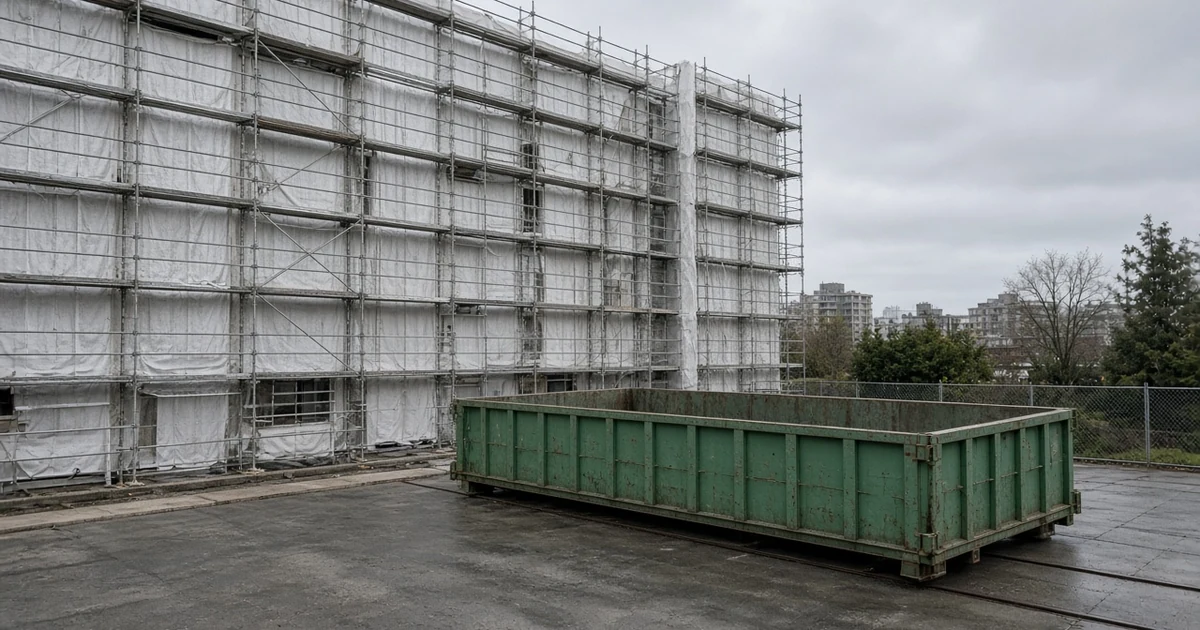
A building envelope project or a re-roof can run for months. Waste builds up on the site the whole time, and decisions about it get made early, usually before the first panel comes off. A short waste plan helps a strata council and its property manager avoid delays, surprise costs and unsafe handling.
Test for asbestos before work starts
WorkSafeBC says that if you are a homeowner, strata council or property manager, you need to get the building tested for asbestos before a renovation or demolition project, or before maintenance work that could disturb asbestos. A licensed surveyor takes samples and gets a lab report. If asbestos is found, a licensed abatement contractor contains or removes it before the work continues.
Asbestos was used in more than 3,000 building materials from the 1950s to the 1990s, according to WorkSafeBC. Do not assume a newer building is clear. Asbestos is the licensed contractor’s job, and it never goes in a Trash King bin. Removal needs special bins, permits and licences.
Decide who handles each material
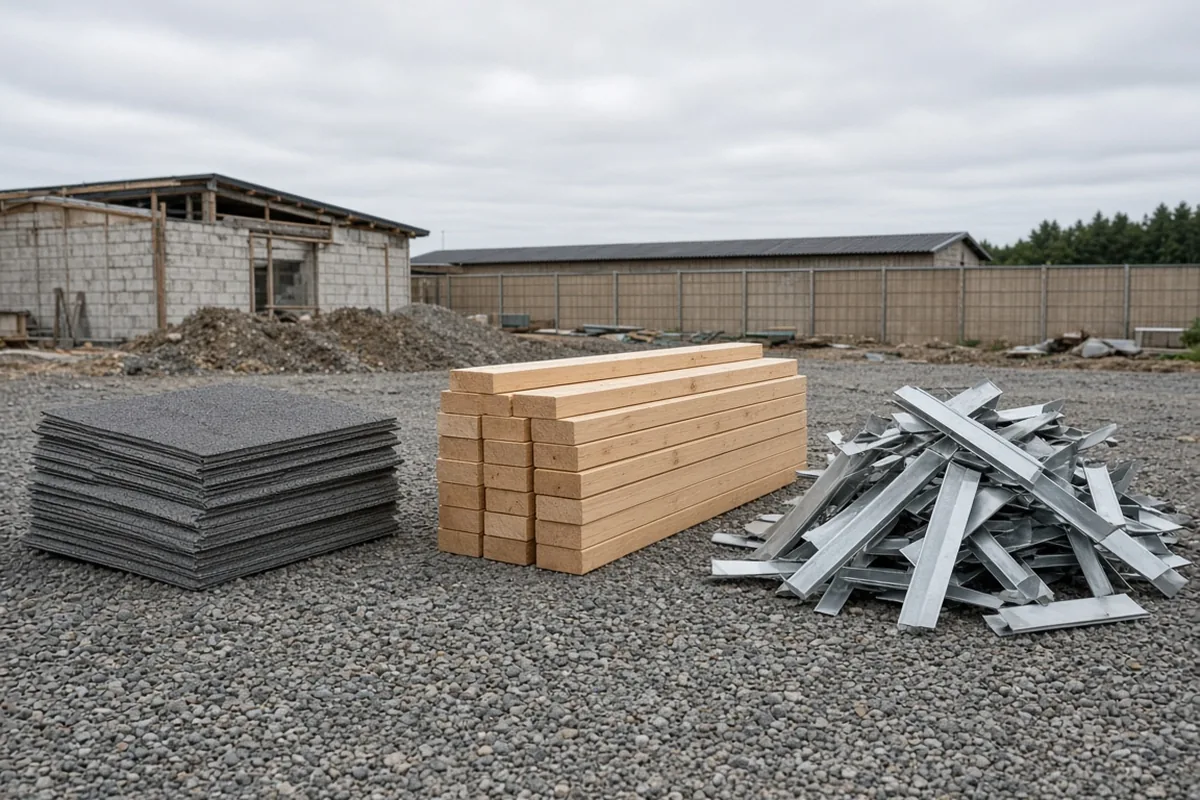
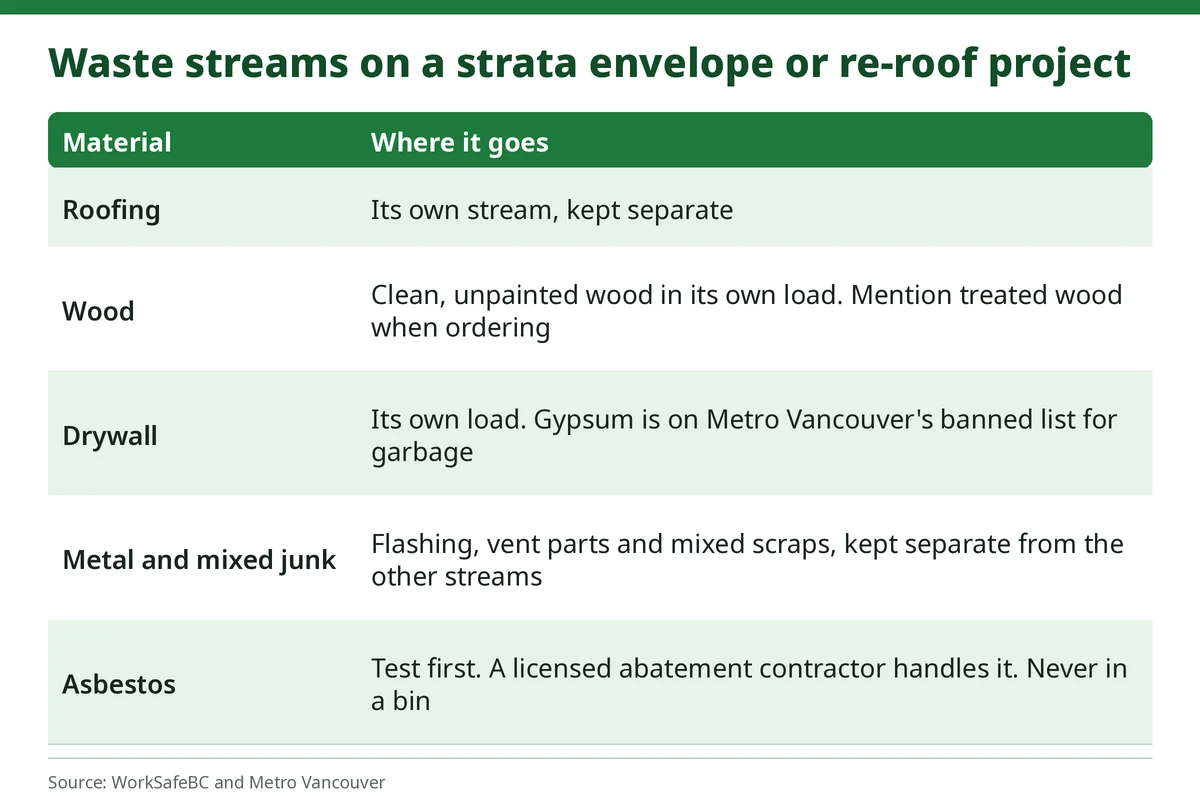
Envelope and roofing projects produce different waste streams. A basic list helps:
- Roofing. Old roofing from a re-roof is its own stream. See our guide to roofing tear-off debris and our roofing page.
- Wood. Clean, unpainted wood goes in its own load. Treated wood needs special handling and should be mentioned when ordering.
- Drywall. Gypsum is on Metro Vancouver’s banned list for garbage, so it needs its own bin. Our drywall bins take board date stamped 1990 or newer, or older or undated board with a lab report showing no asbestos.
- Metal and mixed junk. Flashing, vent parts and mixed scraps can go in a junk bin, kept separate from the streams above.
Metro Vancouver’s disposal bans apply at its disposal facilities, and a load with banned material can attract a surcharge. Our disposal bans post covers how that works.
Plan bin sizes and timing
For a large project, the junk bins are the 20, 30 and 40-yard sizes. A 15-yard bin is also available, but it is often sold out, so a larger size is the safer plan. Our bins are drop-off. We deliver the bin, the contractor loads it, and we haul it away when it is full. Ask your contractor how often loads need to be swapped and where the bin can sit.
If the bin has to go on the street or a lane, the strata or contractor applies to the City for a permit, and strata or HOA rules can also apply. Putting the bin on the property’s own lot needs no permit. Tell us the permit dates and we time the delivery to match.
Keep the work site safe
Bins near an active site need clear access for the truck and a spot that does not block the fire lane or a neighbour. The contractor and the property manager should agree on a location before the first delivery.
For more on how we work with buildings, see our commercial services page, and our post on strata cleanup days for smaller, one-day cleanups.
FAQ
Does a strata need an asbestos test before a re-roof? WorkSafeBC says strata councils and property managers should have the building tested before renovation, demolition or maintenance that could disturb asbestos.
What bin sizes suit a large envelope project? The 20, 30 and 40-yard junk bins. Ask about availability and the best fit when you book.
Can drywall go in the same bin as other waste? No. Drywall goes in its own bin, and older or undated board needs a lab report showing no asbestos.
Does the strata need a permit for a street bin? The City requires a permit for a bin on the street or lane. A bin on the property’s own lot does not.