
Replacing windows and doors leaves a pile of frames, glass and trim. Each material goes somewhere different, and old windows can hide older materials around them. This guide covers what to check first, how to sort frames and glass, and when a bin helps. For the wider renovation picture, see our renovation debris page.
Test first
Before you pry out old windows or scrape old window putty, find out what is in them. WorkSafeBC says asbestos was used in more than 3,000 building materials from the 1950s to 1990s, and it names window putty among the materials that often contained it. It says it is hard to tell if a material contains asbestos because it is often mixed with other materials, and it says newer homes can also contain asbestos if built with older materials.
WorkSafeBC says homeowners should hire a licensed asbestos surveyor, who takes samples and sends them to a lab for testing, before a renovation. If asbestos is found, a licensed abatement contractor must contain or remove it. Anyone hired to deal with asbestos in a BC home must be licensed. Ask the surveyor to include window putty in the samples.
Asbestos containing material never goes in a Trash King bin.
Reuse first
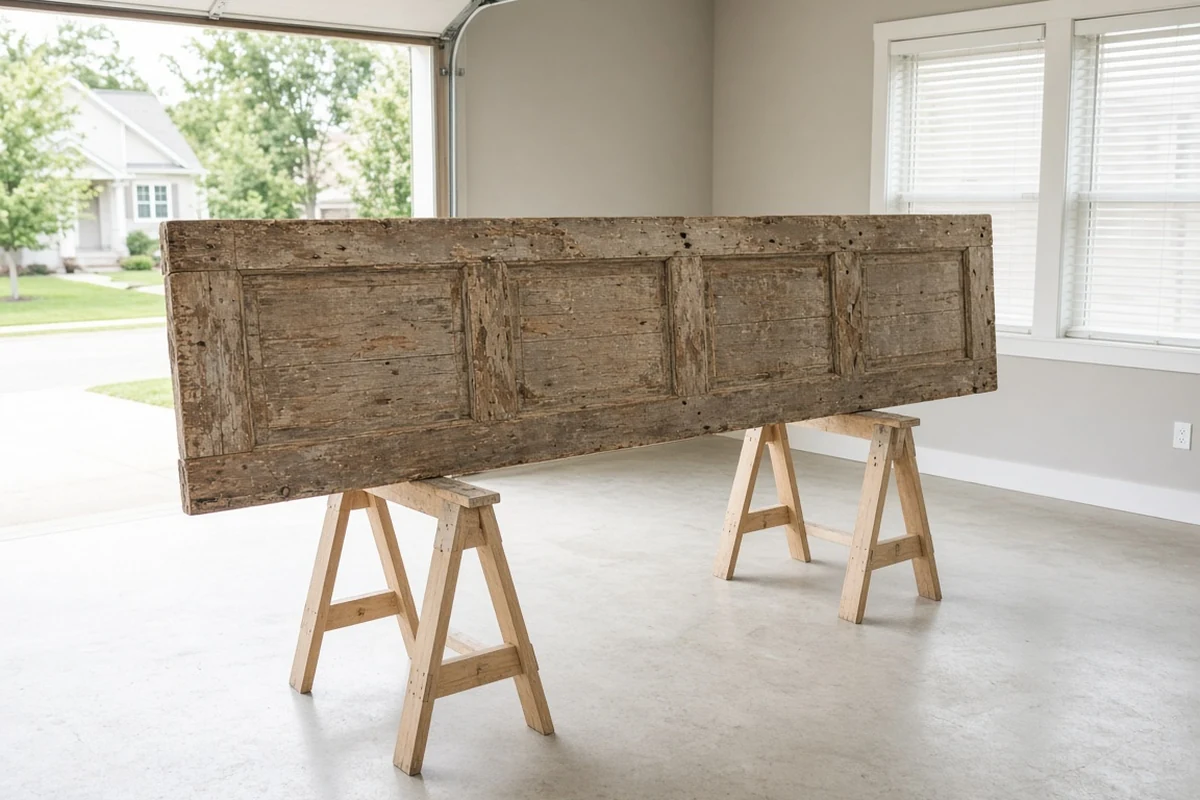
Windows and doors in good condition may be reusable. The City of Vancouver says The Rebuild Hub, a Habitat for Humanity program, offers a place to donate and source salvaged materials, and that it confirms in advance which materials it can accept. Our renovation debris page covers the wider picture. Contact the receiver before you take anything out, so you can remove it carefully.
Glass
Old window glass is not bottle glass. Recycle BC's glass page lists whole or broken window glass and mirrors as not accepted in glass recycling, which is for clear and coloured glass bottles and jars. Our glass recycling page covers what does belong there.
Some cities also do not take windows in their bulky item programs. New Westminster's Special Pick Up lists doors and windows as renovation materials not accepted, and Surrey's Large Item Pickup lists windows, doors and door frames as home renovation material it does not accept.
For broken or loose glass, wrap it, tape it and label the bundle so that anyone handling it knows what is inside. If you are doing the work yourself, wear gloves and eye protection.
Frames
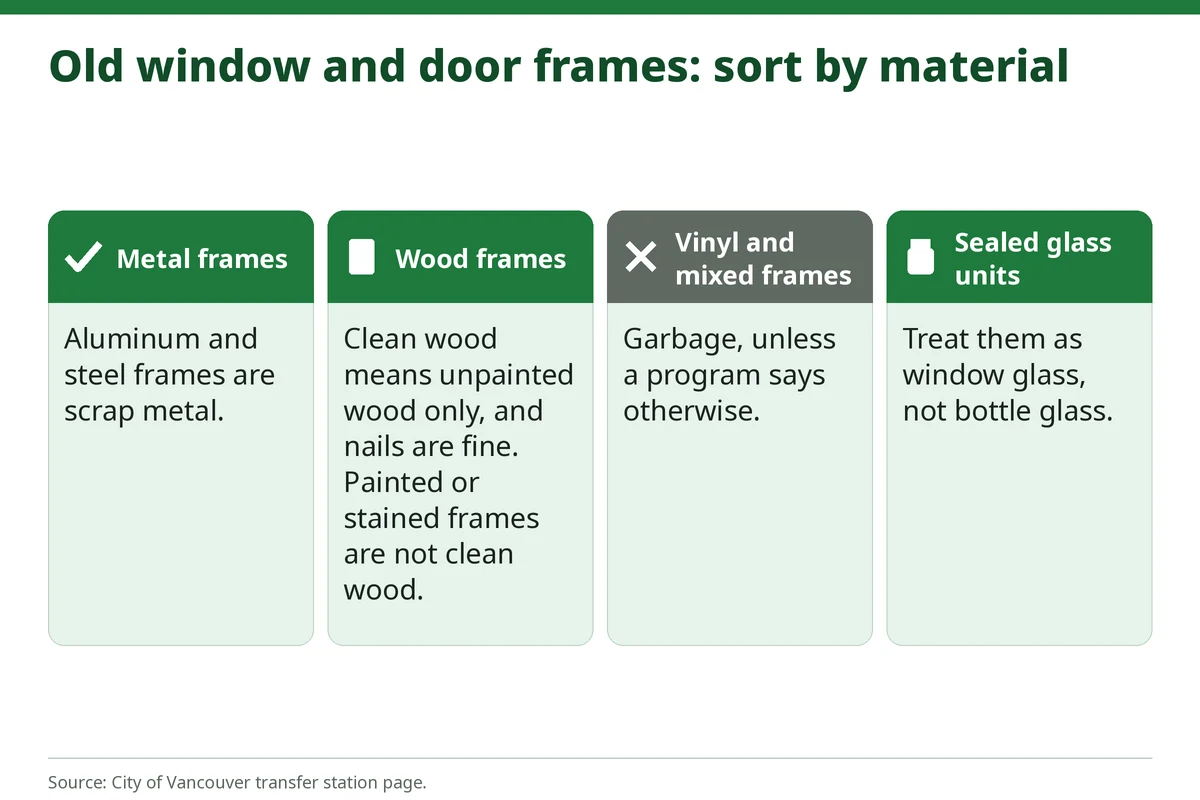
- Metal frames: Aluminum and steel frames are scrap metal. The City of Vancouver's Zero Waste Centre lists scrap metal as accepted for free residential drop off. Check your facility first.
- Wood frames: Clean wood means unpainted wood only, and nails are fine. Most old window and door frames are painted or stained, so they are not clean wood. At the City of Vancouver's transfer station, wood that has been painted, stained or treated is disposed of as garbage. Treated wood needs special handling, so mention it when you order a bin. It stays out of clean wood and yard loads.
- Vinyl and mixed frames: These are garbage unless a program says otherwise. Ask a facility before you assume.
- Sealed glass units: These combine glass, spacers and sealant. Treat them as window glass, not bottle glass.
Doors
Solid interior doors, exterior doors and screen doors follow the same logic. Reuse if possible. Metal doors can go to scrap. Painted wood doors are garbage unless a facility says otherwise.
Using a DIY bin
For a whole house window or door project, a bin saves trips.
Trash King delivers the bin and hauls it away, and you load it. Many people planning junk, cleanouts and renos begin with the 20-yard. The 15-yard junk bin is at times available, but it is commonly sold out, so plan around the 20-yard. Ask when you book about other smaller sizes. More is on the 20-yard bin page.
Wrap glass, place it flat and stack frames on top of heavier items. Drywall goes in its own bin, and so do concrete and dirt.
Where the bin goes decides the paperwork. A bin on your own driveway or yard takes no permit, since that is private property. If the bin has to sit on the street, boulevard or lane, some cities need a permit, so confirm with your City first. Check any strata or HOA rules as well, since they can still apply. If yours does, the permit application goes to the City, and we time delivery to any permit dates.
Leave paint, propane, tires, fuel and electronics out of the bin. They never go in a Trash King bin. Our what not to put in a bin page lists the rest.
A mattress or box spring can go in as an add on for an extra fee, so mention it when you book.
FAQ
Can I put old window glass in glass recycling? No. Recycle BC lists window glass as not accepted.
Do I need to test old window putty? WorkSafeBC says homeowners should test before a renovation, and it names window putty among materials that often contained asbestos.
Are old wood frames clean wood? Only if they are unpainted. Most are not.
Which bin size should I start with? For renos, the 20-yard is the common start. Other sizes? Ask when booking.