
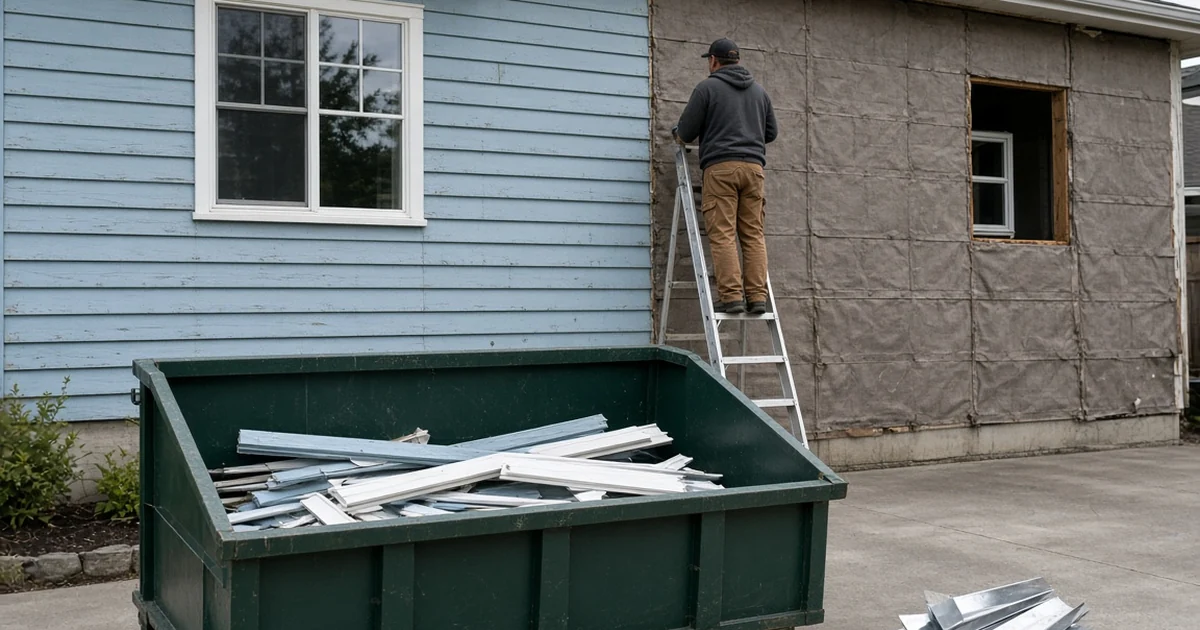
New siding changes how a house looks and how it holds up to West Coast rain. The old siding has to go somewhere first. Vinyl, cedar and stucco each come off differently and load differently, and some older siding needs a test before anyone touches it.
Go through each type below, then plan the bin. You or your crew do the stripping and loading, and our truck handles the drop-off and pickup.
Test first: asbestos in older siding and stucco
WorkSafeBC’s guide to asbestos in older homes lists several exterior materials that can contain it:
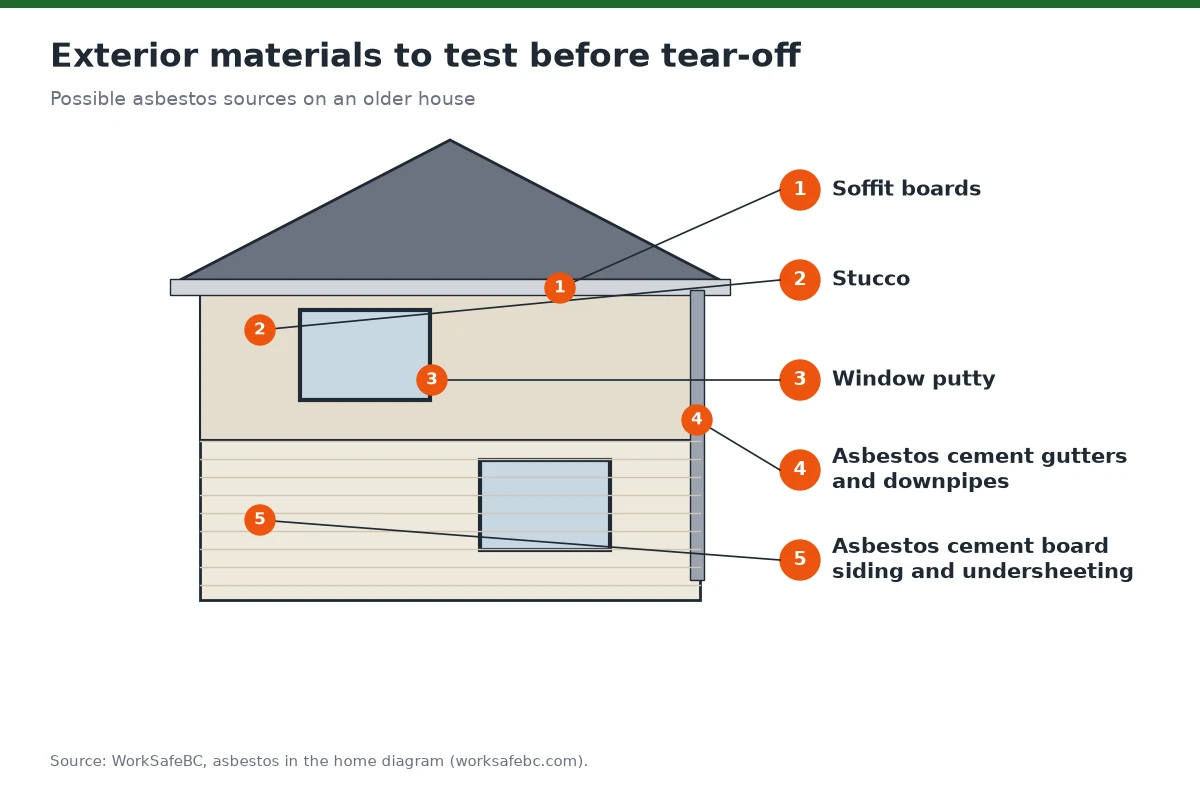
- Stucco
- Asbestos cement board siding and undersheeting, sometimes called transite
- Soffit boards
- Roof gutters and downpipes made of asbestos cement
- Window putty
WorkSafeBC says a home built before 1990 is likely to contain some asbestos, and newer homes can too if older materials were used. You can’t tell by looking. Hire a licensed asbestos surveyor to test before any tear-off or reno starts. If the test finds asbestos, a licensed asbestos abatement contractor removes it. Don’t load anything from the tear-off until the report is back and the abatement is done.
Check the permit side
Re-siding can affect the building envelope, especially if the sheathing, windows or flashing change too. Ask your city whether your project needs a building permit before work starts. If the bin has to sit on the street, check your city’s street-use permit as well. Rules and timelines change often.
Know what’s coming off
Vinyl siding
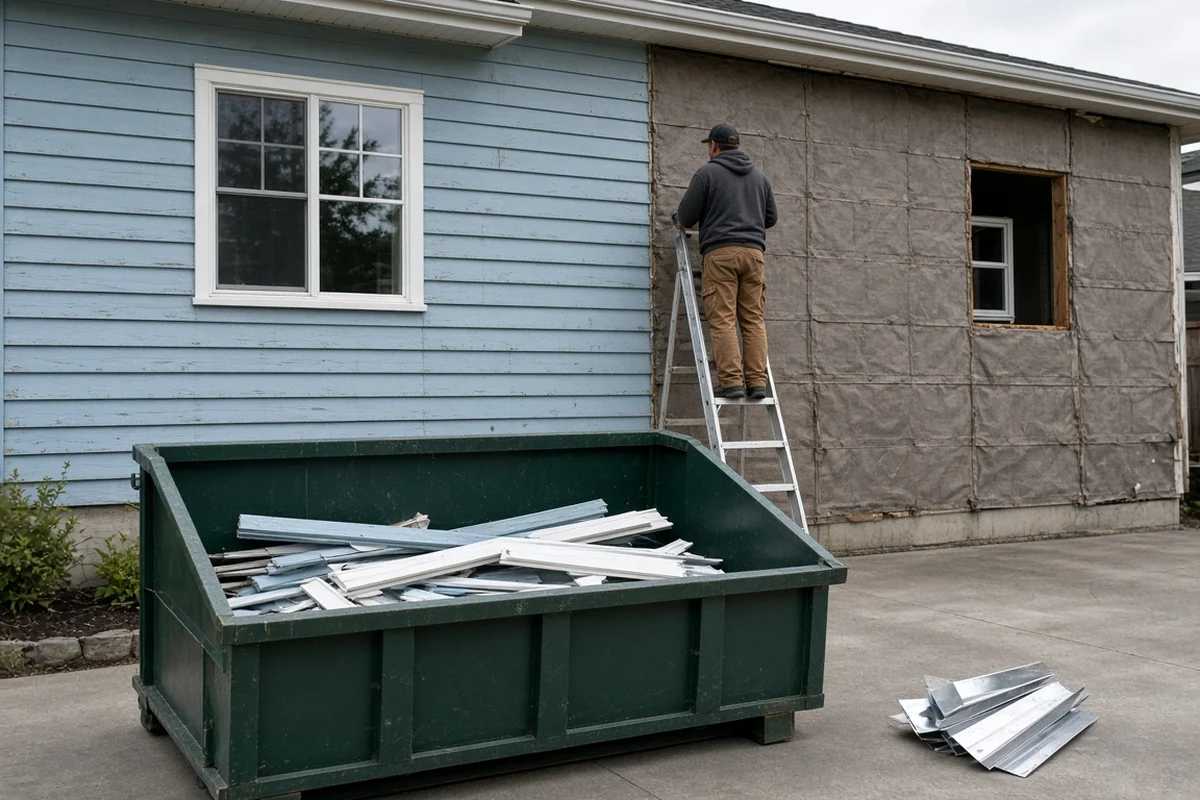
Vinyl is light and bulky. Long pieces take up space fast if they go in at angles. Cut or snap them into shorter lengths and stack them flat in one direction.
Cedar siding
Cedar shingles and bevel siding are common on older Metro Vancouver homes. Most are painted or stained after years of weather. Metro Vancouver defines clean wood as unpainted, unstained and untreated, with no glues or resins. Painted or stained cedar doesn’t meet that definition, but it can go in your mixed bin. Tell us about treated or painted wood when you book, since it needs special handling. See our wood page and tell us what’s on the cedar when you book.
Stucco
Stucco is cement-based and heavy. A stucco tear-off can reach a bin’s weight limit before the bin looks full. Test it first, then tell us it’s stucco when you book. Heavy stucco goes in its own bin, or in a 15-yard filled only partway.
Fibre cement and older cement board
Newer fibre-cement siding is heavy and brittle. Older cement board may be asbestos cement, so it’s on the test-first list above.
Metal: aluminum siding, flashing and trim
Aluminum siding, flashing, J-channel and gutters can go in a separate metal pile. Clean scrap metal is often easier to recycle when it’s kept apart. Our metal recycling page covers metal loads.
What else comes off the wall
Behind the siding you’ll find building paper or housewrap, strapping, sometimes old insulation and a lot of nails. Bag loose paper and wrap so it doesn’t blow around. Have older insulation tested before you disturb or bag it, then keep it in its own bags. WorkSafeBC lists vermiculite and other insulation among possible asbestos sources too.
Sweep for nails with a magnet every evening. Siding nails end up in the lawn, the driveway and the tires of anyone who parks nearby.
Sort as you tear off
Work one side of the house at a time and keep piles separate:
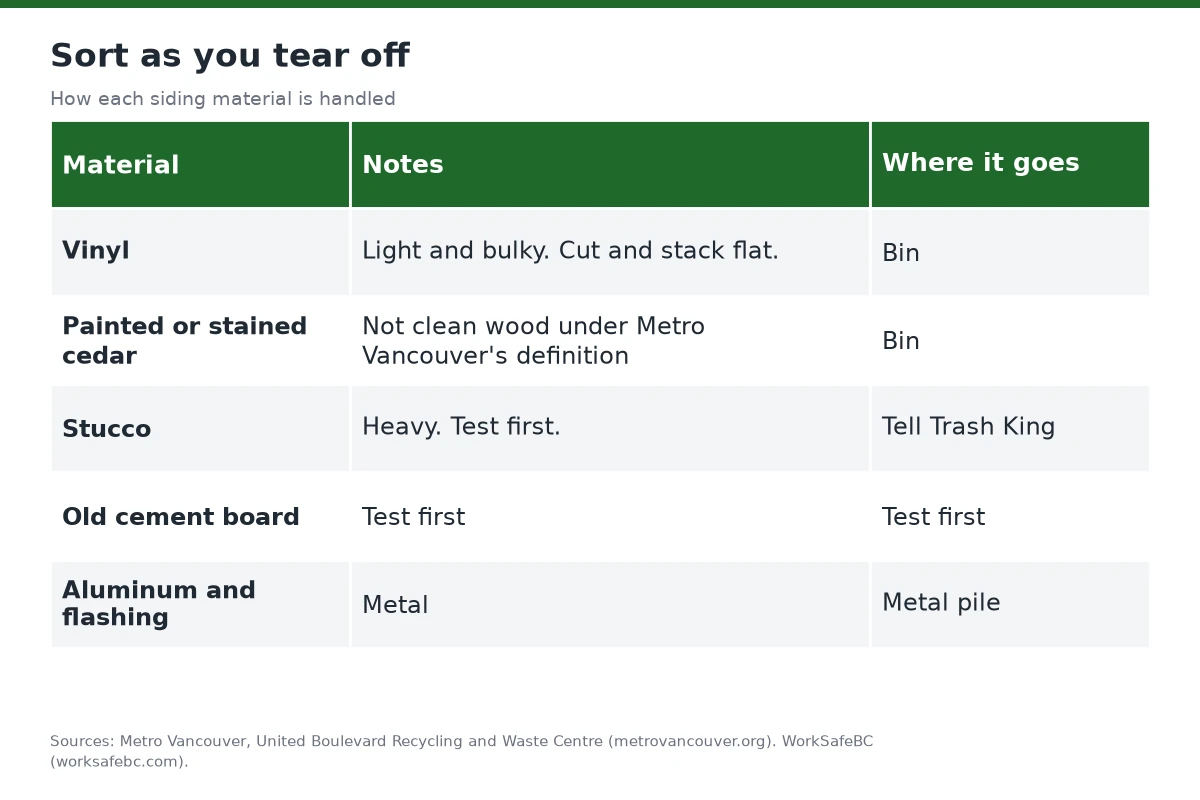
- Vinyl and general debris in the bin
- Painted cedar in the bin, stacked flat
- Stucco in its own load or low in the bin, as you discussed when booking
- Metal in a separate pile
- Anything not yet tested set aside until the report is back
Paint, propane, fuel and tires never go in the bin. Leftover exterior paint and stain go to a Product Care Recycling drop-off.
Plan the bin
Tell us:
- The siding type, or each type if there’s more than one
- Roughly how many walls you’re stripping
- Whether stucco or cement board is involved
- Where the bin can sit, and what’s overhead
For siding waste, bins come in 15, 20, 30 and 40 yards, and concrete goes in its own 10 or 12-yard. Sizes are approximate. Light, bulky vinyl and cedar suit a mid-size bin. Heavy stucco goes in its own bin, or in a 15-yard filled only partway, so tell us when you book. Call 604-433-5865 and we’ll help you match the size to the material. Our renovation debris page has more on reno loads, and our post on what renovation debris can go in a disposal bin covers the inside of the house.
Place the bin near the work
Siding jobs move around the house. Put the bin where you can reach it from most elevations without carrying long pieces past windows and cars. Keep it clear of scaffolding and ladders. Our roll-off prep checklist covers driveway prep and access.
FAQ
Can old stucco go in a disposal bin?
Only after it’s been tested for asbestos. WorkSafeBC lists stucco as a possible asbestos source. Once it’s cleared, tell us it’s stucco when you book, since it’s heavy.
Is vinyl siding heavy?
No, it’s light but bulky. Cut it shorter and stack it flat to save space.
Is painted cedar siding clean wood?
No. Metro Vancouver defines clean wood as unpainted, unstained and untreated. Painted cedar can go in your mixed bin. Tell us about it when you book, since painted wood needs special handling.
Do I need a permit to replace siding?
Ask your City about a building permit before work starts, especially if the sheathing, windows or flashing change. Rules and timelines change often.
Does Trash King remove the siding?
No. That’s work for you or your contractor. We deliver the bin and haul the load.
Sources
- WorkSafeBC, Asbestos hazards when renovating older homes (stucco, asbestos cement board siding and undersheeting, soffit boards, asbestos cement gutters and downpipes, window putty, vermiculite insulation): https://www.worksafebc.com/~/media/F9B18996A8E94660B81D8921487C0F35.ashx (checked 2026-10-30)
- WorkSafeBC, Asbestos campaign for homeowners (homes before 1990 likely to contain asbestos, newer homes can too, test first): https://www.worksafebc.com/en/about-us/news-events/campaigns/asbestos
- Metro Vancouver, United Boulevard Recycling and Waste Centre (clean wood definition: no glues or resins, unpainted, unstained and untreated): https://metrovancouver.org/services/solid-waste/united-boulevard-recycling-and-waste-centre (checked 2026-10-30)
- Trash King, Household garbage (siding listed as an accepted item): https://trashking.ca/household-garbage/ (checked 2026-10-30)
- Trash King, Renovation debris: https://trashking.ca/renovation-debris/ (checked 2026-10-30)
- Trash King, Disposal bins (dense materials can hit weight limits first, a smaller bin is often safer): https://trashking.ca/disposal-bins/ (checked 2026-10-30)
- Trash King, Wood and Metal recycling pages: https://trashking.ca/wood/ and https://trashking.ca/metal-recycling/ (checked 2026-10-30)
- Product Care Recycling, paint in B.C.: https://www.productcare.org/products/paint/british-columbia/