
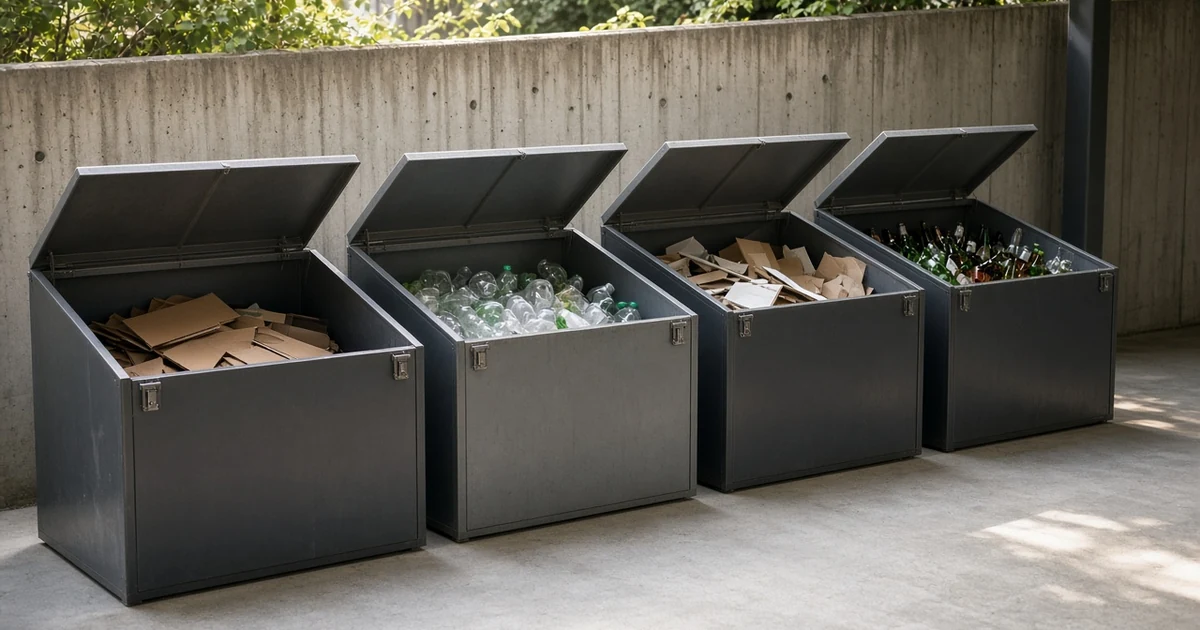
If you are clearing out a closet, a garage or a whole apartment in Vancouver, two City services can take a lot of it off your hands for free. The Vancouver Zero Waste Centre is open seven days a week for residents, except on Christmas Day and New Year’s Day. Pop-up recycling events come to different neighbourhoods and take a set list of reuse and recycling items. Both are sorted by material, and both have clear limits. This guide covers what each one takes, what they turn away, and where a disposal bin fits when the pile is bigger than a few car trips.
The Vancouver Zero Waste Centre
The City of Vancouver describes the Zero Waste Centre as a place for residents to drop off many kinds of material for reuse and recycling, free of charge. It sits at 8588 Yukon Street. Recycling drop-off there is for residential customers only, so it is not a stop for a business clearing out a unit.
According to the City's page, hours are Monday to Saturday from 8am to 6pm and Sunday from 9am to 6pm. The centre is closed on Christmas Day and New Year's Day, and other statutory holidays run 9am to 5pm unless the City notes otherwise. Hours can change, so check the City page before you load the car.
The City also asks you to drop garbage at the Vancouver South Transfer Station before you go to the Zero Waste Centre, and it warns about left turn restrictions on Kent Avenue North.
What the Zero Waste Centre accepts for free
The City's list is long. It includes bicycles and accessories, books, flattened cardboard, cell phones, clothing and textiles, electronics, small appliances and power tools, fire extinguishers, fluorescent bulbs and tubes, flexible plastics, foam packaging, glass bottles and jars, household batteries, large appliances such as fridges, freezers and air conditioners, lawnmowers, lead acid car and truck batteries, scrap metal, propane tanks, smoke and carbon monoxide alarms and thermostats.
Some items come with limits. The City lists a maximum of 5 large items for electronics, small appliances and power tools. Fire extinguishers are limited to 2 per day per resident. Cooking oil is limited to 10 litres per day per resident. Propane tanks are limited to 4 disposable and 2 refillable. For lawnmowers, the City says to remove the battery and drain the gasoline and oil first.
Books come with a note too. Outdated textbooks and old encyclopedias are not accepted.
Pop-up and mini pop-up recycling events
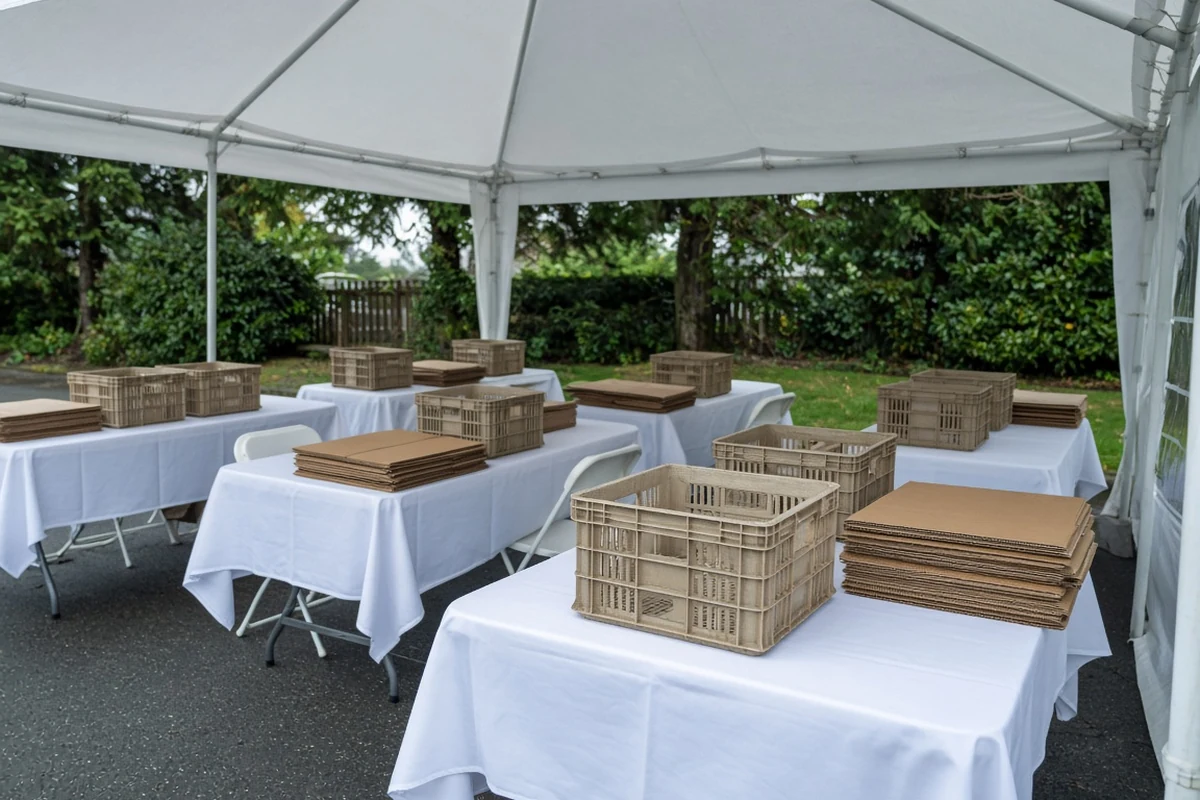
The City's term for these is pop-up recycling events. The City page title is "Pop-up and mini pop-up recycling events." They are meant to help keep useful items out of the landfill, and the City suggests you clean out your closet or garage and bring old, broken or unwanted electronics and other items.
A few rules from the City's guidelines are worth knowing before you go:
- Pre-sort your items into the accepted categories. Unsorted and unacceptable items will not be collected.
- Bring only accepted items. Items in their original packaging can stay in it.
- Expect lineups, because the events can be very busy.
- If you are carrying heavy items, lift carefully and ask event staff for help.
Dates and locations change. The City page is the only place that shows the current schedule, so check it for dates. Never assume an event repeats on the same day each month.
Accepted at pop-up events
For reuse, the City lists items such as accessories, bags and backpacks, bedding, bicycles in good condition, books, CDs, DVDs and Blu-ray discs, clothing, computers, laptops and monitors, curtains, clean and dry flexible plastics, shoes, towels and video game systems.
For recycling, it lists items such as charging cables, computer peripherals, e-bike, scooter, skateboard and hoverboard batteries, TVs and other electronics, household batteries, ink and toner cartridges, light bulbs, light fixtures, phones, power tools, small household appliances and smoke and CO alarms.
Clothing and textiles have their own rules. They need to be washed, dried and tied in a bag. Items that are wet, mildewed, contaminated, stained with oil or paint, infested or not in a bag will not be accepted.
Mini pop-up events
Mini events take a shorter list of small items. The City lists books, cell phones, disposable razors, e-bike and scooter batteries, flexible plastics, household batteries (5 kg maximum, no car batteries), ink and toner cartridges, light bulbs (no light tubes), pens and markers, smoke and carbon monoxide detectors and thermostats.
What pop-up events do not take
This is where many cleanouts get stuck. The City says pop-up recycling events do not currently accept:
- Construction materials, such as drywall and wood
- Furniture and large or bulky items
- Mattresses and box springs
- Carpet and rugs
- Sinks, toilets and bathtubs
- Lawnmowers
- Tires, propane tanks and used oil
- Hazardous waste and pharmaceutical products
- Toys, suitcases, planter pots, plastic storage containers and Styrofoam
If your pile is mostly on that list, an event will not help. Plan another route.
Repair and donate first
The City also points to local non-profits for items that still work. Its page names reBOOT Canada and BC Technology for Learning Society for computers, BabyGoRound, Repair Cafe SPEC and the Vancouver Tool Library. If a toaster or a drill can be fixed or reused, that is usually the best outcome.
Other programs behind the events
Many of the items at pop-up events are covered by Extended Producer Responsibility programs. The City lists Encorp for electronics and small appliances, Recycle Your Batteries Canada for household batteries, LightRecycle for bulbs and fixtures and Product Care for smoke and CO alarms. If you cannot get to an event, those programs have their own drop-off locations.
When a disposal bin makes more sense
The Zero Waste Centre and the pop-up events are built for sorted, smaller loads. They do not take the bulk of a real cleanout, like old furniture, a torn-up carpet, drywall scraps or a pile of mixed junk. For that kind of job, a bin is the bigger-job option. Our dump run versus bin rental guide compares a facility trip with a bin.
The usual starting point for junk and cleanouts is the 20-yard. Our 20-yard bin page has the details. A 15-yard junk bin is sometimes available, though it is often sold out, so plan around the 20-yard. Other smaller sizes are a question for when you book. We deliver the bin and haul it away. You handle the loading. If the job sounds bigger when you call, we may suggest a larger bin.
Mattresses and box springs are an add-on with an extra fee, so mention them when you book.
Some things never go in a Trash King bin: paint, propane, tires, fuel and electronics, plus the other items on our what not to put in a bin page. Take those to the right take-back program, or check the Zero Waste Centre and event lists first.
Your driveway or yard is private property, so a bin there needs no permit. If the bin goes on the street, boulevard or lane, you need a City permit. Strata or HOA rules can still apply. You apply with the City, and we set delivery for your permit dates.
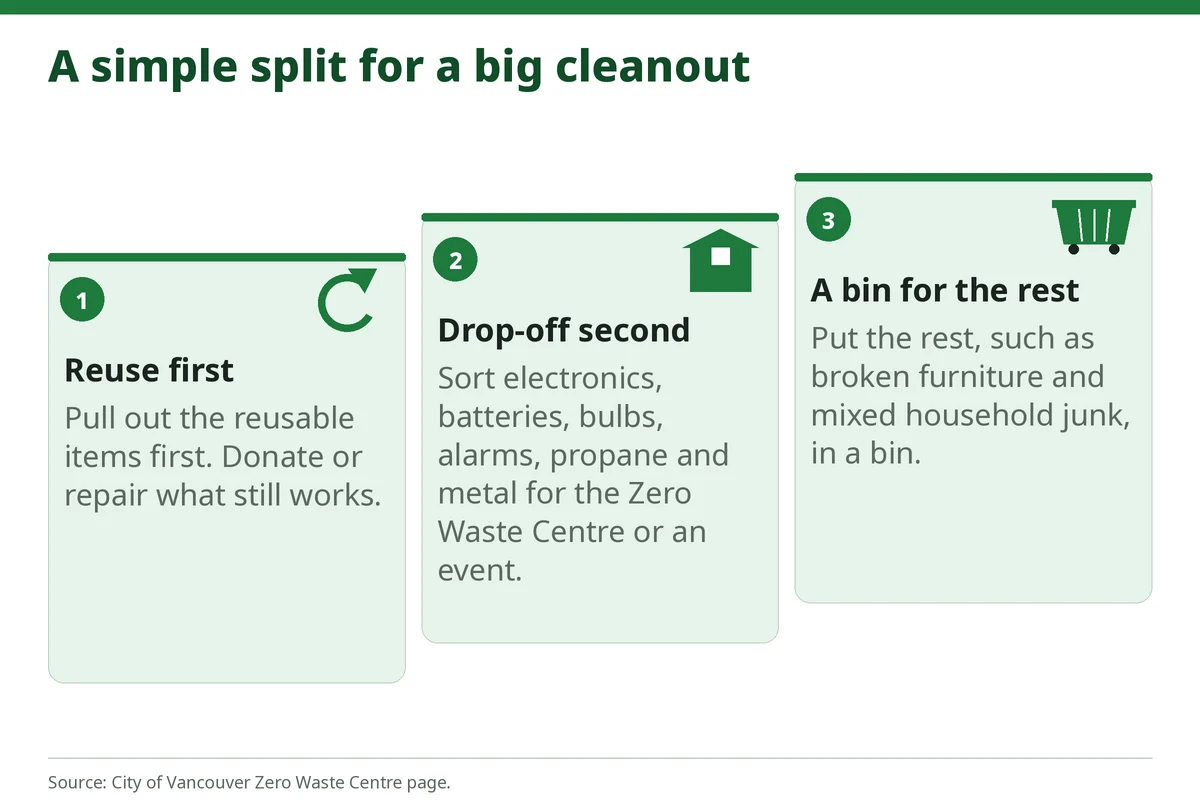
A simple split for a big cleanout
- Pull out the reusable items first. Donate or repair what still works.
- Sort electronics, batteries, bulbs, alarms, propane and metal for the Zero Waste Centre or an event.
- Put the rest, such as broken furniture and mixed household junk, in a bin.
Our Greater Vancouver page and household garbage page cover the bin side of the plan.
FAQ
Can businesses use the Vancouver Zero Waste Centre? No. The City says recycling drop-off at the Zero Waste Centre is for residential customers only.
Are the Zero Waste Centre and pop-up events free? The City describes the Zero Waste Centre drop-off as free of charge for the materials on its accepted list, and says fees apply to some items at the Transfer Station, such as mattresses. Check the City page for the current list.
Do pop-up recycling events take furniture or mattresses? No. The City lists furniture, large or bulky items, mattresses and box springs as not accepted.
When is the next pop-up recycling event? Check the City of Vancouver page. We do not list dates because they change.
What goes in a disposal bin instead? Bulky household junk, broken furniture and similar non-hazardous items go in a bin. Hazardous items, electronics, propane and tires do not.