

Waste Reduction Week in Canada is a good prompt to look at what your household throws out. The idea is simple. Use what you have, fix what breaks, pass on what still works and recycle the rest the right way. This guide shares practical, low effort ways to do that in Metro Vancouver, and points to the official places that help.
What Waste Reduction Week is
The Recycling Council of British Columbia (RCBC) explains that Waste Reduction Week has been a long standing Canadian campaign, and that since 2022 it has been expanded to celebrate the circular economy for the whole month of October. RCBC says it continues to recognize Waste Reduction Week in the third week of October. It describes a circular economy as a system where we make the greatest use of the materials and resources we already have, prioritizing reuse, repair and remanufacture, with recycling as one of those processes.
Check RCBC's page for the exact dates each year.
Step 1: Start with what you already own
Before you buy or toss anything, ask three questions:
- Can I still use it as is?
- Can it be repaired?
- Can someone else use it?
The City of Vancouver says most items found in household garbage can be diverted from the landfill through reuse, repair, recycling and composting. It encourages people to consider whether an item can be recycled or composted at home, dropped off at the Zero Waste Centre or other depots, or donated to local charities. Its Waste Wizard tool helps you look up where items go.
Step 2: Repair before you replace
Repair groups give things a second life. The City of Vancouver's pop up recycling page names several non profit options:
- reBOOT Canada for computers, laptops and monitors
- BC Technology for Learning Society
- BabyGoRound
- Repair Cafe SPEC
- Vancouver Tool Library
Check each group's site for what they take and when.
Step 3: Donate and swap
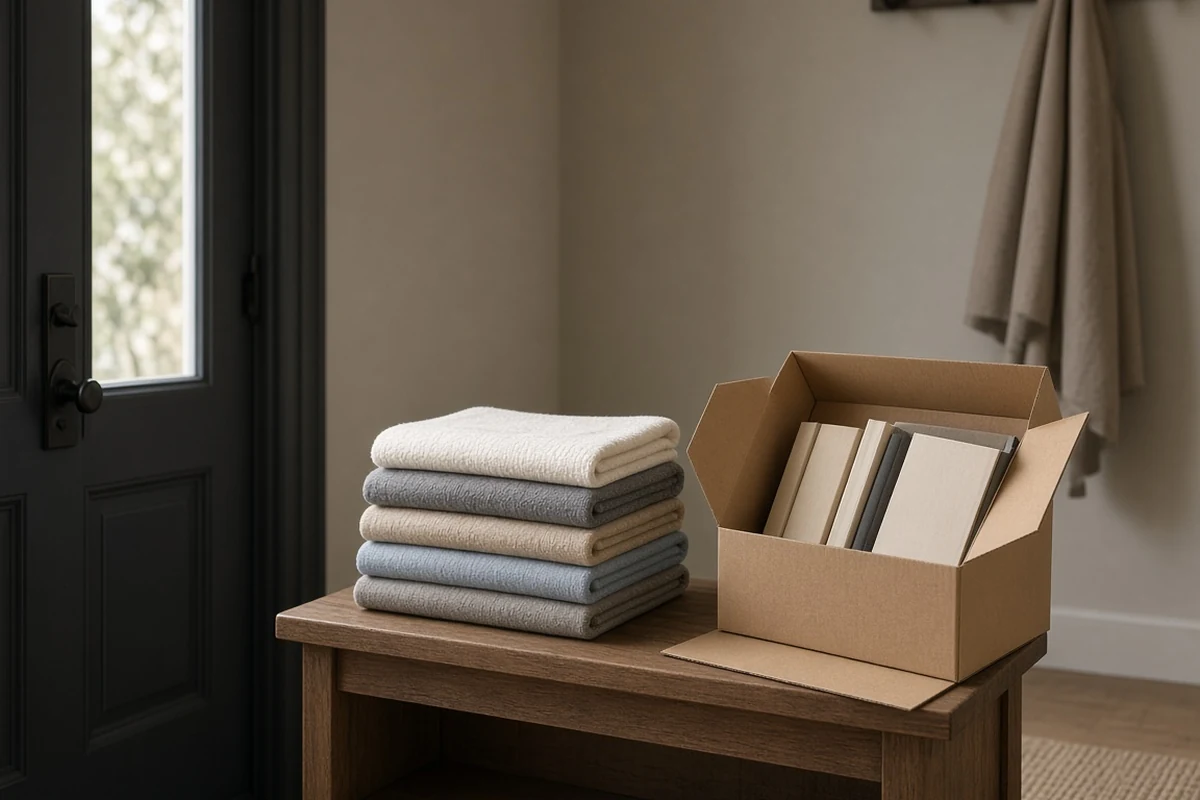
Clothing, books, tools and household items often have a second owner waiting. The City's pop up events list items accepted for reuse, such as bedding, towels, books, shoes, bags and bikes in good condition. Items must be sorted and clean. Clothing and textiles, for instance, must be washed, dried and tied in a bag.
Step 4: Recycle the right way
When something cannot be reused, send it to the right program. The Vancouver Zero Waste Centre at 8588 Yukon Street offers free residential drop off for many kinds of material, including electronics, batteries, scrap metal, clothing and textiles and glass bottles and jars. Metro Vancouver's recycling and waste centres list their own accepted items. RCBC's Recyclepedia is a good directory, and you can call the RCBC Recycling Hotline.
Contamination matters. Putting the wrong thing in the wrong stream makes recycling harder for everyone, so check before you toss.
Step 5: Keep hazardous items out of the garbage
Batteries, electronics, propane, paint and fuel need their own programs. Metro Vancouver says lithium ion batteries cause most battery related fires at its facilities and asks people not to put them in the garbage or blue bin. Take them to a battery recycling location, and ask staff where to place them.
Step 6: Plan the big jobs
Some jobs cannot avoid waste. A reno, a move or a big cleanout all produce a lot. You can still reduce what ends up in the garbage by sorting first. Pull out reusable items, donate what works and send recyclables to the right place. What is left, such as broken furniture and mixed junk, can go in a bin.
We deliver the bin, you load it, and Trash King hauls it away. Begin with the 20-yard for junk, cleanouts and renos, since it is the common starting size. A 15-yard junk bin is at times available, but it is commonly sold out. Plan on the 20-yard. Other smaller sizes are a question for when you book. You can read more on the 20-yard bin page.
A bin on your own driveway or yard takes no permit, since that is private property. For a bin on the street, boulevard or lane, confirm with your City first, since some cities need a permit. Strata or HOA rules can still apply. If yours does, apply with the City, and we set delivery for any permit dates.
These never go in a Trash King bin: paint, propane, tires, fuel and electronics. You can see everything else on the list on our what not to put in a bin page.
If a mattress or box spring is part of the load, tell us when you book. It goes in as an add on for an extra fee.
Our residential services page has more.
A short checklist for the week
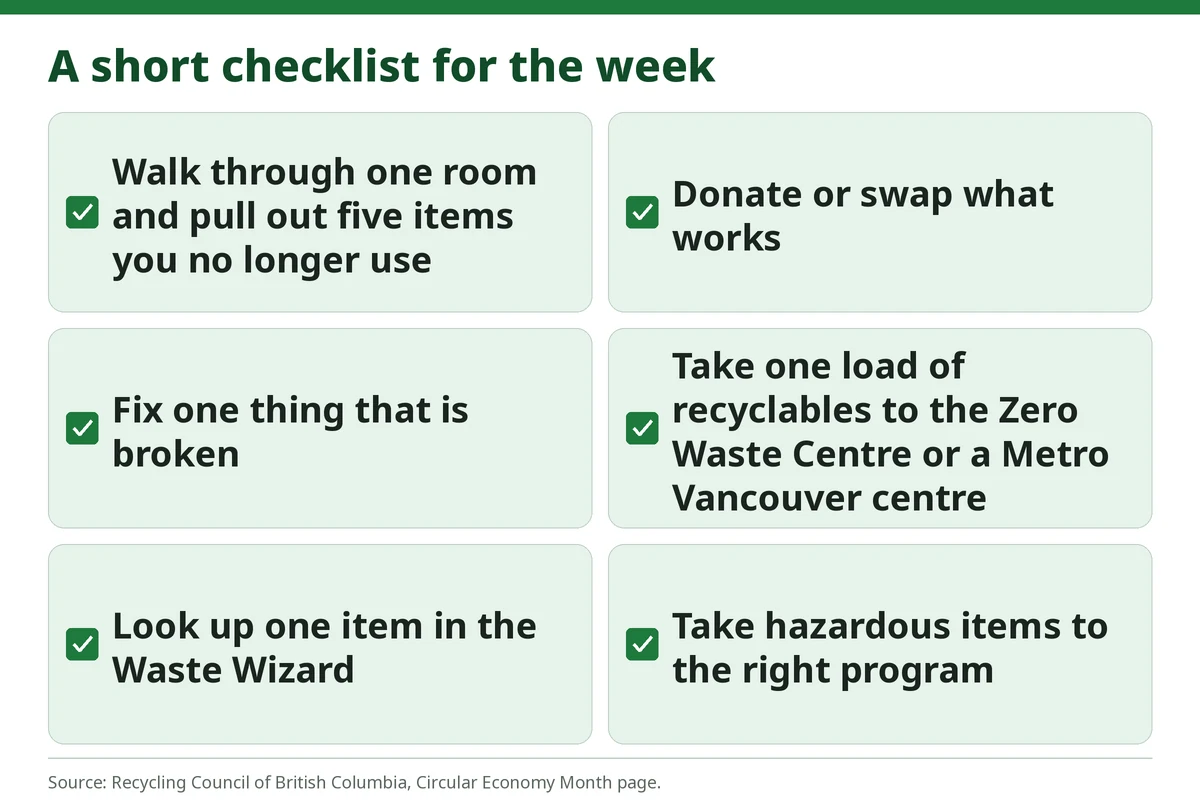
- Walk through one room and pull out five items you no longer use.
- Donate or swap what works.
- Fix one thing that is broken.
- Take one load of recyclables to the Zero Waste Centre or a Metro Vancouver centre.
- Look up one item in the Waste Wizard.
- Take hazardous items to the right program.
Why it matters
Metro Vancouver notes that illegal dumping costs taxpayers millions of dollars each year to clean up, and the City of Vancouver notes it costs over a million dollars each year. Every item sent to the right place is one less item left in a lane or dumped. See our guide to illegal dumping for more.
FAQ
When is Waste Reduction Week? RCBC says it is recognized in the third week of October. Check its page for the exact dates.
What is the circular economy? RCBC describes it as a system that makes the greatest use of the materials we already have, with reuse and repair first.
Where can I get things fixed? The City of Vancouver lists Repair Cafe SPEC, the Vancouver Tool Library and other groups.
Where do batteries and electronics go? Metro Vancouver recycling and waste centres and the Zero Waste Centre take many of them. They never go in a Trash King bin.
What size bin should I start with for a big cleanout? Plan on the 20-yard, which is the common start. Other sizes? Ask when booking.