
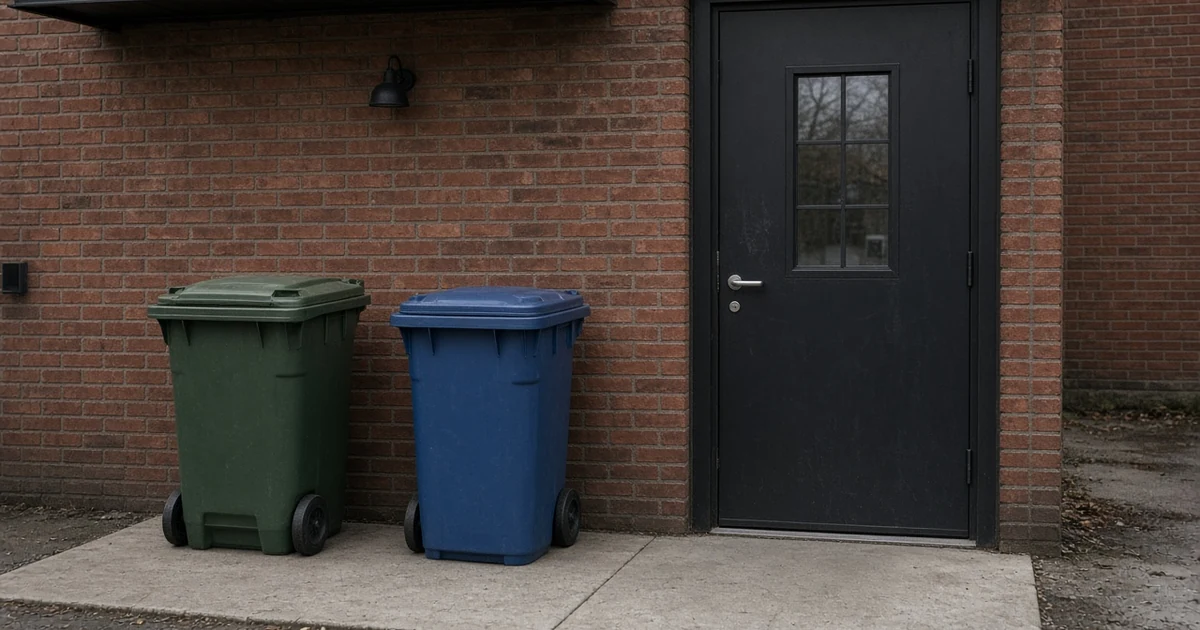
Food scraps in the garbage are a regional rule problem, not just a smell problem. Metro Vancouver has banned food scraps from garbage disposal since January 2015, and the ban covers restaurants and cafes as well as homes and apartment buildings. Here is what the rule says, what counts as compostable, and how restaurants can keep a food scraps bin from becoming a nuisance.
What the ban says
Metro Vancouver's food scraps page explains that food is banned as garbage at the region's waste facilities. Loads of waste are inspected when delivered to a regional disposal facility. If a load has excessive amounts of visible food scraps, the hauler pays a surcharge of 50% on the cost of disposal.
The ban is enforced the same way as the region's other disposal bans. For the details on how the surcharges work, see our post on Metro Vancouver disposal bans.
What goes in the green bin
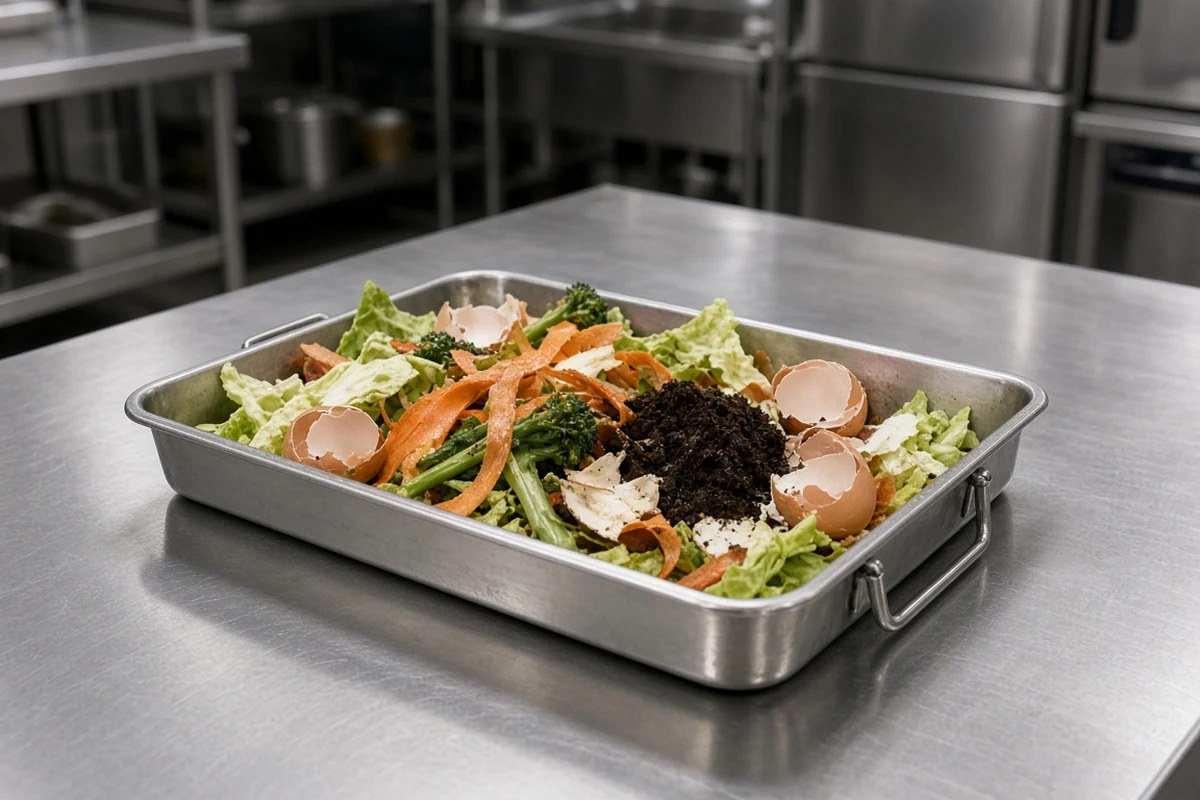
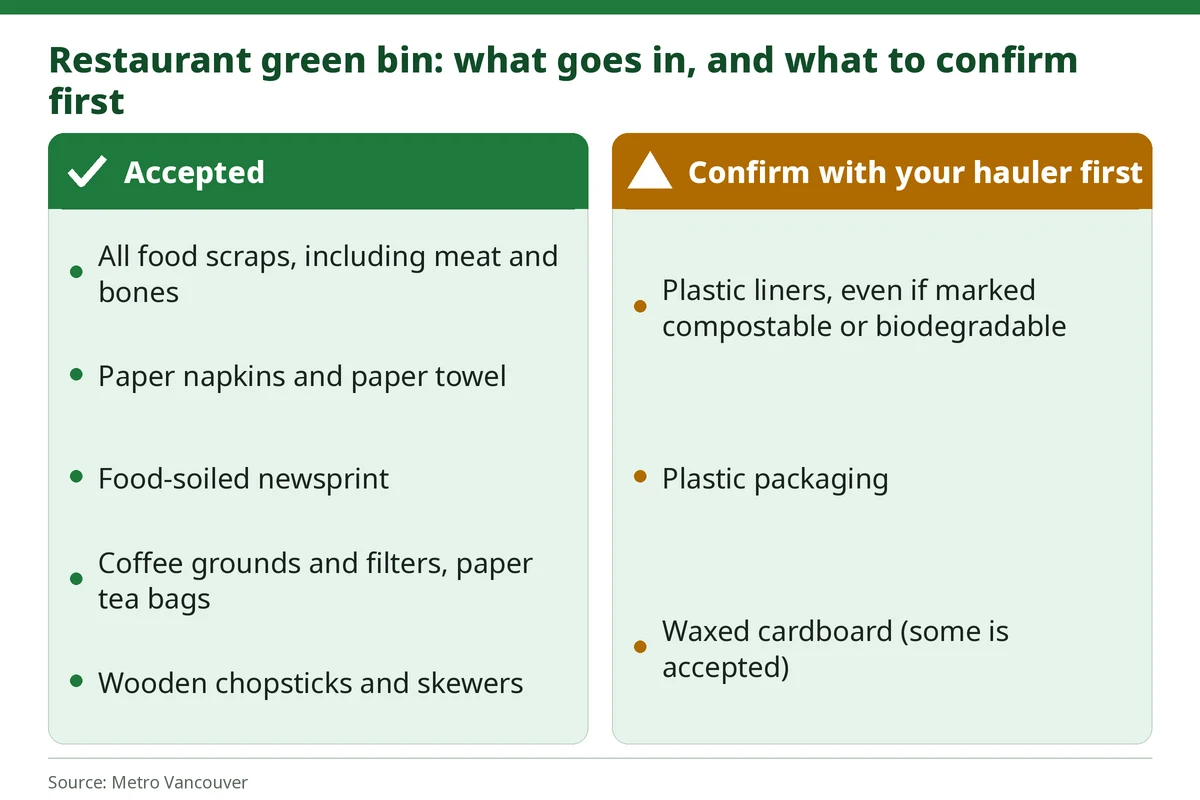
Metro Vancouver lists these as accepted: all food scraps, including produce, grains, dairy and meat, prepared food and leftovers, shells and bones, small amounts of fat, oil and grease, paper napkins, food-soiled newsprint, paper towel, coffee grounds and filters, paper tea bags, and wooden chopsticks, skewers and popsicle sticks.
Packaging and liners
Packaging is where restaurants get confused. Metro Vancouver's restaurant questions page says many food-soiled papers, such as pizza boxes and paper napkins, are compostable. It lists examples such as paper egg cartons, uncoated paper plates and cups, and uncoated take-away food packaging. Some waxed cardboard is accepted, and it says to check with your hauler.
Plastic is the problem. The page says plastics, including those marked biodegradable, contaminate compost and reduce its value. A bag labelled compostable does not mean it is accepted. Confirm with your hauler before you use any plastic liner. Metro Vancouver says there are exceptions for large volumes where the liner is removed before the food scraps are processed.
Pests and smell
Metro Vancouver's guidance says pests and odour can be kept to a minimum with regular emptying and cleaning of food waste containers. It suggests talking to your hauler about options such as:
- Switching in clean bins after collection
- Using a pre-approved bin liner when available
- Having bins cleaned at time of collection
- More frequent collection during hot weather
- Reducing free liquids in your organics collection
The Recycling Council of BC keeps a list of commercial bin-cleaning services. You can reach the Recycling Hotline at 604-732-9253.
Where a bin fits
Food scraps are not a bin job for us. Your hauler and an organics service handle that stream, and food waste does not go in our bins in large amounts. If you have a one-off cleanout, such as a storage clear-out, ask us when you book about a bin. The bin arrives, you load it, and we haul it away. See our commercial services and our page on organics recycling for more.
FAQ
Are food scraps banned from garbage in Metro Vancouver? Yes. Food scraps have been banned from disposal since January 2015, and the ban applies to businesses as well as homes.
What happens if a load has too many food scraps? Metro Vancouver says the hauler pays a surcharge of 50% on the cost of disposal for loads with excessive visible food scraps.
Can I use compostable plastic bags for scraps? In general, plastics including those marked biodegradable contaminate compost. Confirm with your hauler before using any liner.
Who can I call with questions? The Recycling Council of BC Recycling Hotline is 604-732-9253. Metro Vancouver's Information Centre can answer questions on the ban.