
From Box to Bale: The Ultimate Guide to Cardboard Recycling
We all have them—piles of Amazon boxes in the garage, cereal boxes in the pantry, and shoe boxes in the closet. Cardboard is the backbone of modern packaging, but what happens after you break it down and toss it in the bin?
At Trash King, we believe that understanding the lifecycle of a box is the first step toward a greener planet and a leaner business. From the 11th-century recycling efforts in Japan to Canada’s first “blue box” initiative in Mississauga in 1983, recycling has come a long way. Here is everything you need to know about giving your cardboard a second life.
Why Recycle? The Numbers Don’t Lie
Recycling isn’t just a “feel-good” activity; it’s a critical component of resource management.
- Save Trees: For every 1 ton of cardboard recycled, we save 3 tons of trees (approx. 10–30 individual trees).
- Save Space: That same ton of recycled cardboard spares 9 cubic yards of landfill space.
- Save Energy: Manufacturing new cardboard from raw materials consumes massive amounts of water and energy.
- Save Money: Cardboard is a commodity. If your business generates enough of it, we can actually sell the bales, potentially leading to subsidized or even free bin rentals.
The Recycling Process: How It Works
Cardboard is unique because it can be recycled many times without losing its strength. Here is the journey your box takes after we pick it up:
- Collection: It starts with you. Whether it’s a residential blue bin or a commercial 40-yard roll-off, we collect the material and transport it to the facility.
- Sorting: We separate Corrugated Cardboard (shipping boxes with the wavy middle layer) from Boxboard/Chipboard (cereal and shoe boxes).
- Pulping: The cardboard is soaked in water and chemicals to break it down into a slurry or “pulp.”
- Filtering: The pulp is passed through screens to remove foreign materials like tape, glue, and staples. A separate process removes inks and dyes.
- Finishing: The clean pulp is mixed with new fibers, dried, pressed to squeeze out excess water, and rolled into linerboard. This linerboard is then sent to manufacturers to be born again as a new box!
Recycling Etiquette: What Goes In (and What stays Out)
To ensure the process runs smoothly, preparation is key.
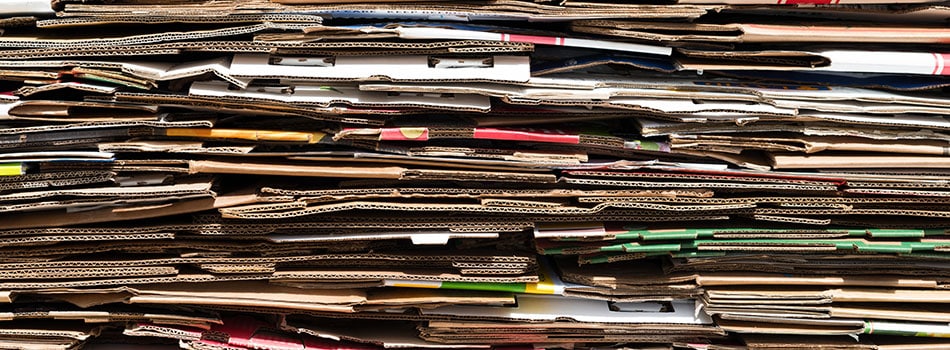
- YES: Clean, dry corrugated cardboard and boxboard. Flattening boxes saves massive amounts of space in the bin.
- NO: Waxed, wet, or soiled cardboard (like greasy pizza boxes). These contaminants ruin the pulp and should be composted instead.
- PREP: Remove plastic shipping envelopes and Styrofoam peanuts. While our machines can filter out tape and labels, removing them beforehand is always helpful.
Trash King Solutions: Bins for Every Need
Residential: Beyond the Blue Bin
Most municipal blue bins (120–240L) can’t handle a full post-move cleanout. Trash King offers residential bins with volumes over 7,500L—that’s 30 times more space for your broken-down boxes.
Commercial & Industrial: High Volume, Low Cost
For warehouses and manufacturing plants, we offer 10 to 40-cubic yard dumpsters and customizable pickup schedules.
- The “Commodity” Advantage: If you produce high volumes of clean cardboard, ask us about our baler programs. Baling your cardboard can turn waste into revenue, offsetting your disposal costs.
Ready to Recycle?
Whether you are a homeowner with a mountain of moving boxes or a business looking to reduce your carbon footprint, Trash King has the solution.