
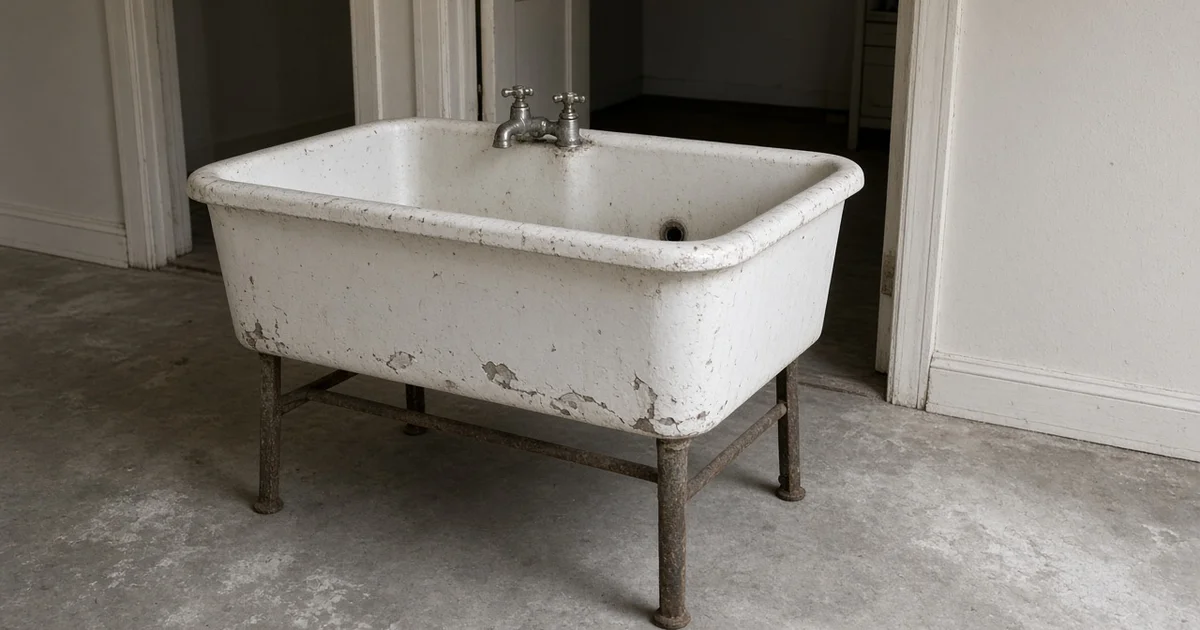
Laundry tubs and utility sinks come in cast, steel and composite. Send the metal ones to scrap first.
Cast and composite laundry sinks
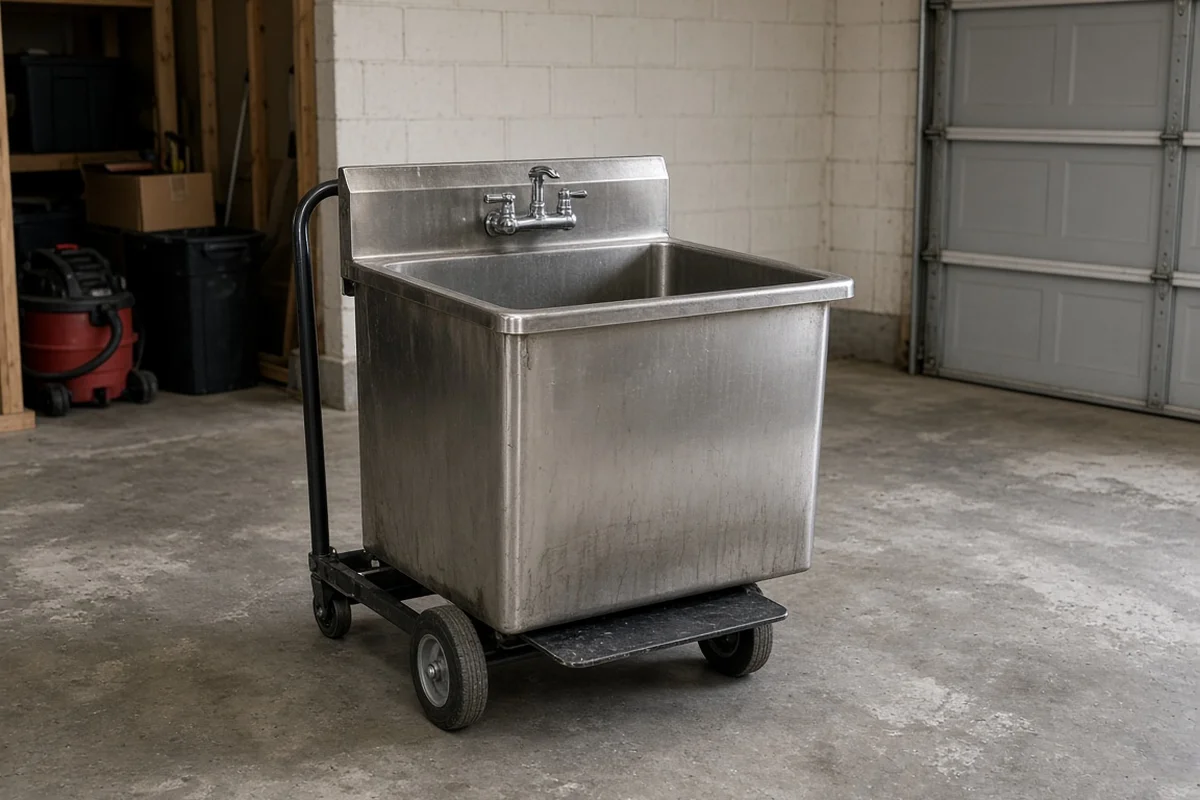
Metal sinks can go to scrap once separated. Composite tubs are usually junk.
Legs, cabinets and traps
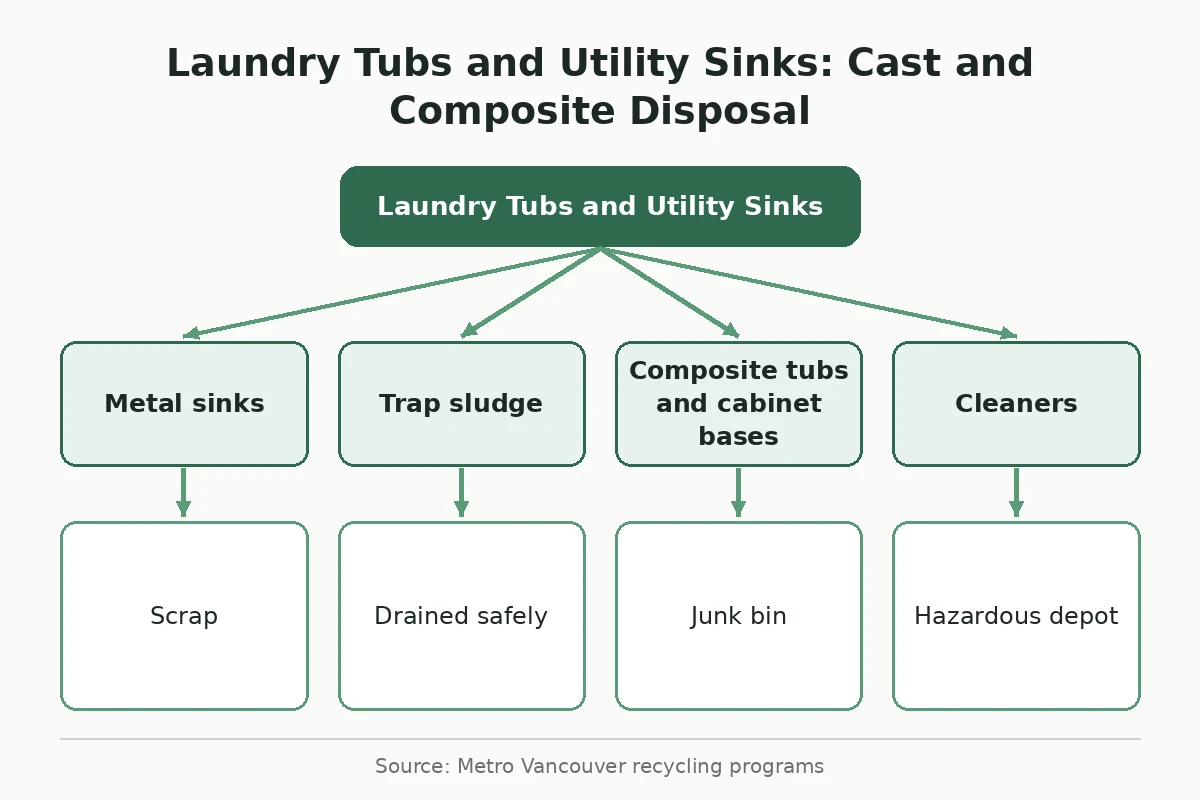
Cabinet bases go as wood or junk depending on the coating. Drain traps with care. Never pour sludge down a storm drain.
Utility room refreshes
Once the metal is out, the rest can start in a 20-yard junk bin. Keep cleaners and solvents out of it.
When a bin fits
Delivery and haul away are on us. You load the bin. For most jobs, the 20-yard junk bin is the place to start. We also have a 15-yard bin, but it is often sold out, so ask when you book.
Putting the bin on your driveway or yard needs no permit. On the street, boulevard or lane, some cities require a permit, so check with your City before booking. If a permit applies, send us the dates and we will time delivery.
A junk bin is the wrong place for batteries, electronics, propane tanks, paint, solvents, pharmaceuticals or asbestos. Asbestos is never permitted in any Trash King bin. Search Metro Vancouver Recycles or call 604-732-9253 if you are unsure.
Standing limits are on our disposal bins and what not to put in a bin pages.
FAQ
What is the first sorting step for this job? Drain the trap and pull any metal sink for scrap. Then load the composite tub and cabinet base.
What size bin should I start with? Start with the 20-yard junk bin in most cases. Ask when booking about other sizes. The 15-yard is often sold out.
Do I need a permit on my driveway? No. A driveway or yard needs no permit. Street, boulevard or lane rules depend on your City.
Where do I check an item I am unsure about? Search Metro Vancouver Recycles or call the Recycling Hotline at 604-732-9253.
Can asbestos ever go in a Trash King bin? No. Asbestos is never permitted in any Trash King bin.