
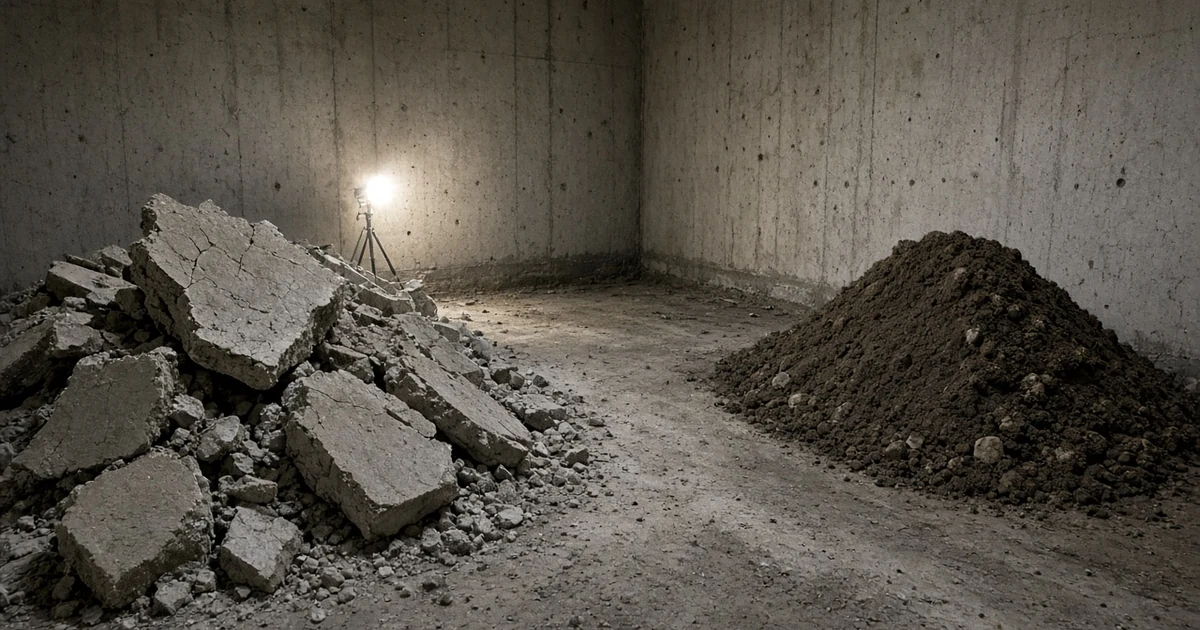
Lowering a basement turns a low ceiling into usable room, and it also turns plenty of ground into waste. The old slab comes out, and the dirt under it comes out too. Most of the work is planning how both leave the yard and in what order.
The permit and the plan come ahead
Basement lowering is structural work. Confirm with your City on the permit and design requirements for your address, and ask your contractor to confirm them before you plan any bins. The contractor also sets the order of work, which tells you when a bin is needed.
Call before you dig
BC 1 Call says digging projects need a locate request, and the service is free. You can request online at any time or call 1 800 474 6886 during call centre hours. Members respond within three working days, and you are not clear to dig until all notified members have contacted you.
Two materials, two streams
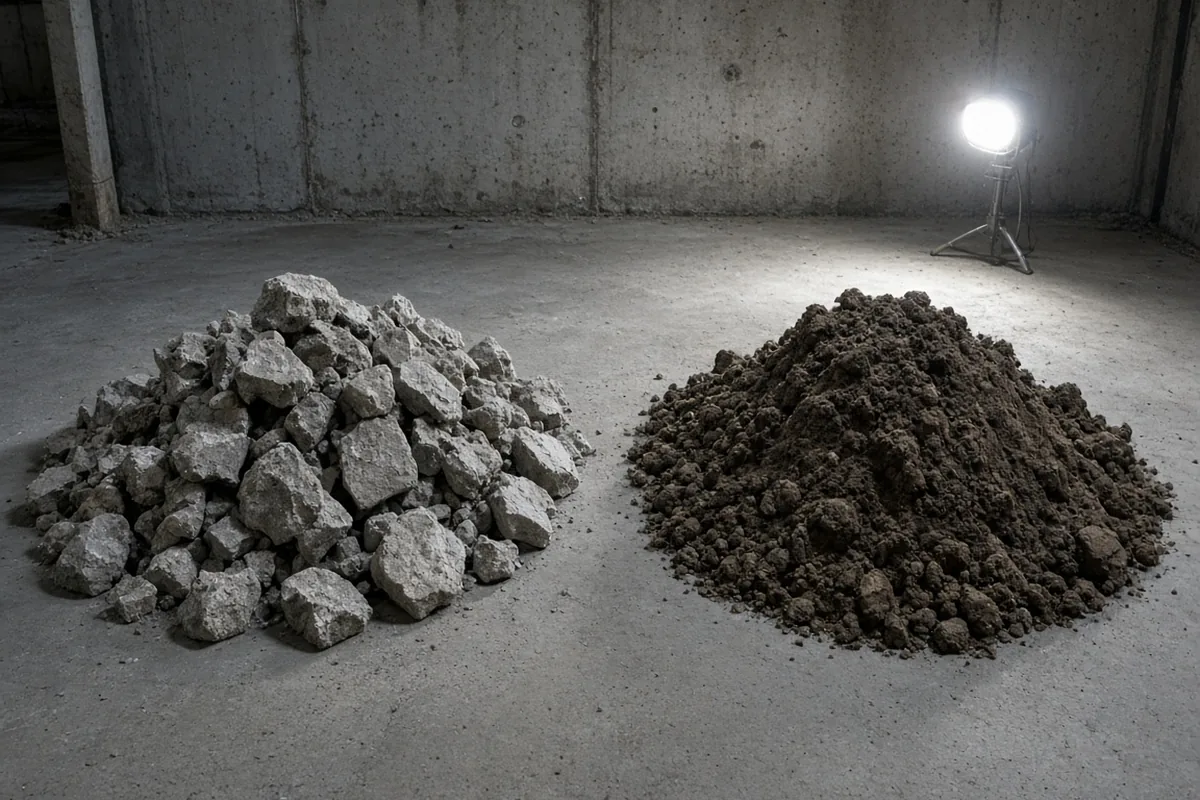
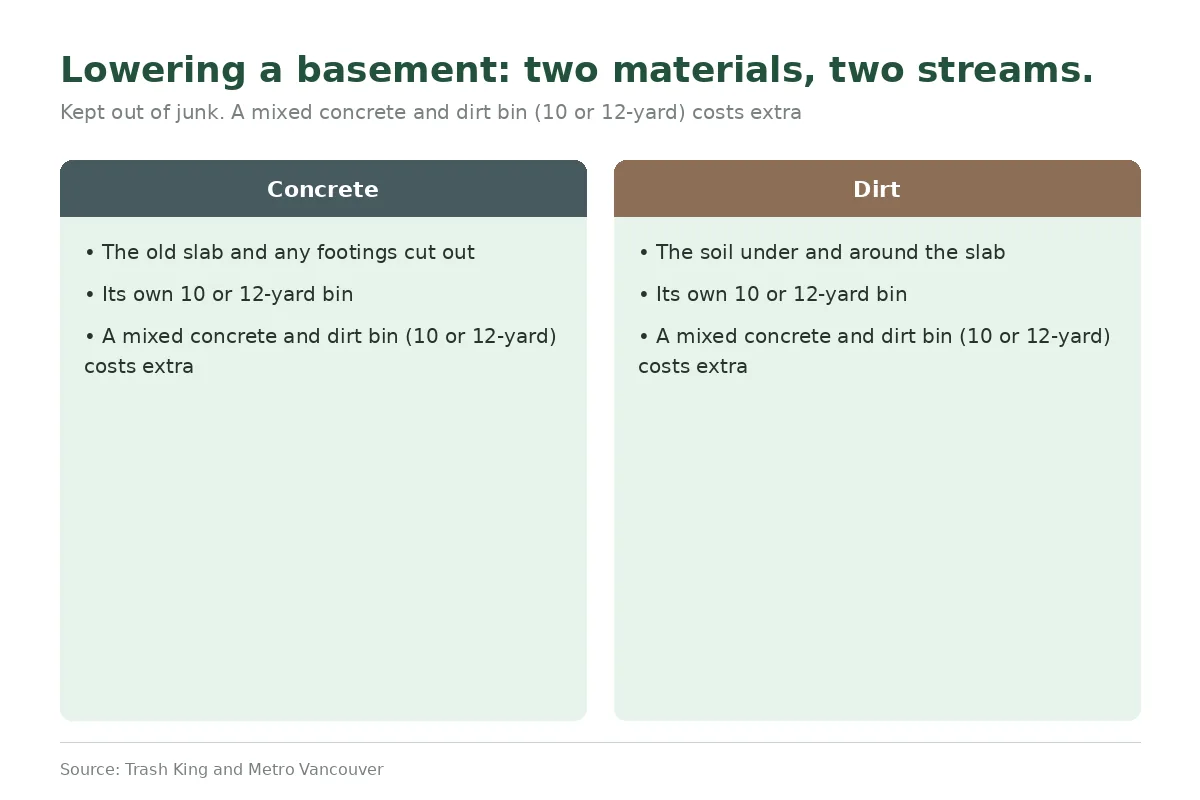
- Concrete. The old slab and any footings that are cut out. Concrete goes in its own 10 or 12-yard bin, and never in a larger one.
- Dirt. The soil under and around the slab. It goes in its own 10 or 12-yard bin, and never in a larger one.
The two stay out of junk, and they are kept apart unless you book a mixed concrete and dirt bin (10 or 12-yard) for an extra fee. Metro Vancouver lists soil, sod, gravel, concrete and asphalt over 0.5 cubic metres per load as banned inert fill at its disposal facilities, and the City of Vancouver says its landfill does not accept soil or recyclable materials such as concrete. That is why each stream has its own route. See our concrete page and dirt page.
Metro Vancouver's construction toolkit lists silica as a hazard in concrete and fill dirt. Cutting and breaking a slab makes dust, so leave that to your contractor's safety plan.
How many bins
The volume depends on the size of the basement, the slab thickness and how deep you dig. We do not give a figure here, because a contractor or engineer can give you one for your job. Plan on swapping bins as they fill. Tell us your schedule when you book, and we will suggest how many swaps to expect.
When the dig is done
After the dirt and concrete are out, there is usually general debris too, such as old framing, insulation and flooring. A junk bin handles that, and a 20-yard is the common start. Our guide to concrete and dirt disposal for homeowners goes into more detail on how the two streams work.
Permits are not needed when the bin sits on your driveway. A street or lane spot is different, since some cities need a permit for it. Confirm with your City before you book. We will time delivery to your permit dates. The contractor does the loading. We handle delivery and haul away.
FAQ
Do I need a permit to lower a basement? It is structural work, so a building permit is normally needed. Check with your City.
Can concrete and dirt share a bin? Sometimes. We can do a mixed concrete and dirt bin, also a 10 or 12-yard, for an extra fee. Otherwise each goes in its own 10 or 12-yard bin.
How many bins will I need? It depends on the size of the basement and the depth of the dig. Your contractor can estimate it, and we can help plan swaps when you book.
Do I call before I dig? Yes. BC 1 Call is free and members respond within three working days.