
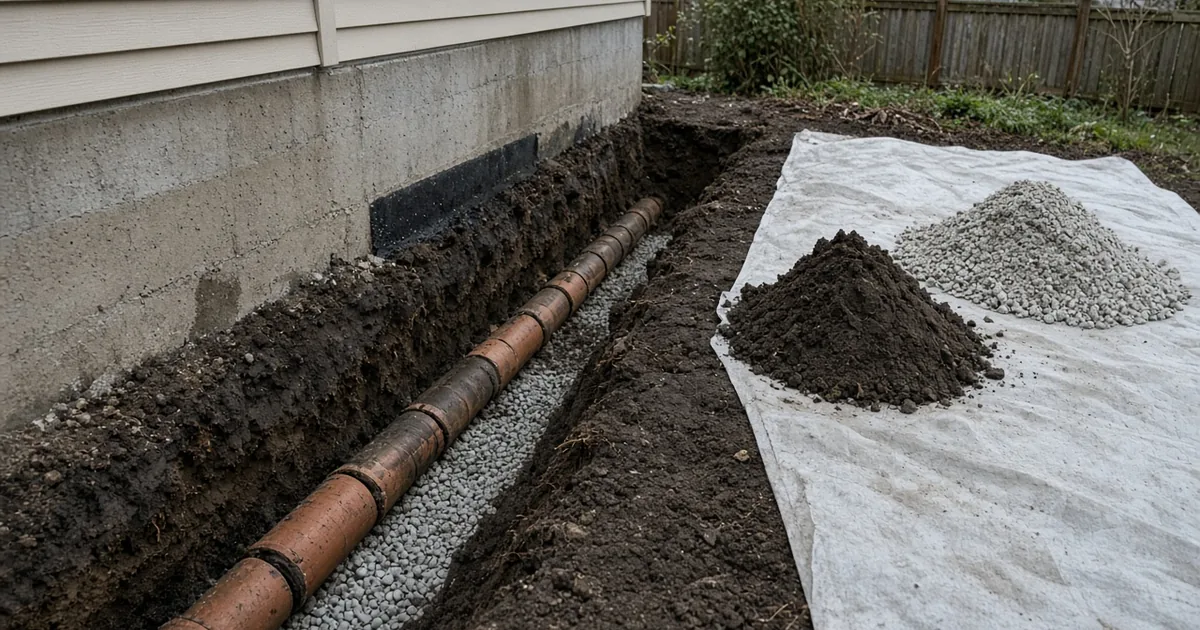
Replacing a perimeter drain means digging a trench around the foundation. That puts plenty of material on your lawn in a hurry: dirt, drain gravel, old drain tile and sometimes broken concrete. A plan for where it goes before the dig starts saves plenty of stress.
Call before you dig
BC 1 Call says homeowners should file a locate request for outdoor projects that involve digging. The service is free. You can request a locate online anytime, or call 1 800 474 6886 during call centre hours. Utility members respond within three working days, and BC 1 Call says you are not clear to excavate until all the members notified have contacted you. Excavation must start within 14 calendar days of the request.
Your contractor may handle this, so ask. A perimeter drain job may also need a plumbing or building permit in your city. Confirm with your City on permits.
Know what is coming out
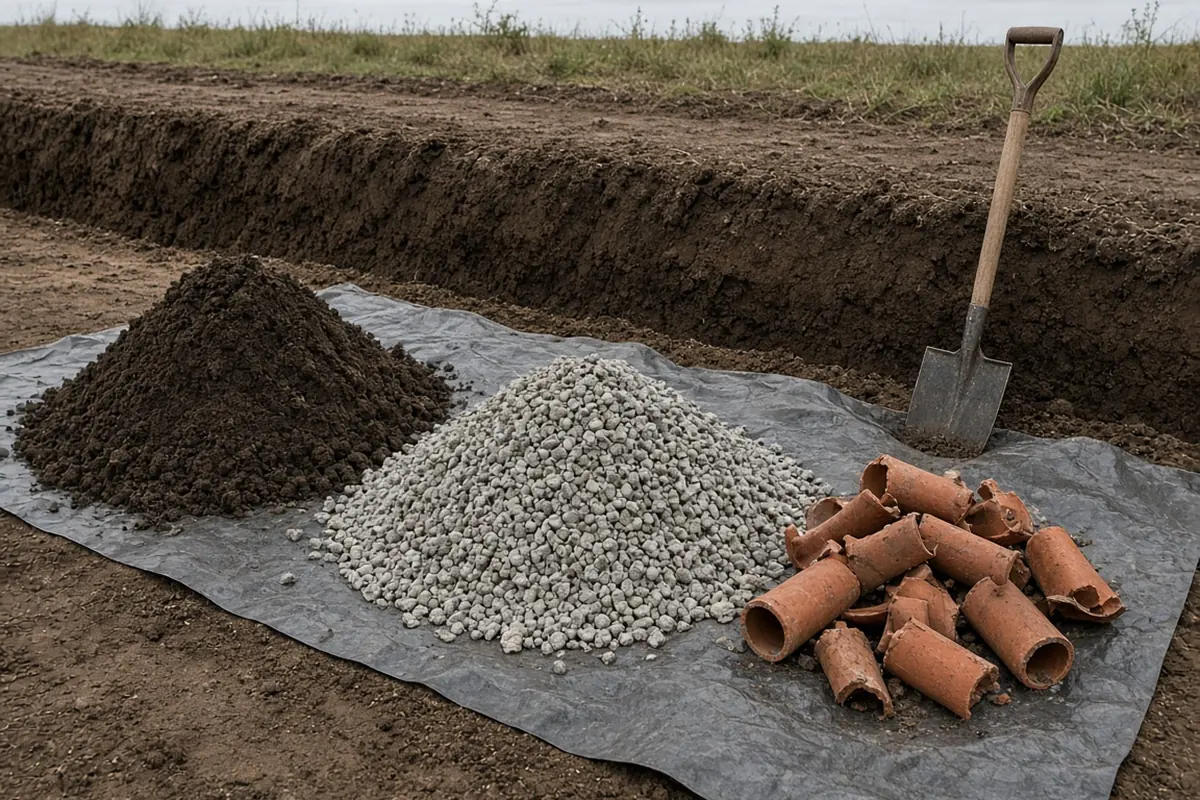
A drain replacement usually produces several materials:
- Dirt. The soil from the trench.
- Drain gravel. The gravel that surrounds the old pipe.
- Old drain tile. The pipe itself, in whatever condition it is in.
- Concrete. Any footing pieces or patio edges broken during the dig.
Keep them apart as they come out. Dirt that has been mixed with gravel, concrete or garbage is harder to place.
Where each material goes
Metro Vancouver says inert fill materials such as soil, gravel and concrete are banned from the landfill in amounts above 0.5 cubic metres, as listed by the City of Richmond. The Vancouver Landfill lists soil as a material it does not accept in construction loads. So soil needs its own route, and dirt has its own bin with us. Our dirt and soil disposal guide covers it in more detail.
Bins for a drain job
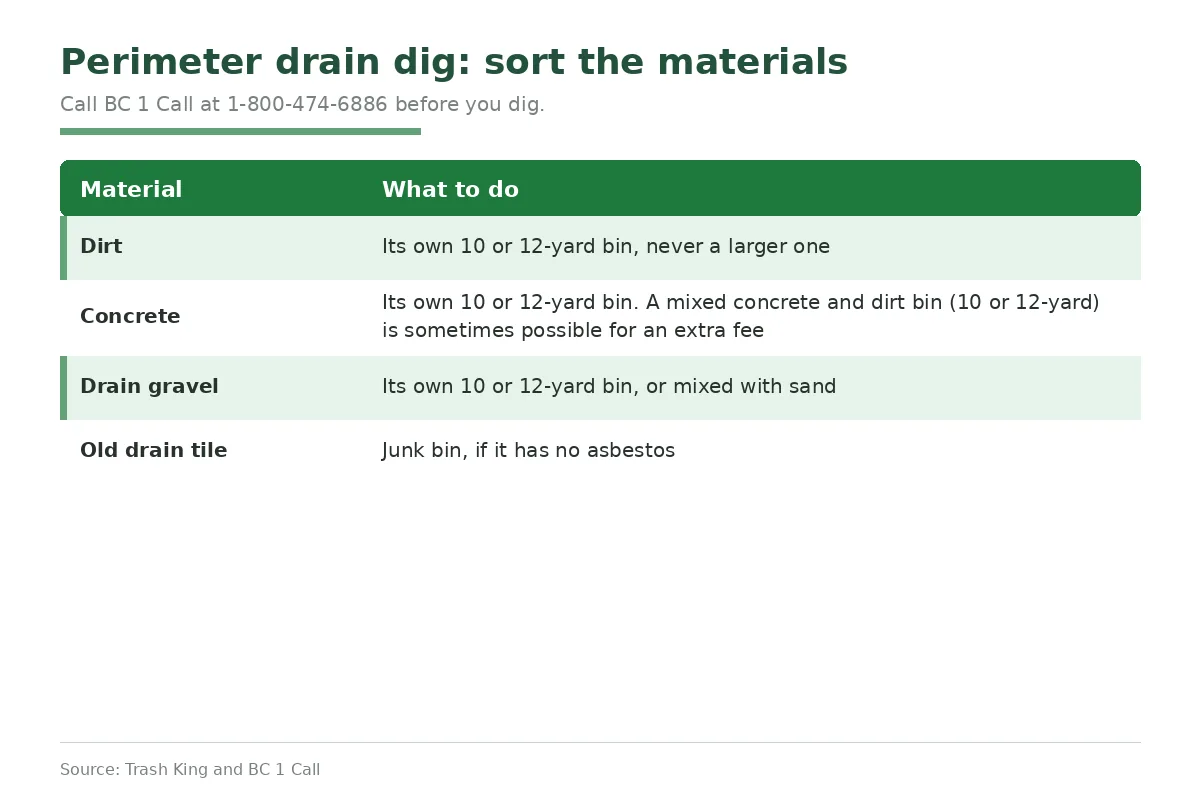
Dirt goes in its own 10 or 12-yard bin, and never in a larger one. Concrete also has its own 10 or 12-yard bin. Sometimes we can do a mixed concrete and dirt bin, also a 10 or 12-yard, for an added fee. See our dirt page and concrete page. If a job has a small amount of both, ask about the mixed bin when you book.
Drain gravel goes in its own 10 or 12-yard bin, or in one with sand. Old drain tile can go in a junk bin if it has no asbestos. If you are not sure what the old pipe is made of, have it tested first. We can tell you which bin fits your job. The bin arrives, your contractor loads it, and we haul it away. Our post on concrete and dirt disposal for homeowners explains how we keep the two separate.
No permit is needed for a bin on your driveway. A street or lane spot is different, since some cities need a permit for it. Confirm with your City before you book. We will match delivery to any permit dates.
FAQ
Do I need to call before I dig for a perimeter drain? BC 1 Call says homeowners should place a locate request for digging projects. It is free and members respond within three working days.
Can dirt and concrete go in the same bin? Usually each goes in its own 10 or 12-yard bin. A mixed concrete and dirt bin is sometimes possible for an extra fee.
Can I put drain gravel and old drain tile in a bin? Yes. Drain gravel goes in its own 10 or 12-yard bin or with sand. Old drain tile goes in a junk bin, as long as it has no asbestos.
Does a perimeter drain job need a permit? It may. Check with your City.