
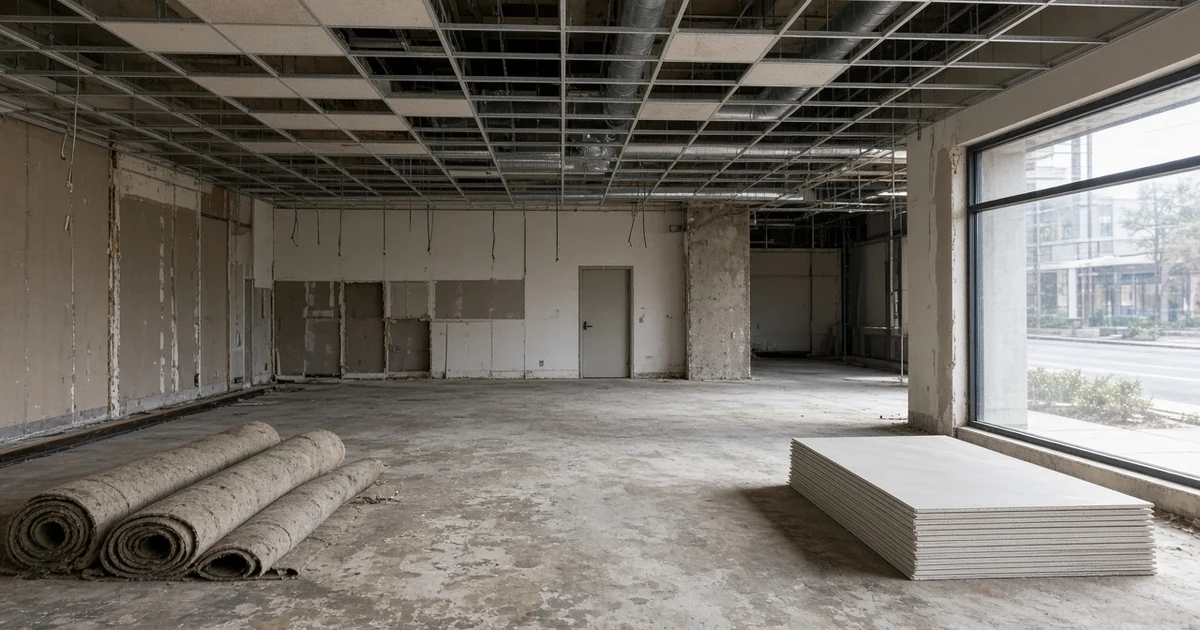
A tenant improvement starts with a tear-out. Old counters, ceilings, carpet, drywall and fixtures all come out before anything new goes in, and they come out fast. Sorting the pile on day one saves money and keeps the schedule on track. Here is how to plan it.
Start with the building
Ask your landlord or property manager for any existing asbestos survey before work begins. WorkSafeBC says homeowners, strata councils and property managers need to get a building tested before renovation or demolition, and that licensed surveyors and abatement contractors must be used. Whatever the survey finds, asbestos never goes in any Trash King bin. Removal needs special bins, permits and licences. Metro Vancouver’s construction toolkit lists ceiling tile, vinyl sheet flooring, vinyl tiles, insulation and drywall joint compound among materials that may contain asbestos. Do not assume an older ceiling or floor is clear.
Sort the tear-out by material
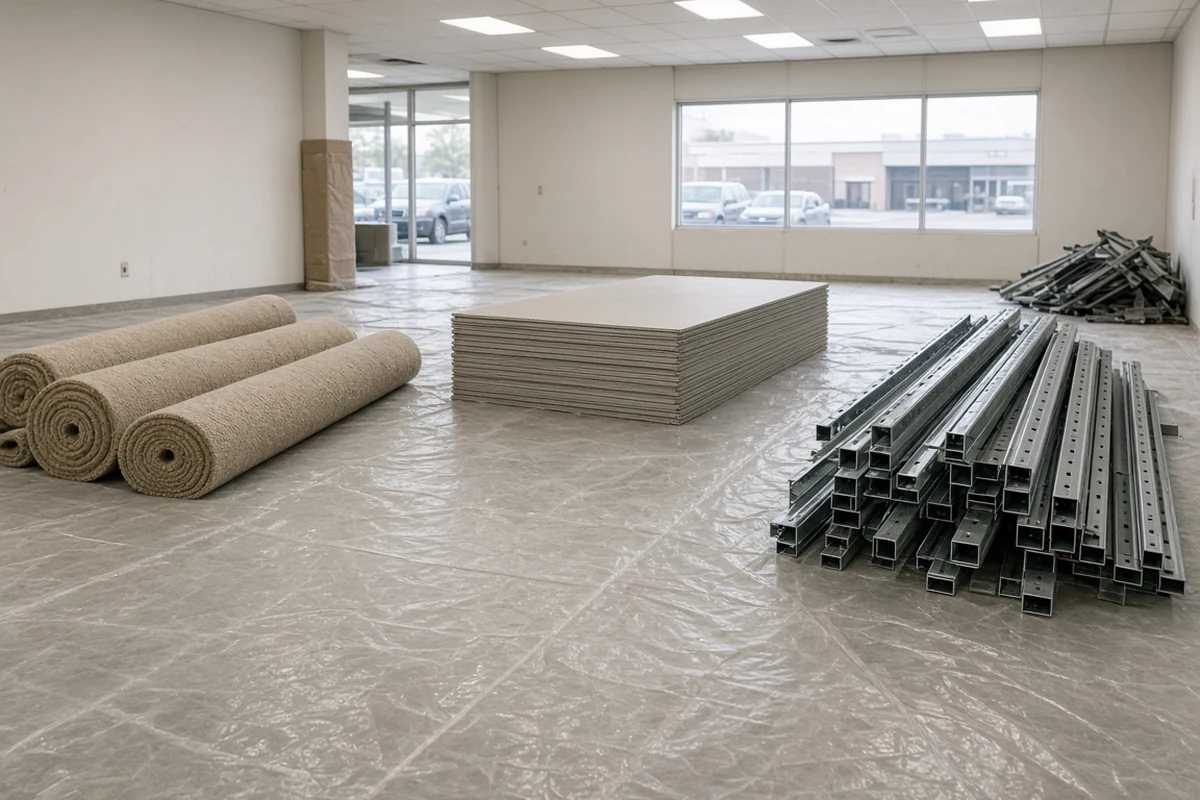
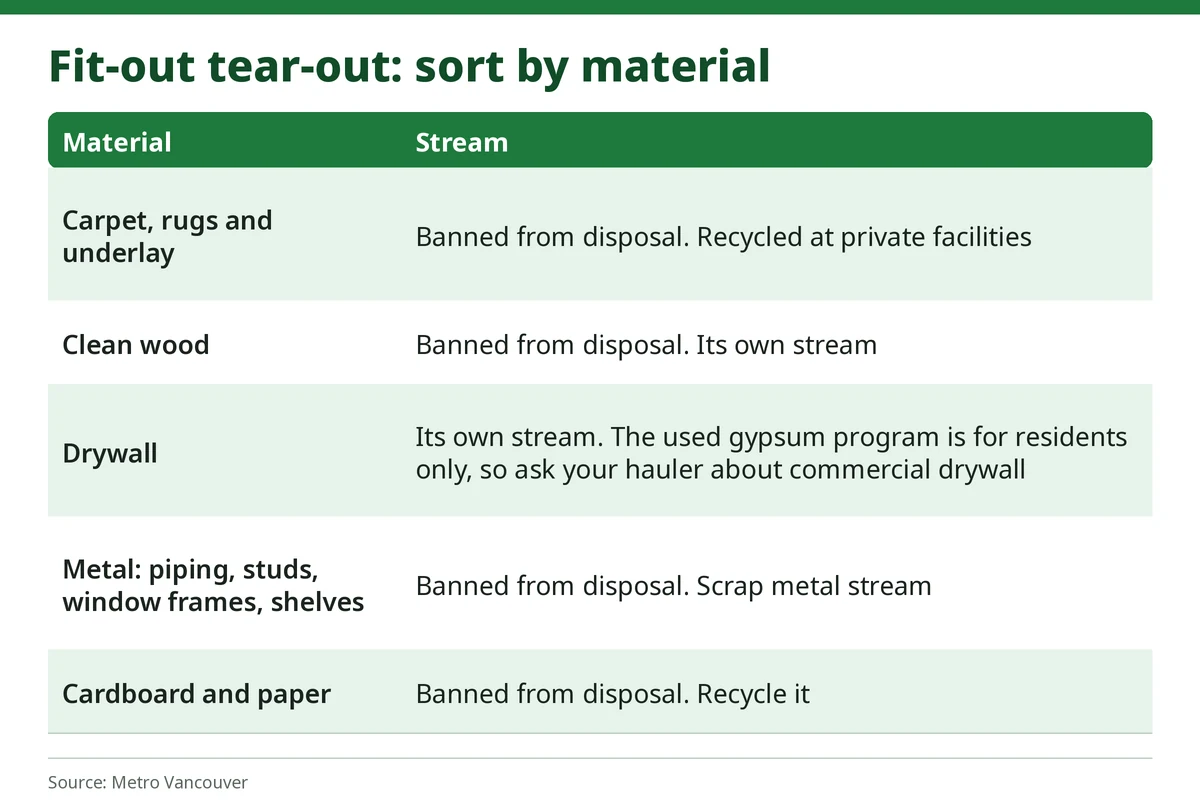
Metro Vancouver’s toolkit lists materials that are banned from disposal and are recycled at private facilities. Several show up in a typical fit-out:
- Carpet, area rugs and carpet underlay
- Clean wood: forming lumber, dimensional lumber and untreated, unpainted wood
- Drywall: the toolkit lists new gypsum cutoffs
- Metal: piping, wires, cable, studs, window frames, cabinets and shelves
- Cardboard and paper
Used gypsum is different. Metro Vancouver’s recycling and waste centres accept used gypsum only through a program limited to residents, with a maximum of 10 bags of 10 kg per visit. Commercial drywall waste needs another route, so ask your hauler before demolition begins.
Fixtures and lights
Light bulbs and fixtures have their own program. Metro Vancouver’s United Boulevard centre lists fluorescent tubes, LEDs, ceiling fixtures and string lights as accepted for free, and lists neon signs as not accepted. Electronics such as point-of-sale systems are e-waste. Our guide to electronics disposal explains why they stay out of bins.
Check the rules for your site
Metro Vancouver’s toolkit says each municipality has its own bylaws that govern construction and demolition, so ask your City what applies to your project.
Plan the bins
For the mixed leftovers, junk bins in the 20, 30 and 40-yard sizes handle most tear-outs. Drywall goes in its own bin if it is date stamped 1990 or newer or has a lab report showing no asbestos. We drop it off, your contractor fills it, and we haul it away when it is full. For a restaurant, the kitchen equipment is a separate job. See our commercial services page and our post on job-site sorting.
Permits are not needed when the bin sits on private property. A bin on the street or lane needs a City permit, and your landlord may have rules too. We time delivery to your permit dates.
FAQ
Do I need an asbestos survey for a store tear-out? WorkSafeBC says to test a building before renovation or demolition. Ask your landlord for any existing survey.
Can I put carpet in the garbage? Metro Vancouver’s toolkit lists carpet among materials banned from disposal.
Can commercial drywall go to Metro’s used gypsum program? The program is limited to residents. Ask your hauler about a commercial route.
What bin size should I ask about? Junk bins come in 20, 30 and 40-yard sizes. Ask when you book.