
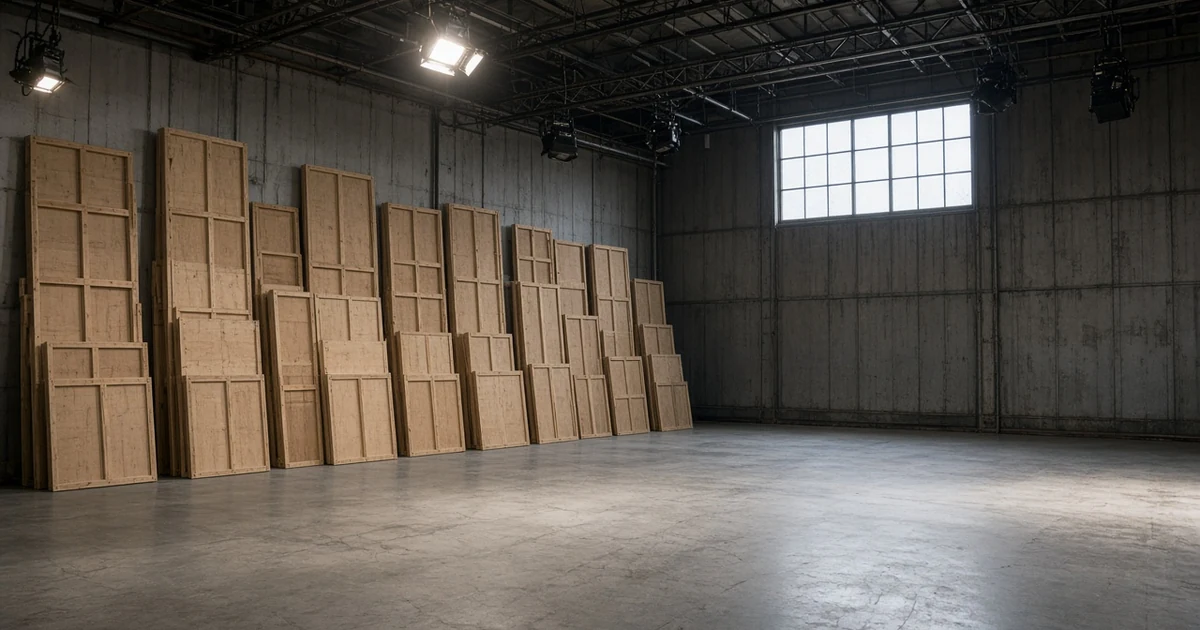
A set strike is a short, loud job. A build that took weeks comes apart in days, and what is left goes somewhere. Productions that plan the strike before the first nail is driven end up with less to throw away. Here is a planning outline built from Vancouver's film industry sustainability resources.
Plan for the strike while you build
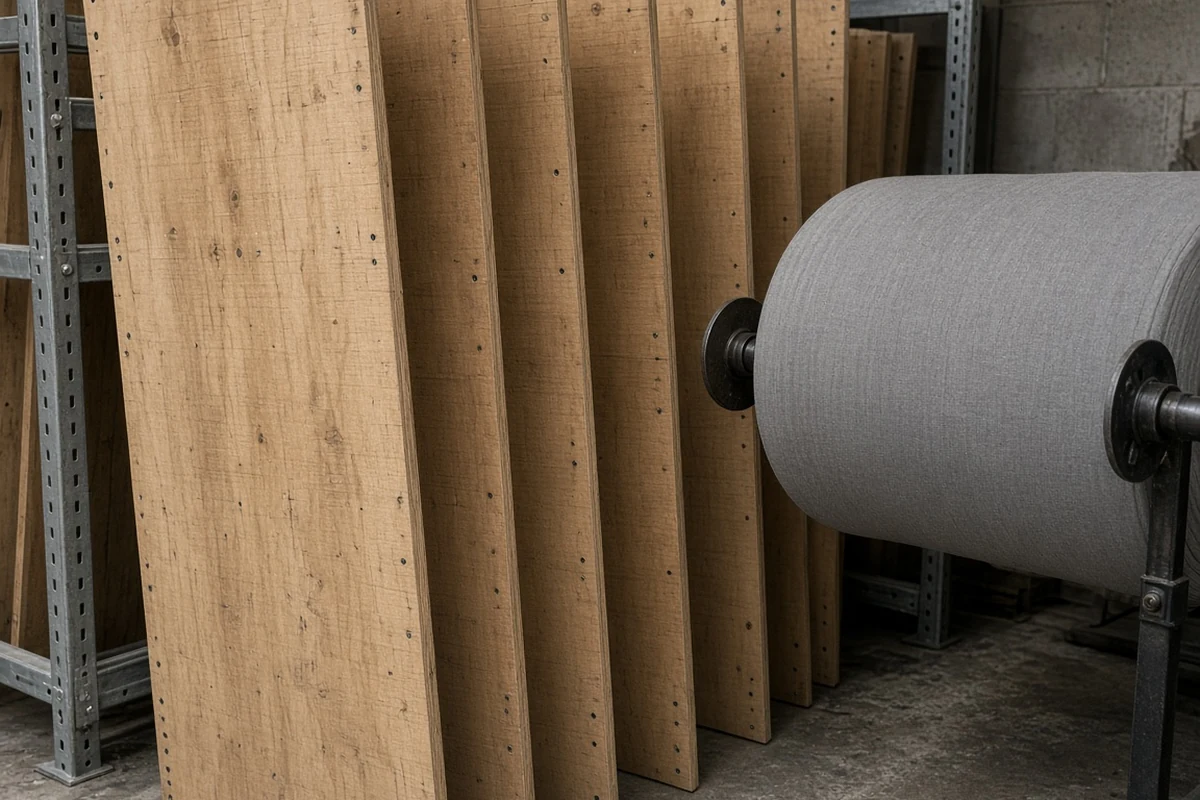
Reel Green, the sustainability program for BC's film industry, makes one point again and again: the strike starts at the build. Its lumber reuse guidance says reuse keeps lumber at its highest value, because a reused 2×4 is still a 2×4. Wood that is glued, stapled and painted into a one-off set piece often has nowhere to go but the bin.
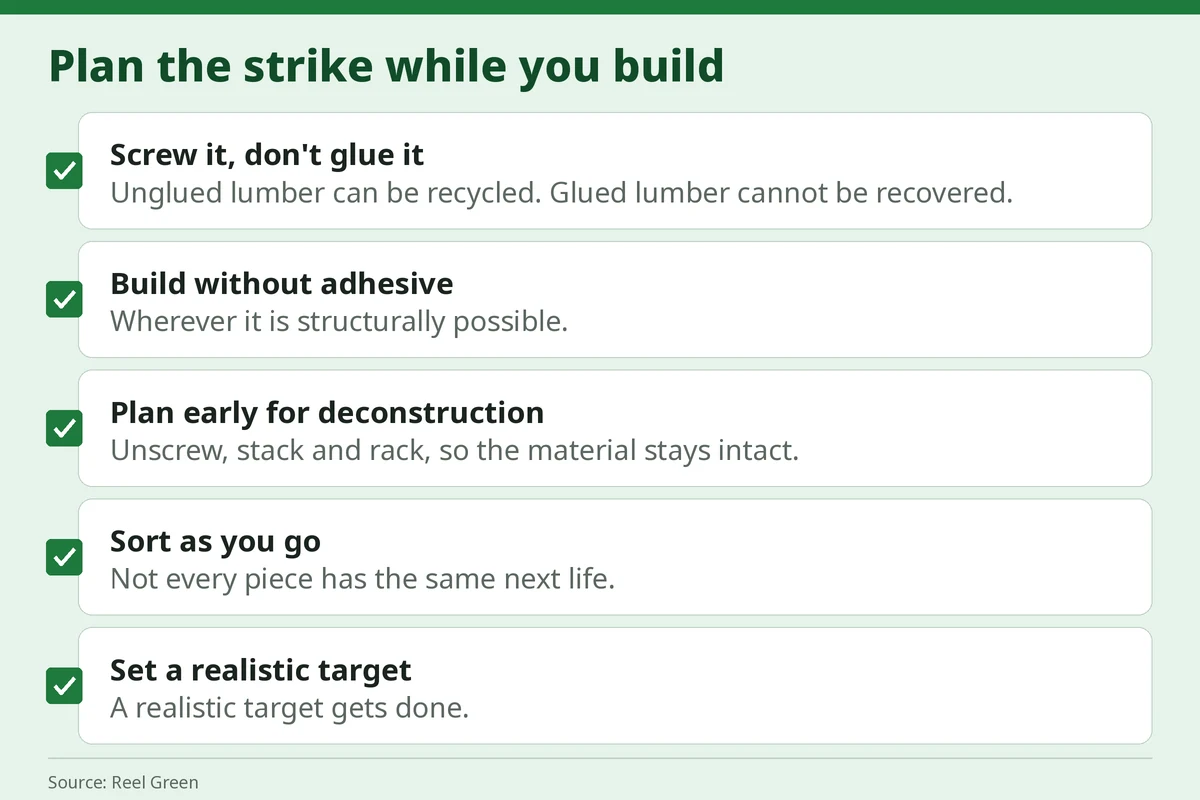
Its advice is simple:
- Screw it, don't glue it. Unglued lumber can be recycled. Glued lumber cannot be recovered.
- Build without adhesive wherever it is structurally possible.
- Plan early for deconstruction. Unscrew, stack and rack, so the material stays intact.
- Sort as you go. Not every piece has the same next life.
- Set a realistic target. Reel Green says 100% sounds great, but a realistic target gets done.
Send reusable material on
Keep It Green Recycling runs a Material Reuse Lockup in the Vancouver area. Reel Green describes it as a place where productions can source materials during prep and filming, and where lumber, flats, furniture, set dressing and costumes are accepted, sorted and recirculated at wrap. Productions pay for drop-offs, and pickups are free. Keep It Green says reusable material is also made available to film schools, community theatre groups, artists and charities for free.
Add the Lockup to your wrap plan and your budget. Reel Green suggests production managers build drop-offs into the wrap plan.
What is left
After reuse and recycling, there is still general waste: broken flats, packaging, carpet, foam and scraps. Sort it from the reusable material as you go, because mixing the streams makes everything harder to place.
Some materials never go in a general waste container. Paint, solvents, batteries, propane, fuel and electronics all have their own programs. The full list is in our what not to put in a bin post, and Metro Vancouver Recycles can help find a place for each.
Where a bin fits
For the general waste that is left, ask us when you book whether a bin suits your job. When we bring a bin, delivery and haul away are on us and you load it. A 20-yard junk bin is the common start, and we also have 30 and 40-yard bins for larger jobs. Ask when you book if you want a different size. On private property, a bin needs no permit. Setting the bin on a street or lane needs a City permit, so we can time delivery to your permit dates. Learn more on our commercial services page.
FAQ
What is Reel Green? It is the sustainability program for BC's film industry, with guidance and resources on waste reduction and reuse.
Does Keep It Green charge to pick up reusable set material? Reel Green says productions pay for drop-offs and all pickups are free.
Why avoid glue on sets? Reel Green says unglued lumber can be recycled and glued lumber cannot be recovered.
What size bin should a production ask about? The 20-yard is the usual place to start. Ask about 30 or 40-yard bins when booking for larger jobs.