
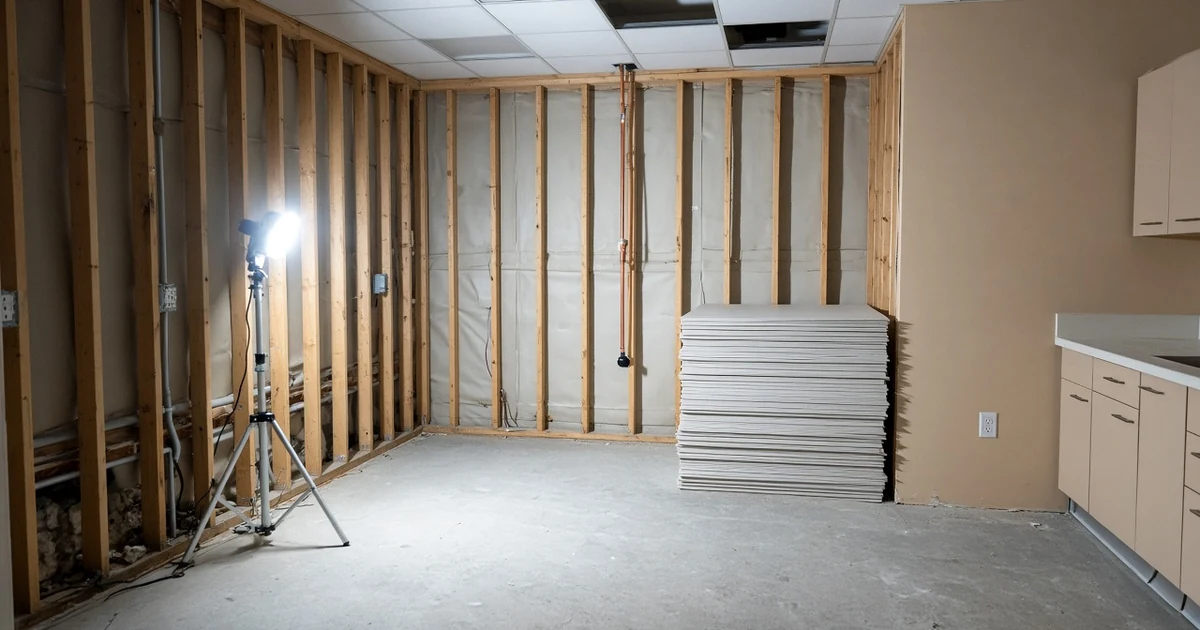
A clinic renovation produces ordinary debris like drywall and flooring, and a short list of items that cannot go in any bin. Sorting them out before demolition day holds the job on schedule and keeps staff and patients safe.
Items that never go in a bin
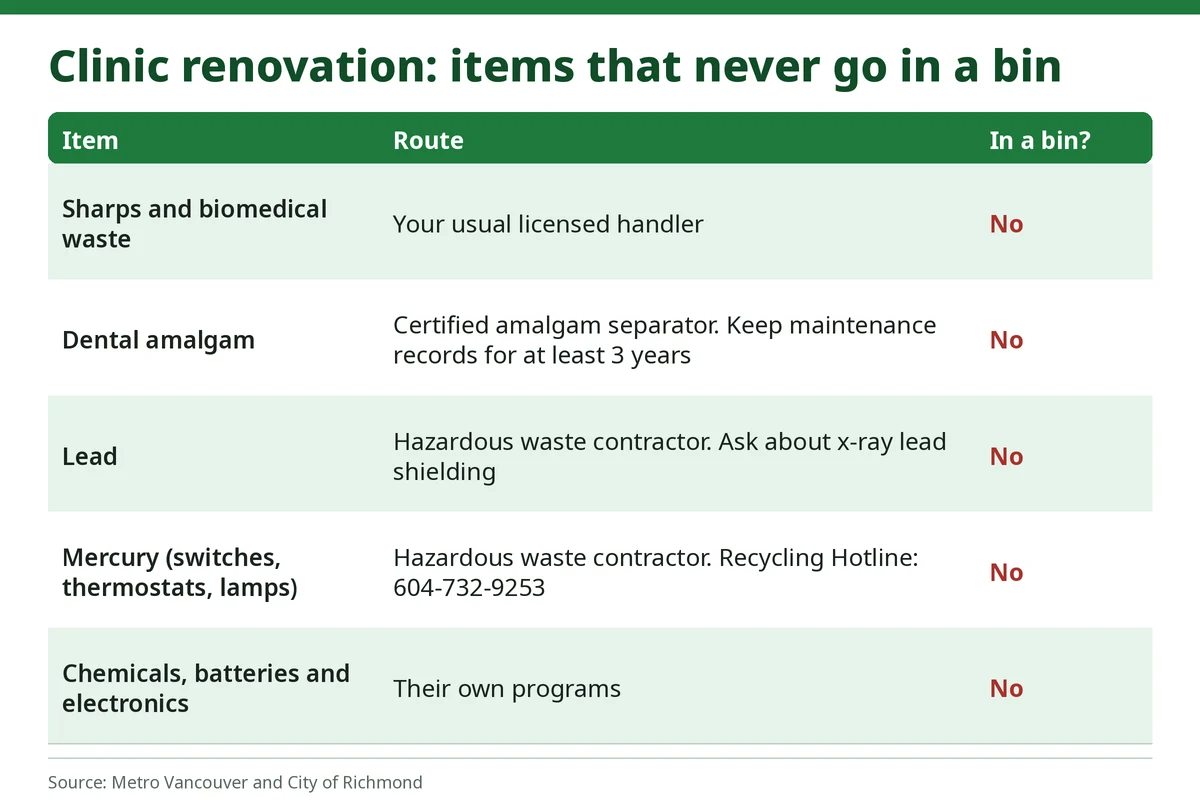
Several materials in a medical or dental office need a licensed or regulated route.
- Sharps and biomedical waste. Richmond's Recycling Depot lists hypodermic needles among items it does not accept, and Metro Vancouver bans pharmaceutical products and medications from its disposal sites. Sharps and clinical waste need your usual licensed handler.
- Dental amalgam. Metro Vancouver's Code of Practice for Dental Operations, Schedule E to its sewer bylaw, requires dental operations that discharge wastewater containing amalgam to install a certified amalgam separator. Operators must keep maintenance records for at least three years, including who accepted the waste from the separator.
- Lead. Metro Vancouver's construction toolkit lists lead, found in older paint on walls, doors and window sills, among hazardous materials on building sites. If your clinic has lead shielding from x ray equipment, ask your hazardous waste contractor how to handle it.
- Mercury. The same toolkit lists switches, thermostats and lamps as sources.
- Chemicals, batteries and electronics. These have their own programs. Our post on what not to put in a bin and our guide to electronics disposal have the lists.
None of these goes in a bin.
Test for asbestos first
If the clinic is in an older building, the renovation can disturb asbestos. WorkSafeBC says homeowners, strata councils and property managers need to get a building tested before a renovation, and that licensed surveyors and abatement contractors must be used. Ask your landlord or property manager for any existing asbestos survey, and do not assume a newer building is clear.
Ask your regulator and your hauler
Ask your professional college, if you have one, and your licensed waste handler what applies to your office before the walls come down. Call the Recycling Hotline at 604-732-9253 for a list of hazardous waste contractors, as listed in Metro Vancouver's toolkit.
The general debris
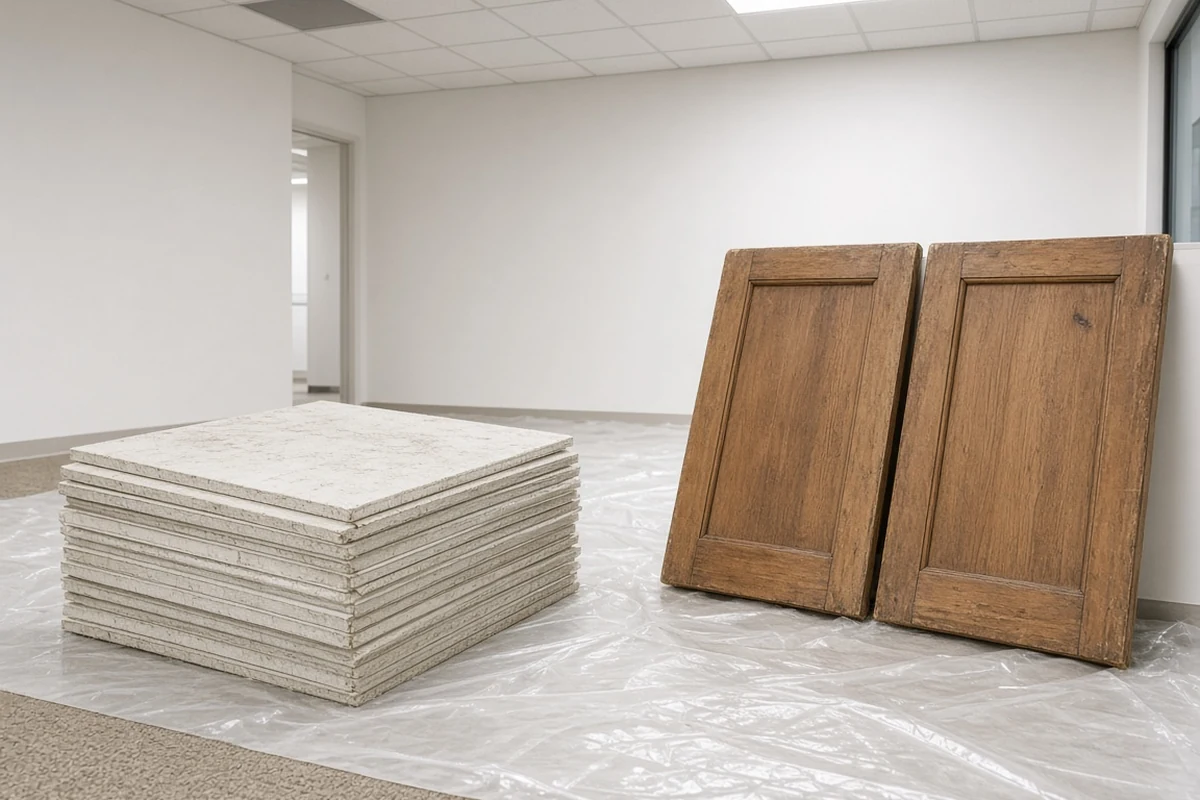
Once the regulated items are out, the rest is ordinary renovation waste: drywall, flooring, ceiling tile, cabinets and framing. A junk bin can take much of it, so ask us when you book whether a bin suits your job. Drywall goes in its own bin, and clean wood in its own load. Delivery and haul away are on us. Your contractor loads the bin. A 20-yard is the common start, and larger junk bins are available. See our commercial services page.
For a bin on the street or lane, confirm with your City first, since some cities need a permit. Your landlord or strata rules can apply as well. We time delivery to your permit dates.
FAQ
Can sharps go in a renovation bin? No. Sharps and biomedical waste need a licensed handler. Richmond's depot does not accept hypodermic needles.
What does Metro Vancouver require for dental amalgam? Dental operations that discharge wastewater containing amalgam must install a certified amalgam separator and keep maintenance records for at least three years.
Do I need an asbestos test for a clinic reno? WorkSafeBC says to test before renovation or demolition work that could disturb asbestos.
Who can help me find a hazardous waste contractor? The Recycling Hotline, 604-732-9253.