
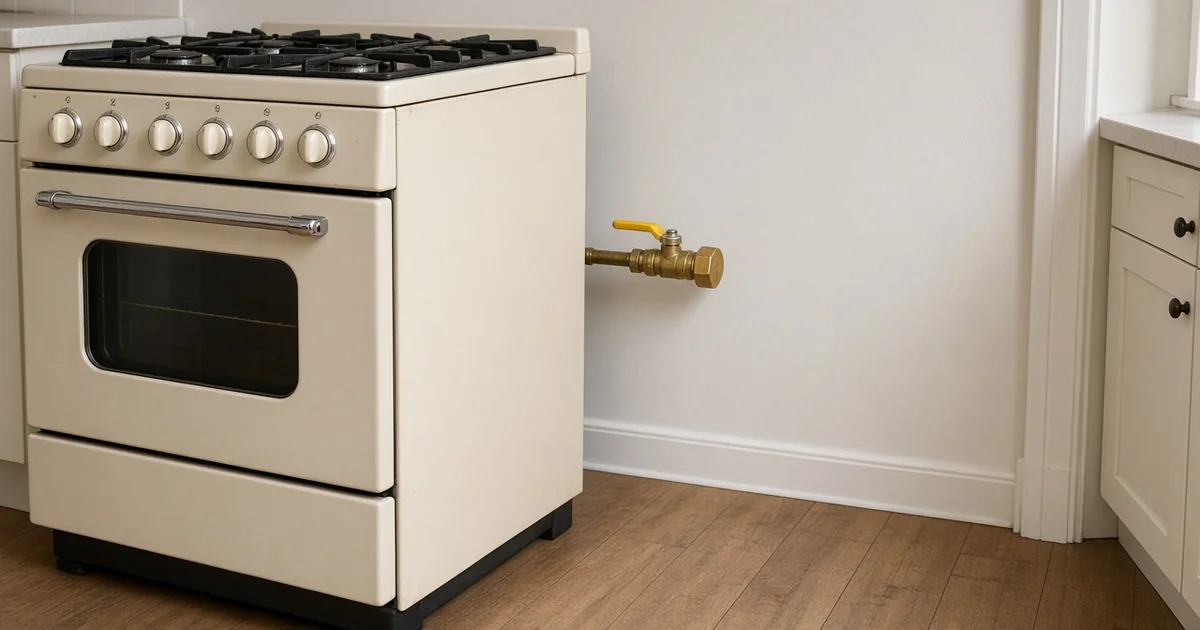
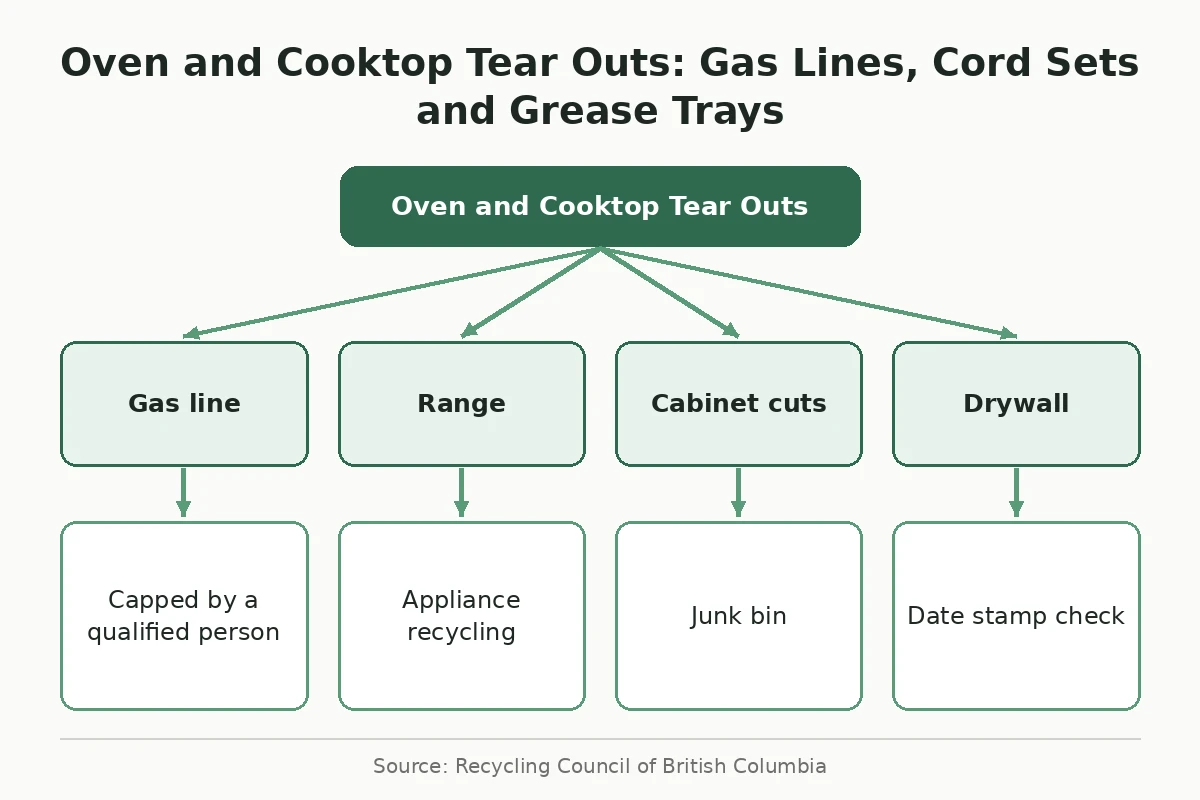
A gas range needs its line capped by a qualified person before it moves. Then send the unit to appliance recycling.
Ovens and cooktops need safe disconnects
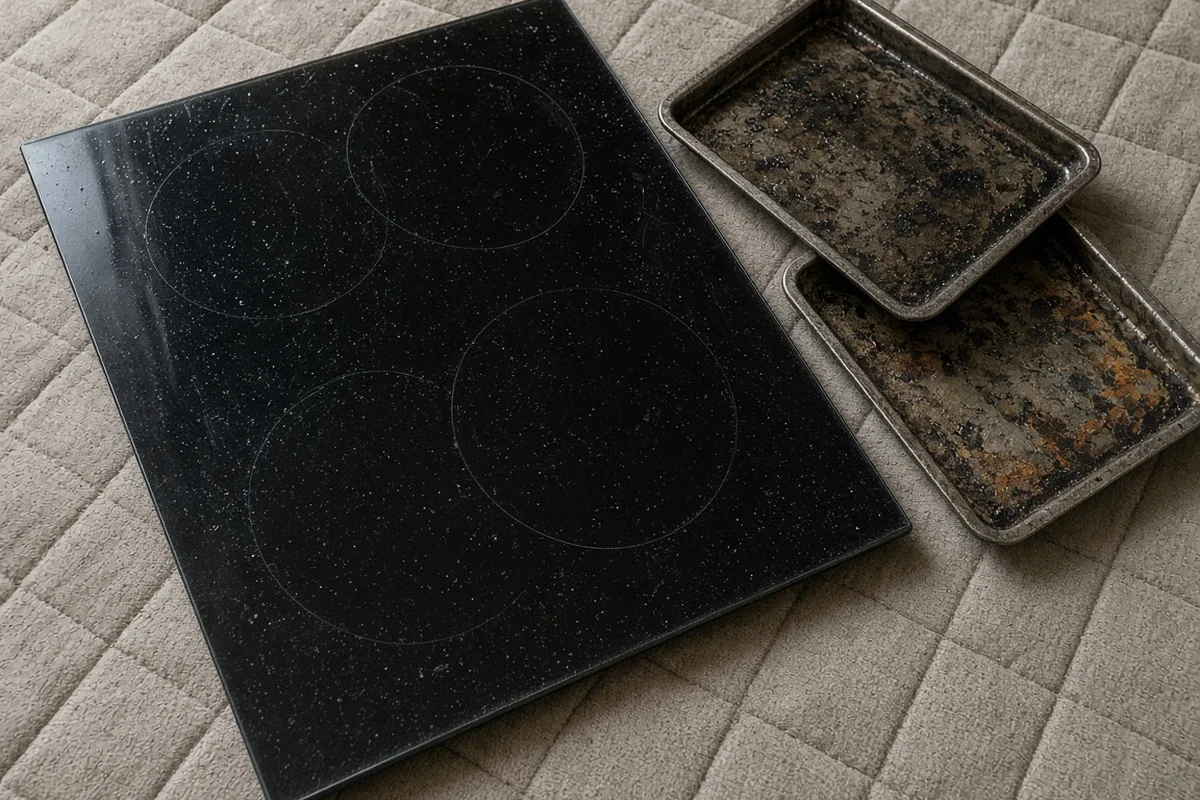
A qualified person must cap gas lines. Unplug electric units safely. Clean the grease trays so the depot can take the unit.
Appliance recycling before junk
Search for appliance take back options. A gas appliance with an open line never goes in a bin. Handle loose glass cooktop panels with care.
Surrounding reno debris
Cabinet cuts around the opening go with normal reno debris. Drywall dated 1990 or newer is accepted. Older or undated drywall needs a lab report showing no asbestos.
When a bin fits
The bin arrives, you load it, and we haul it away. A 20-yard junk bin is the usual starting size. We also have a 15-yard bin, but it is often sold out, so ask when you book.
A driveway or yard placement needs no permit. Street, boulevard or lane rules vary by City, so check yours before you book. When a permit is required, pass us the dates and we will time the drop off.
Batteries, electronics, propane tanks, paint, solvents, pharmaceuticals and asbestos stay out of a junk bin. Asbestos is never permitted in any Trash King bin. Search Metro Vancouver Recycles or call 604-732-9253 if you are unsure.
Our disposal bins and what not to put in a bin pages cover the standing limits.
FAQ
What is the first sorting step for this job? Have a qualified person cap the gas line. Then send the oven or cooktop to appliance recycling.
What size bin should I start with? The usual start is the 20-yard junk bin. Ask when booking about other sizes. The 15-yard is often sold out.
Do I need a permit on my driveway? No. A driveway or yard needs no permit. Street, boulevard or lane rules depend on your City.
Where do I check an item I am unsure about? Search Metro Vancouver Recycles or call the Recycling Hotline at 604-732-9253.
Can asbestos ever go in a Trash King bin? No. Asbestos is never permitted in any Trash King bin.