
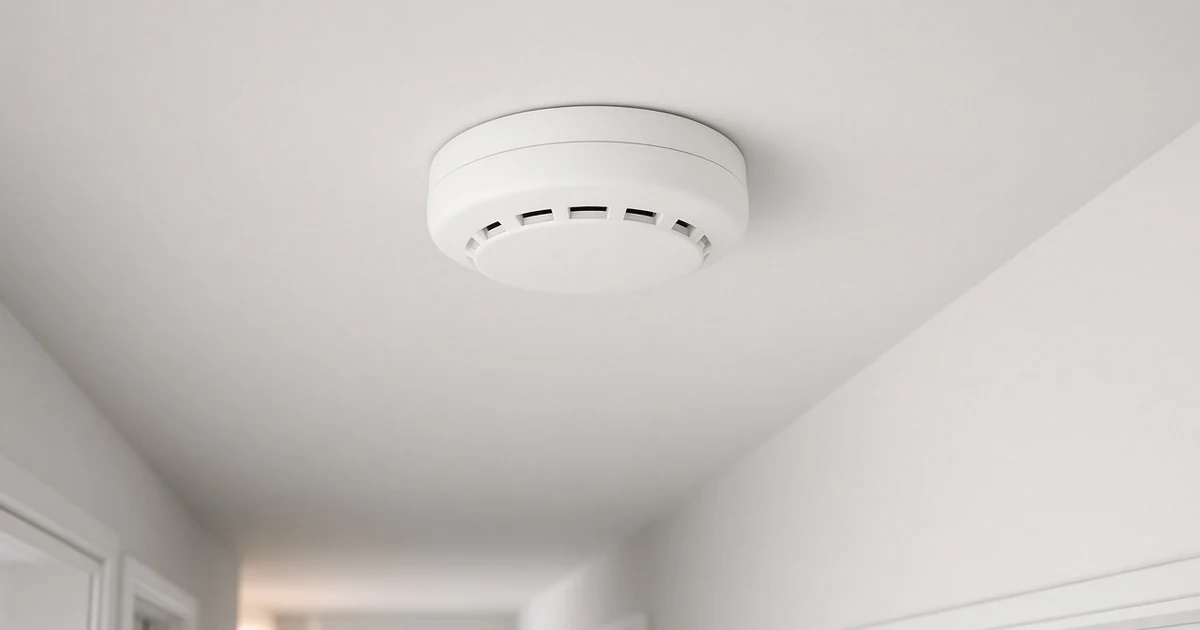
Four small household items cause a lot of confusion at cleanout time: smoke alarms, carbon monoxide (CO) detectors, old thermostats and fire extinguishers. None of them belongs in the garbage or in a Trash King bin. Each has a safe route, and most of the routes are free. This guide covers where to take each one in Metro Vancouver, using the programs' and cities' own pages.
All four belong at a facility. Trash King does not take them in a bin.
Smoke alarms and CO detectors
Product Care Recycling runs the BC program for these. Its BC page says you can drop off old and broken smoke alarms and carbon monoxide alarms at more than 200 locations, including private and municipal recycling depots, retail stores and fire halls. Its recycling locator shows the nearest one.
Accepted: smoke alarms, CO alarms and combination smoke and CO alarms.
Not accepted: thermostats, alarm keypads, physically damaged smoke alarms, building wide smoke or CO detector units, and smoke detectors without an alarm function (typically installed in commercial buildings).
Limit: up to 40 smoke or CO alarms at once. If you have more, Product Care says you might be eligible for its free pick up service.
The City of Vancouver lists smoke and carbon monoxide alarms as accepted for free at its Zero Waste Centre at 8588 Yukon Street. It also lists them at pop up recycling events, and smoke and carbon monoxide detectors at mini events. Metro Vancouver's North Shore Recycling and Waste Centre page also lists smoke and CO alarms, with a note that large quantities (over 40) are not accepted.
If an alarm is physically damaged, check with the drop off location, because Product Care's page says damaged alarms are not accepted.
A quick safety reminder: replace an old alarm right away so there is no gap in protection. Check the manufacturer's date on the unit and the manufacturer's guidance for replacement.
Thermostats
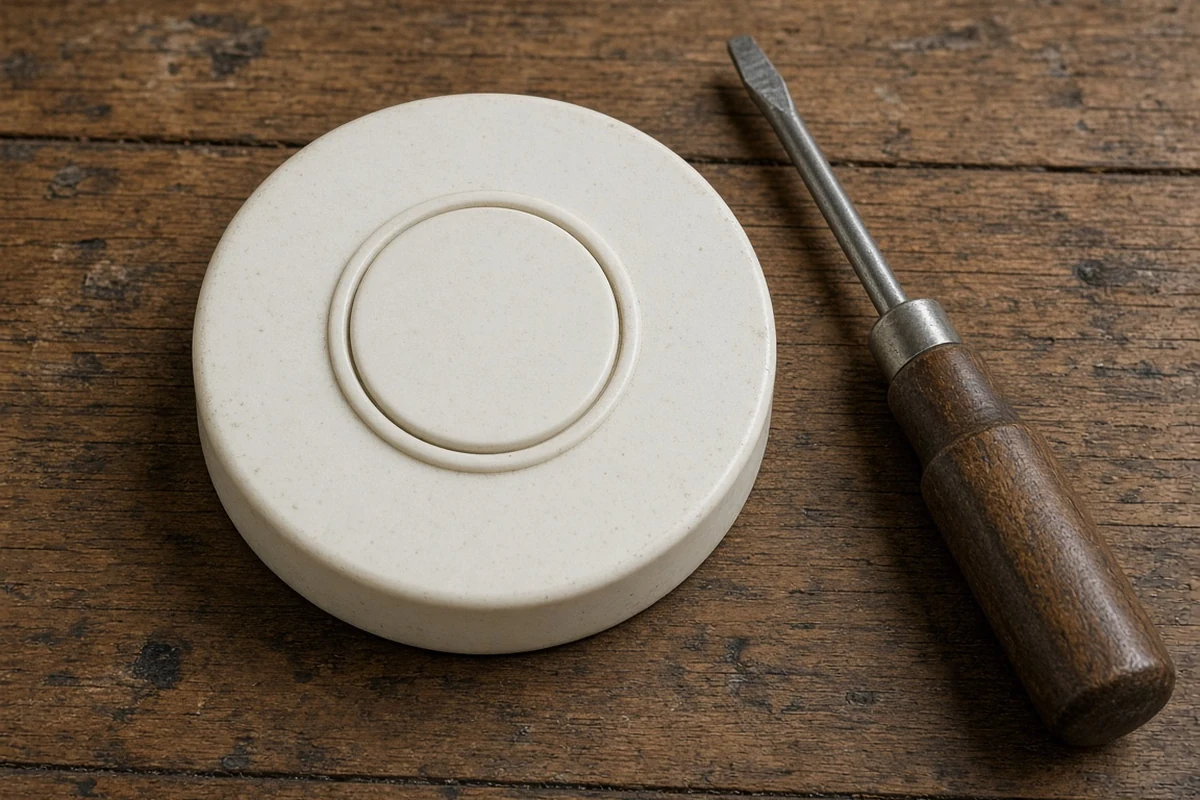
Thermostats are not part of the smoke alarm program. Product Care's page lists them as not accepted. Old thermostats have their own program, the Thermostat Recovery Program run through HRAI (the Heating, Refrigeration and Air Conditioning Institute of Canada). Its page offers a public drop off locator by postal code. Keep the thermostat intact and do not try to take mercury out of it.
The City of Vancouver lists thermostats as accepted for free at the Zero Waste Centre and at mini pop up recycling events. Check the City's page for current details.
Fire extinguishers
The City of Vancouver's Zero Waste Centre lists fire extinguishers as accepted, with a maximum of 2 per day per resident. Check the City's page for the current wording. No province wide program for household extinguishers is listed, so ask the facility you plan to visit whether it takes them. Metro Vancouver's phone line is 604-432-6200, and the Metro Vancouver Recycles tool lists where to take items.
Fire extinguishers never go in the garbage cart or in any bin. Our what not to put in a bin page lists them with the other pressurized items we cannot take.
What to expect at the drop off
- Bring only the items on the accepted list.
- Keep items whole. Do not take alarms apart.
- Ask staff where to place them.
- Check hours before you go, since sites change them.
A quick plan
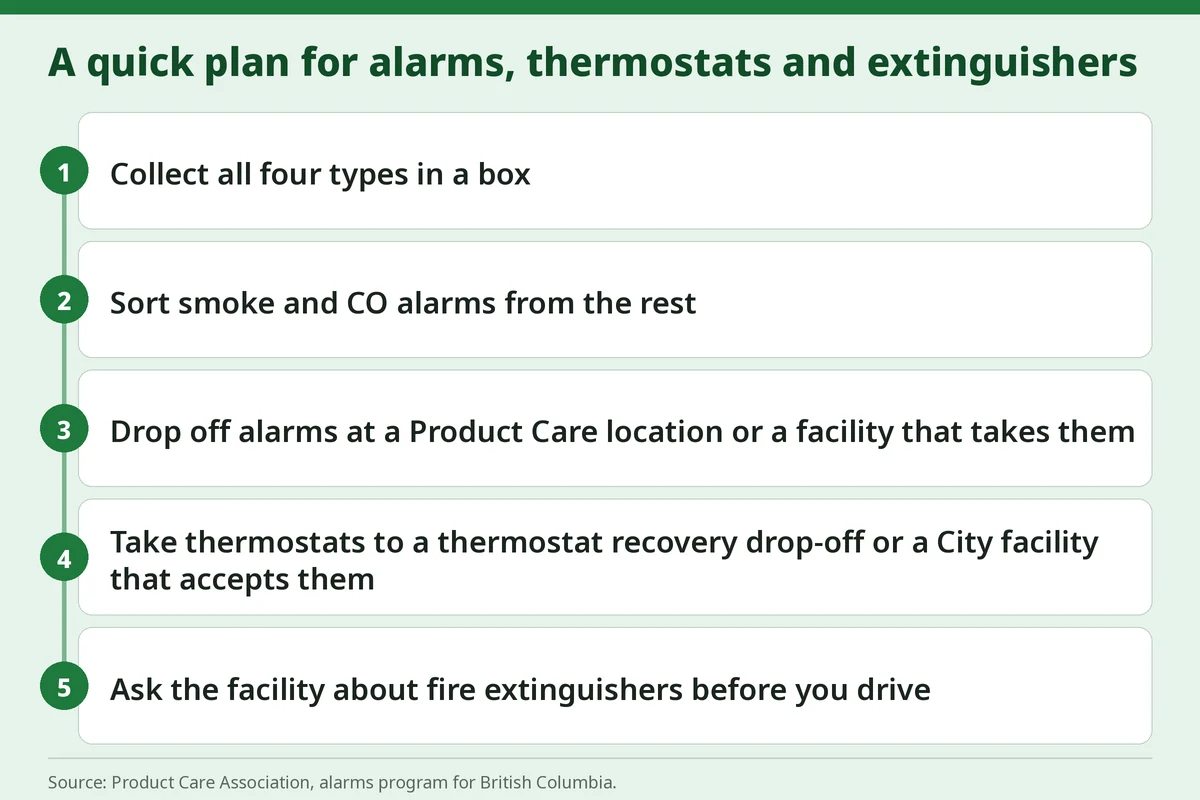
- Collect all four types in a box.
- Sort smoke and CO alarms from the rest.
- Drop off alarms at a Product Care location or a facility that takes them.
- Take thermostats to a thermostat recovery drop off or a City facility that accepts them.
- Ask the facility about fire extinguishers before you drive.
When the rest of the cleanout goes in a bin
If you are clearing a house, a basement or an old workshop, these small items are only part of it. Pull them out first, and keep batteries and electronics out too.
Trash King handles delivery and haul away, and you handle the loading. A 20-yard bin is the usual place to start for junk, cleanouts and renos. A 15-yard junk bin is at times available, but it is commonly sold out, so plan around the 20-yard. Ask us about other smaller sizes when you book. If the job sounds larger when you call, we may suggest a larger bin. More is on the 20-yard bin page.
Leave paint, propane, tires, fuel and electronics out of the bin. They never go in a Trash King bin. Our what not to put in a bin page lists the rest.
Where the bin goes decides the paperwork. No permit is needed for a bin on private property, like your driveway or yard. Some cities need a permit for a bin on the street, boulevard or lane, so confirm with your City before you book. Check any strata or HOA rules as well, since they can still apply. If yours does, apply with the City, and we will time delivery to any permit dates.
A mattress or box spring can go in as an add on for an added fee, so mention it when you book.
Our household garbage page has more on how bins work for home cleanouts.
FAQ
Can I put a smoke alarm in the garbage? Product Care runs a BC program for them with more than 200 drop off locations. Use that rather than the garbage or a bin.
How many alarms can I drop off? Product Care says up to 40 smoke or CO alarms at once.
Does the smoke alarm program take thermostats? No. Product Care's page lists thermostats as not accepted. Use the Thermostat Recovery Program or a facility that takes them.
Can I take a fire extinguisher to the Zero Waste Centre? The City of Vancouver lists fire extinguishers as accepted, with a maximum of 2 per day per resident.
Do any of these go in a Trash King bin? No.