
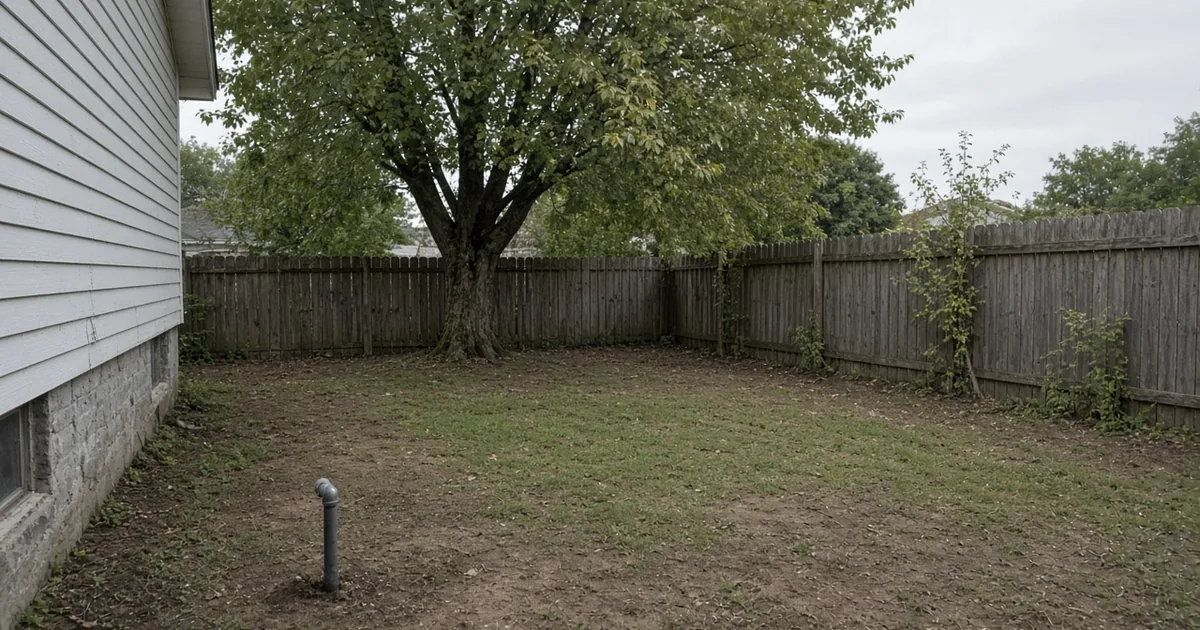
Many older Metro Vancouver homes were heated with oil, and the tank may still be in the yard. The tank is rarely the problem. What leaked out of it is. This is a safety and compliance topic that needs a qualified contractor, so this post explains the process and leaves the hands-on work to the professionals.
Why it matters
The City of Vancouver's bulletin on residential underground storage tanks says that before natural gas arrived in the early 1960s, most Vancouver homes were heated by furnace oil, usually stored in underground tanks of about 1,125 to 1,350 litres in back yards. It says the life expectancy of a tank is about 20 to 25 years because of corrosion, and that a damaged tank can release oil into the ground, where it can contaminate soil and groundwater.
Metro Vancouver's construction toolkit lists underground storage tanks for heating and cooling systems among hazardous materials found on sites.
Permits first
Each city has its own rules.
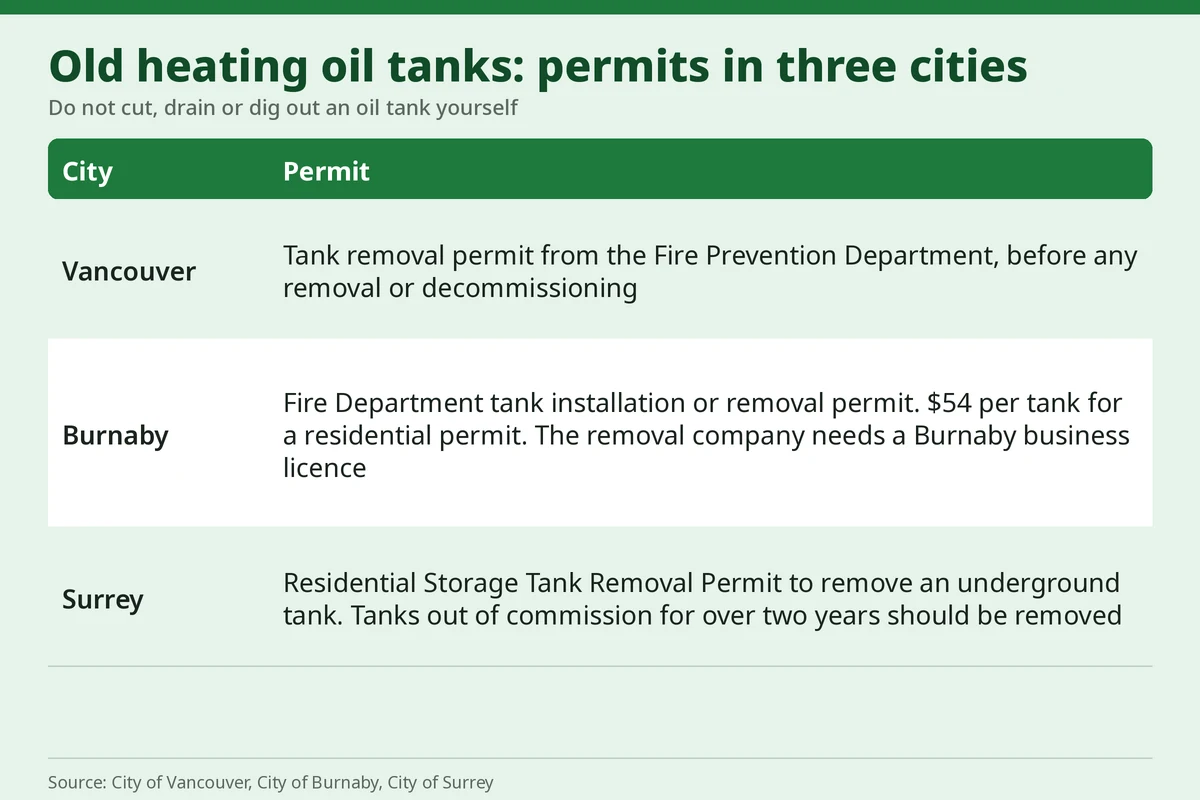
Vancouver. A tank removal permit from the Fire Prevention Department must be obtained before any removal or decommissioning work. The City's Fire By-law and Sewer and Watercourse By-law require tanks that will not be reused, or have been out of service for two years, to be removed.
Burnaby. The Burnaby Fire Department issues a tank installation or removal permit under the National Fire Code. The City's form lists a $54 fee per tank for a residential permit, and says the tank removal company must hold a Burnaby business licence in good standing and submit verification when work is complete.
Surrey. A Residential Storage Tank Removal Permit is needed to remove an underground storage tank on a residential property. Surrey says tanks out of commission for more than two years, or with no further use, should be removed.
Check your own city's fire department page if you live elsewhere.
Who does the work

Vancouver's bulletin strongly recommends experienced tank removal consultants and contractors, with a valid business licence, WorkSafeBC coverage and insurance, and recommends a qualified environmental consultant to oversee the work and check the soil. It describes typical steps: draining remaining oil to an approved facility, assessing the tank for explosive conditions, excavating, cleaning, rendering the tank unfit for reuse and taking soil samples. It adds that smelling soil to check for contamination must be avoided. A final closure report signed by a qualified professional goes to the City.
Do not cut, drain or dig out an oil tank yourself.
The tank is not bin waste
Fuel and tanks never go in a Trash King bin, and the contractor handles the oil, sludge and tank. The related rules are in our post on propane tanks, fuel and old BBQs. Once the tank is out, our metal recycling page explains how scrap metal moves, but ask your contractor where theirs goes.
After the tank
If soil was contaminated, Vancouver's bulletin says it must go to a facility licensed to receive contaminated soil, and that is a contractor job. Clean excavation spoil is a separate matter. Call us if you have questions about the ordinary renovation debris around the job.
FAQ
Do I need a permit to remove an oil tank? In Vancouver, Burnaby and Surrey, yes. Each city issues its own permit for removing an underground storage tank.
Can I remove an old oil tank myself? Vancouver's bulletin strongly recommends experienced contractors and a qualified environmental consultant. Do not do it yourself.
Can an oil tank go in a bin? No. The contractor handles the tank, the oil and any contaminated soil.
Does an old tank have to come out? Vancouver and Surrey say tanks not reused or out of service for two years should be removed.