
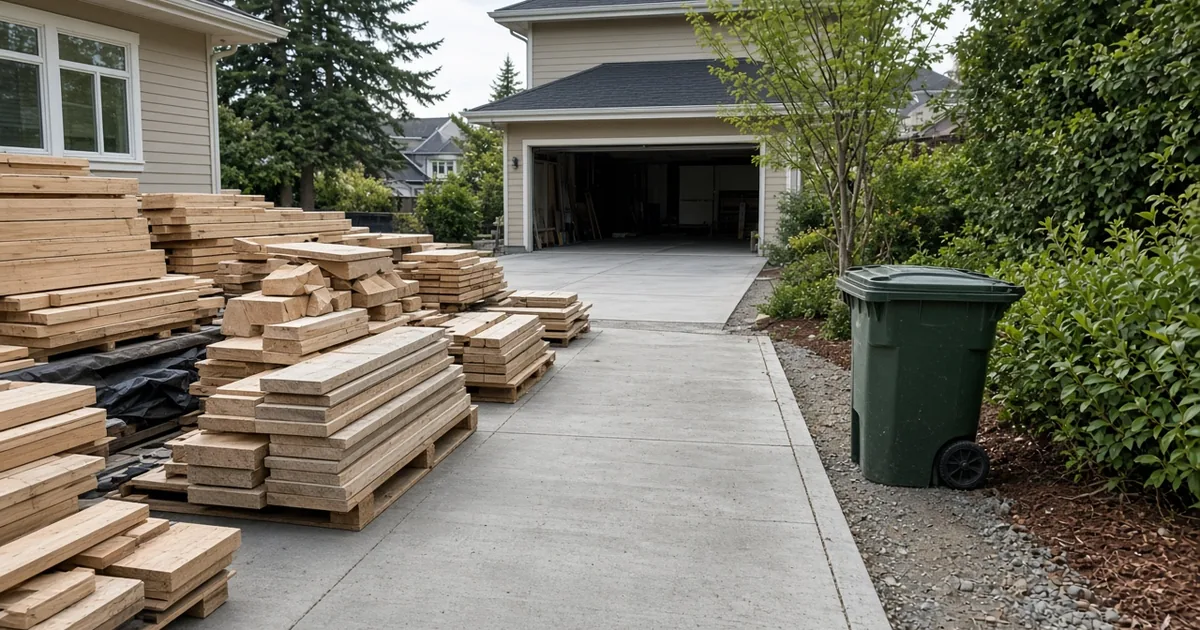
A messy job site is not just untidy. Debris on floors and walkways is how people trip, and material in the wrong place is how things fall. WorkSafeBC’s Occupational Health and Safety (OHS) Regulation has specific housekeeping rules, and this guide walks through the ones that matter most for a renovation or build, in clear language. This is general information, not legal advice. For your own site, read the regulation and ask WorkSafeBC.
The rule on waste material
Section 4.41 of the OHS Regulation, in Part 4 (General Conditions), is short. It reads: "Refuse, spills and waste material must not be allowed to accumulate so as to constitute a hazard."
The key phrase is "so as to constitute a hazard." The rule is not a ban on any waste at all. It means waste, offcuts and spills cannot be left to pile up where they put someone at risk.
Construction housekeeping in Part 20
Part 20 covers construction, excavation and demolition. Section 20.120 is titled Housekeeping. It says material and debris must not be allowed to accumulate on floors or on the ground outside the building or structure if workers will be endangered.
Note the two locations. The rule covers floors inside and the ground outside. A tidy interior does not help if the offcuts are stacked in the access path outside.
Related rules worth reading
A few nearby sections affect how you manage debris:
- Section 4.39, slipping and tripping hazards. Floors, platforms, ramps, stairs and walkways available for use by workers must be kept in good repair and free of slipping and tripping hazards.
- Section 4.45, falling materials. An area in which material may be dropped, dumped or spilled must be guarded to prevent inadvertent entry by workers, or protected by adequate covers and guarding.
- Section 20.117, throwing material. If material is to be dropped or thrown from upper floors, the area where it will fall must be barricaded to prevent workers from entering, with conspicuous warning signs.
- Section 20.10, chutes. Chutes must be provided if the free fall of materials or debris being removed exceeds 6 m (20 ft). Vertical chutes must be completely enclosed and have gates at each point of entry, and the discharge area must be barricaded or guarded with signs near the outlets.
Read the full text on WorkSafeBC's site before you plan your work, because the sections have subsections and conditions that a summary leaves out.
What this looks like on a real job
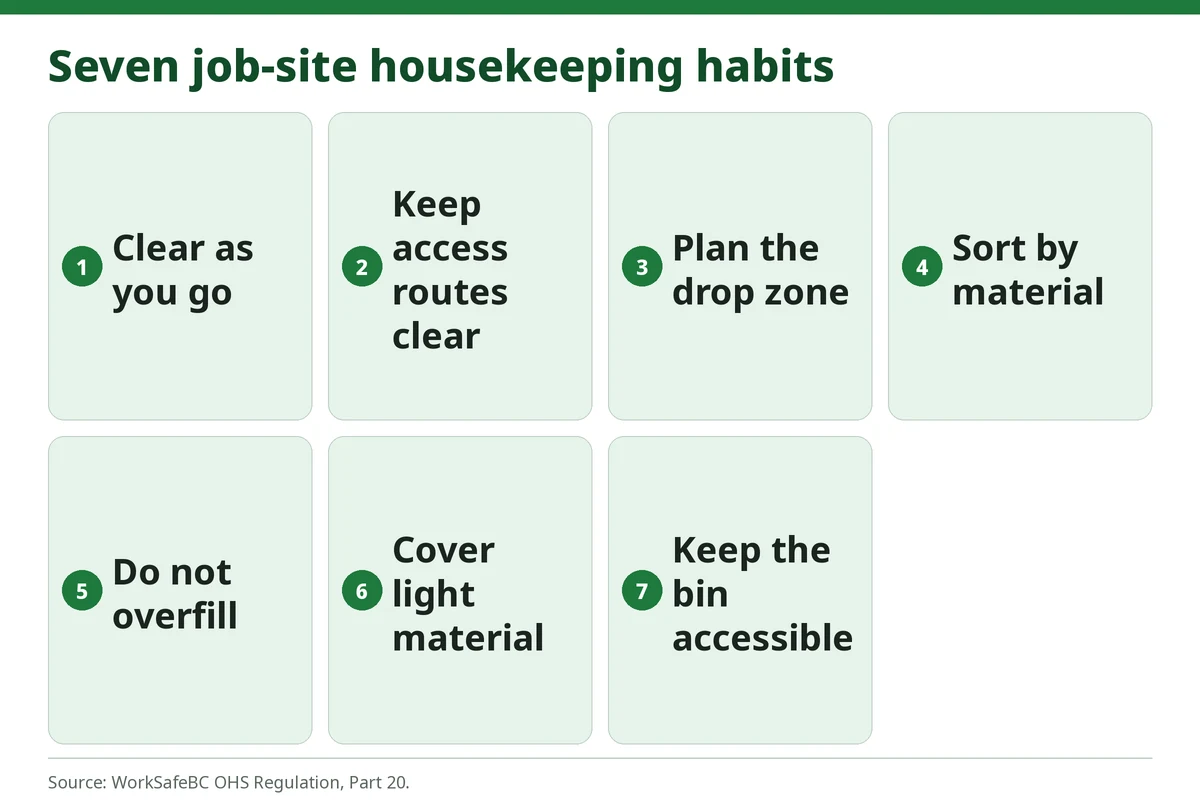
None of these rules says "use a bin." They say debris must not become a hazard. A bin is just one practical way to meet that standard. A few habits help:
- Clear as you go. Do not wait until the end of the week. Offcuts, packaging and demolition pieces go into the bin at the end of each task.
- Leave access routes clear. Walkways, stairs and the path to the bin should stay free of debris.
- Plan the drop zone. If you are dropping material from a height, set up the barricade and signs first. A bin placed under a chute or the drop area keeps the landing zone contained.
- Sort by material. Mixed debris is one thing. Clean wood, drywall, concrete and dirt each need their own separate bin. Our job-site sorting guide covers sorting in more detail.
- Do not overfill. Load to the rim only. Debris above the rim can fall out in transport and blow around the site.
- Cover light material. Remove tarps before pickup, but cover loose items such as insulation scraps and packaging while loading so wind does not scatter them.
- Leave the bin reachable. Park it where trucks can reach it and where workers will not need to carry debris far.
Choosing the bin
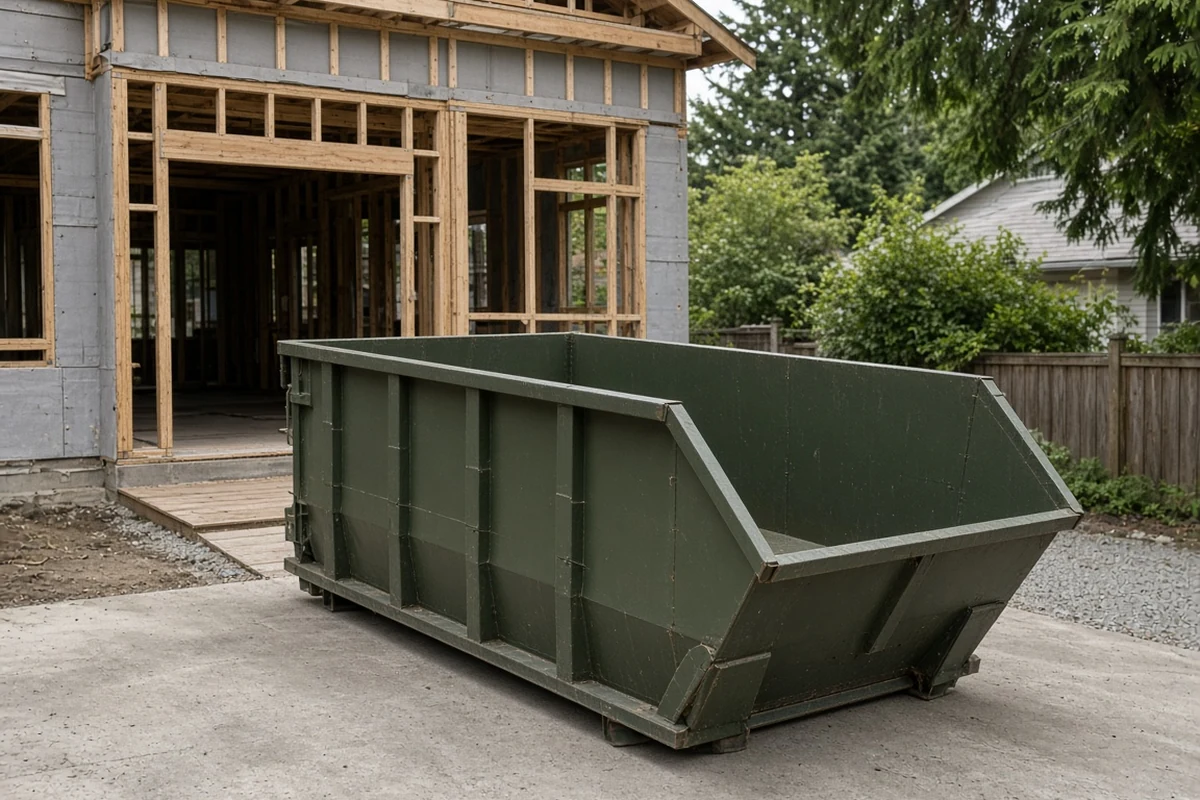
We deliver the bin and haul it away. You handle the loading. That works well for a job site because the debris stays in one place until pickup. Begin with the 20-yard for junk, cleanouts and renos, since it is the common starting size. You can read more on the 20-yard bin page. A 15-yard junk bin is sometimes available, though it is commonly sold out, so plan around the 20-yard. For any other smaller size, just ask when booking.
Each material needs its own bin. Drywall, concrete, dirt and clean wood each go in their own separate bin. Clean wood means unpainted wood only, and nails are fine. Tell us when you order if any of the wood is treated, since it needs special handling. Leave it out of any clean wood or yard load. Bins have drainage holes, which helps with wet material.
No permit is needed for a bin on private property, like your driveway or yard. Some cities ask for a permit when a bin sits on the street, boulevard or lane, so check with yours before delivery. Check any strata or HOA rules as well, since they can still apply. If yours does, apply with the City, and we will time delivery to any permit dates.
Paint, propane, tires, fuel and electronics never go in a Trash King bin, and our what not to put in a bin page has the full list.
If a mattress or box spring is part of the load, tell us when you book. It goes in as an add on for an extra fee.
For larger sites, see our new construction waste page and our commercial services page.
Who is responsible
This is the part to confirm with WorkSafeBC for your own situation. Responsibilities under the OHS Regulation differ between owners, prime contractors, employers and workers. A homeowner doing their own work and a contractor with employees are in different positions. This guide does not tell you which applies to you.
FAQ
Does WorkSafeBC require a bin on a job site? The sections quoted here do not mention a bin. They say waste and debris must not accumulate so as to be a hazard. A bin is one practical way to meet that.
Which section covers waste material? Section 4.41 covers refuse, spills and waste material. Section 20.120 covers housekeeping on construction sites.
What about dropping debris from upper floors? Section 20.117 says the area where material will fall must be barricaded, with warning signs.
Can I mix drywall and wood in one bin? No. Each material goes in its own bin.
Is this legal advice? No. It is a summary of public regulation text. Check the regulation and ask WorkSafeBC.