
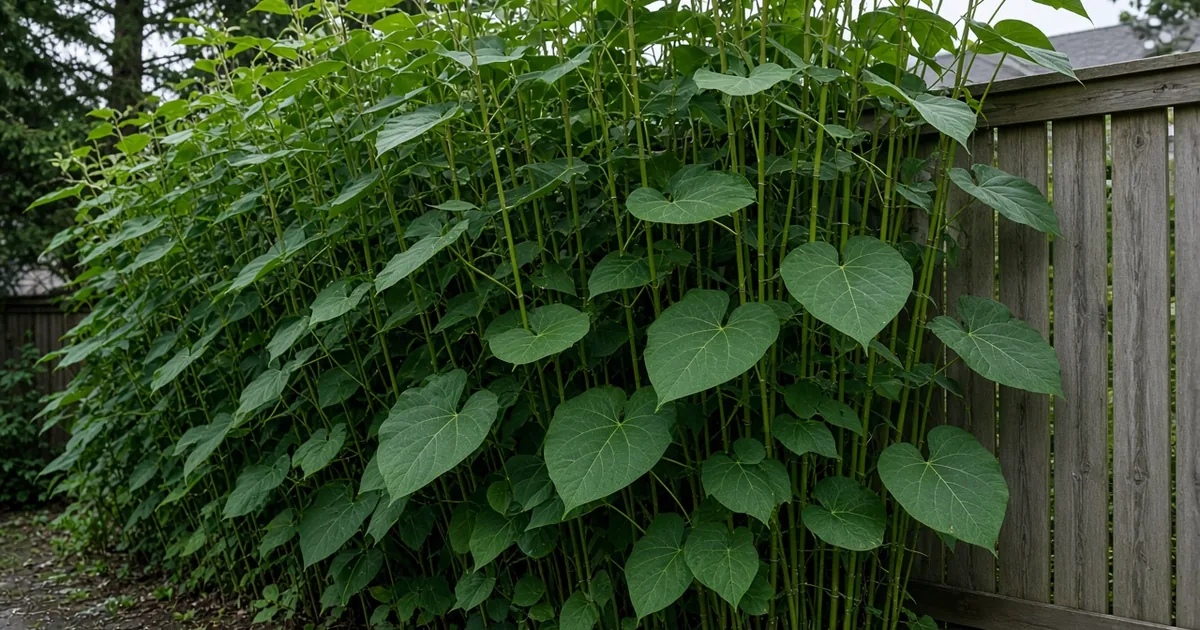
Japanese knotweed and Himalayan blackberry spread quickly, and the way you cut and dispose of them can make a patch larger. Pulling it out and putting it in the green cart looks neat. For some invasive plants it can spread the problem. Here is how to find the right advice for your plant and your city.
Begin with identification
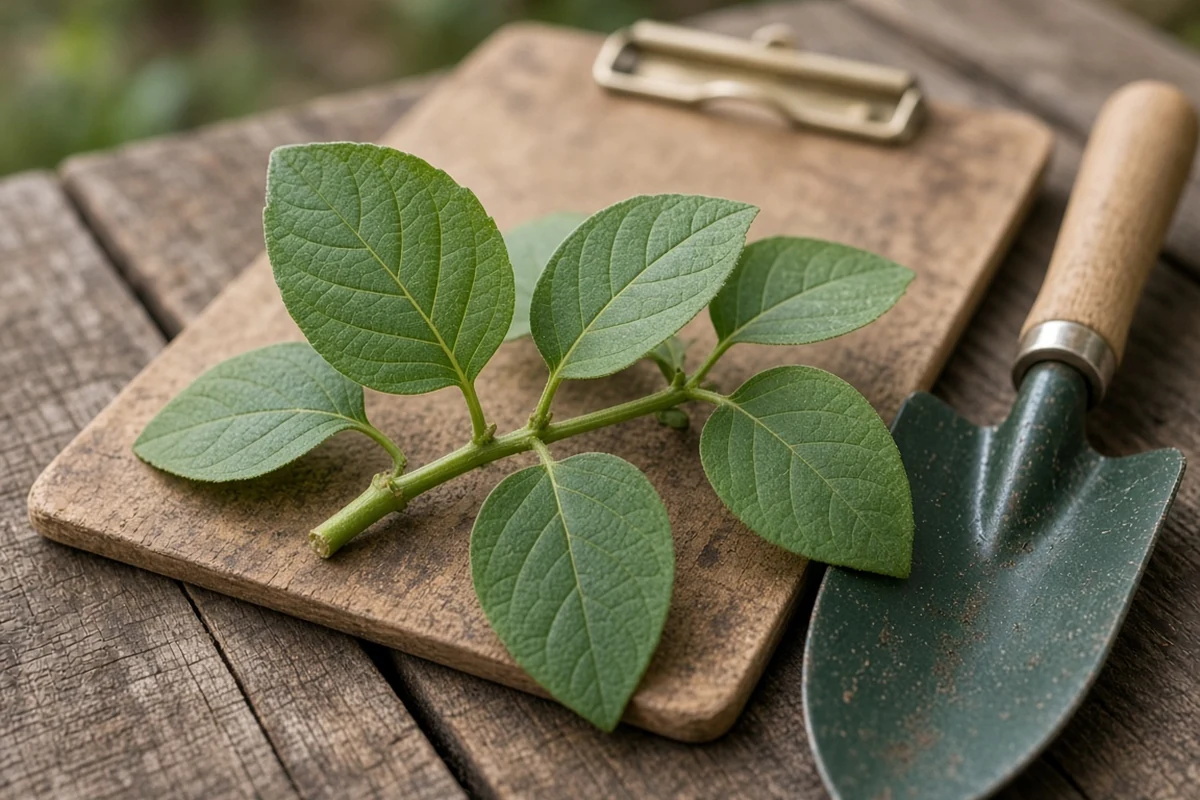
Before you cut anything, verify what you have. The Invasive Species Council of Metro Vancouver maintains a site with plant profiles, identification help and control guidance for the region, at iscmv.ca. Use it to check what the plant on your property is and what is recommended for it.
The ISCMV site is the right place to read disposal advice for each species. Disposal guidance differs between plants, and between cities, so follow the one that matches your plant and your address.
Do not guess with the green cart
Many cities accept yard trimmings in the green cart, but that does not mean every plant is welcome in it. Invasive plants can regrow from small pieces of root and stem. Before you put knotweed, or similar plants, in a curbside cart or at a depot, confirm with your city or the ISCMV that it is accepted.
Richmond's banned and prohibited materials page lists toxic plants among the materials banned from the landfill. Call your city's solid waste office or Metro Vancouver at 604-432-6200 to ask what your area allows.
Who to contact
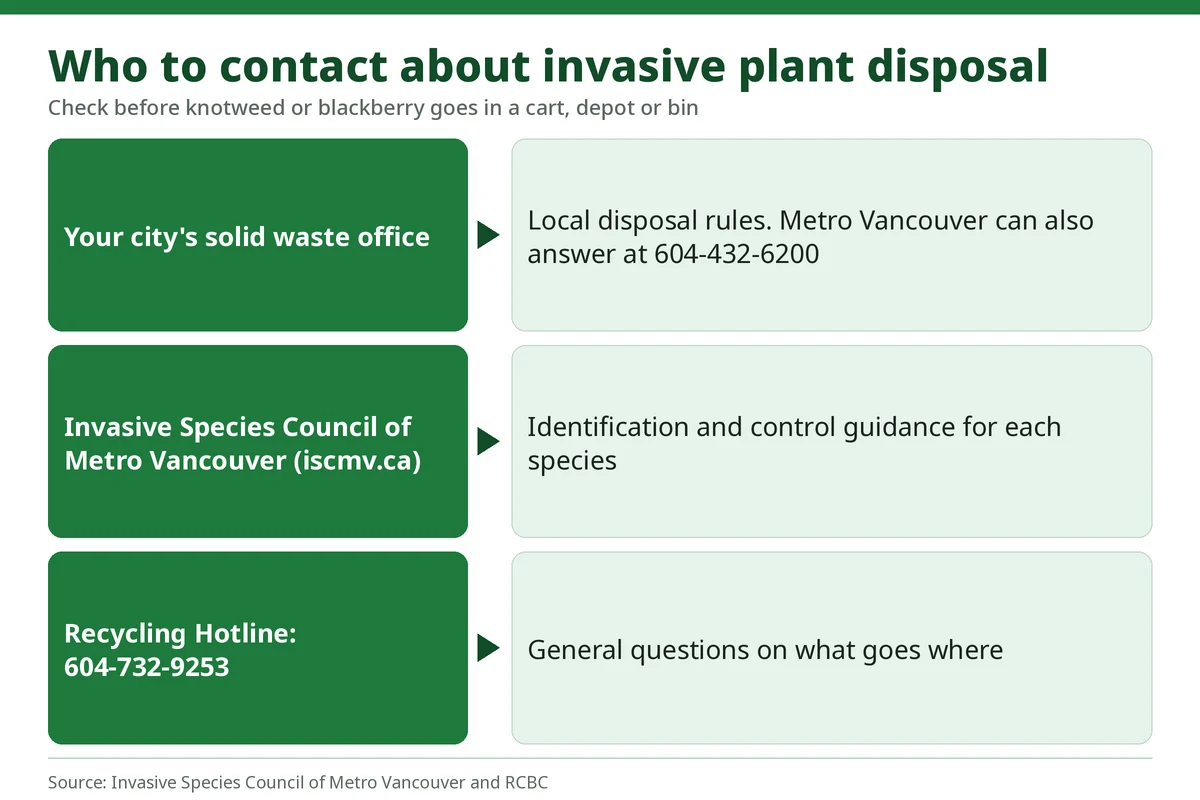
- Your city's solid waste or environmental services office for local disposal rules.
- Invasive Species Council of Metro Vancouver for identification and control guidance.
- Recycling Hotline, 604-732-9253, for general questions on what goes where.
Where a bin fits
Blackberry and other ordinary yard trimmings can go into one of our green waste bins. Japanese knotweed is not accepted in green waste and needs special disposal, so follow your city or the Invasive Species Council of Metro Vancouver for that plant. Bag or contain roots, stems and seed heads so pieces do not fall and spread on the way. Routine cleanup from the same yard, such as old fence panels, broken planters or general junk, can go in a junk bin, kept separate from any plant waste. We deliver the bin, you load it, and we take it away. You can learn more on our residential services page, and our organics recycling page covers how green waste is handled in general.
FAQ
Can I put Japanese knotweed in my green cart? Check with your city and with the Invasive Species Council of Metro Vancouver first. Invasive plants can regrow from small pieces, so do not guess.
Where can I identify an invasive plant? The Invasive Species Council of Metro Vancouver, at iscmv.ca, has plant profiles and guidance for the region.
Do you take blackberry or knotweed in your bins? Blackberry yes, in a green waste bin. Knotweed no. It is not accepted in green waste and needs special disposal. Bag or contain blackberry roots and seed heads so pieces do not spread.
Who can I call? Metro Vancouver's Information Centre is 604-432-6200 and the Recycling Hotline is 604-732-9253.