
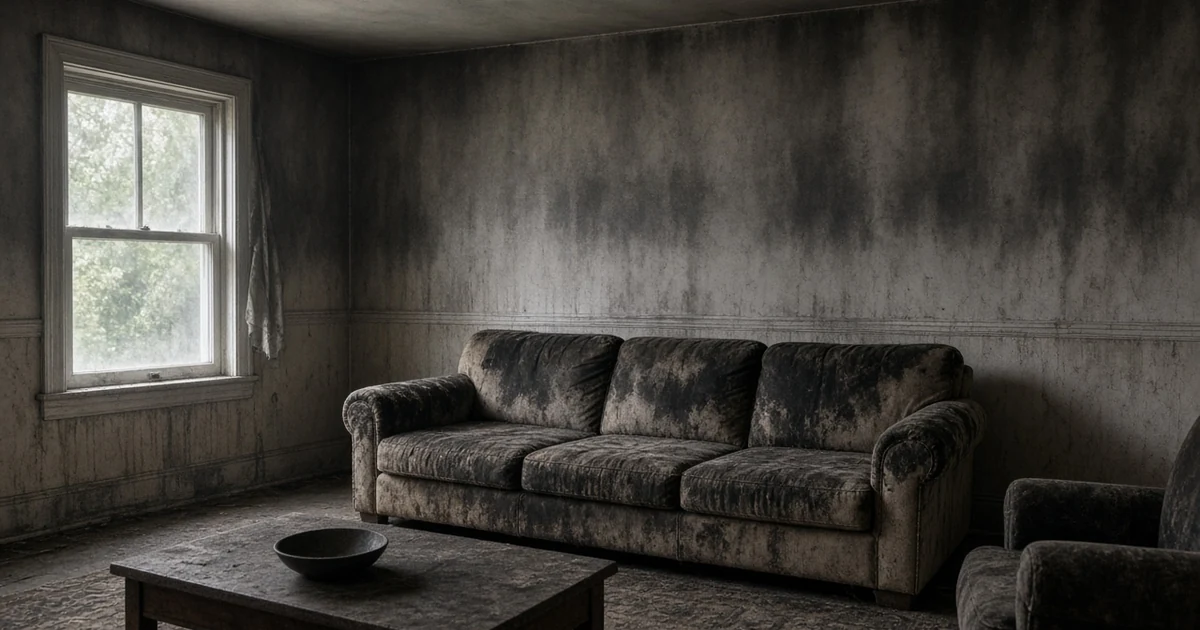
A house fire leaves you with a long list of choices. The urgent ones are about safety and your insurance claim. Clearing out the contents comes after, and doing it in the wrong order can cost you coverage or more harm. This guide covers the sequence of steps, using BC's Office of the Fire Commissioner guidance and WorkSafeBC.
First: fire department and insurer
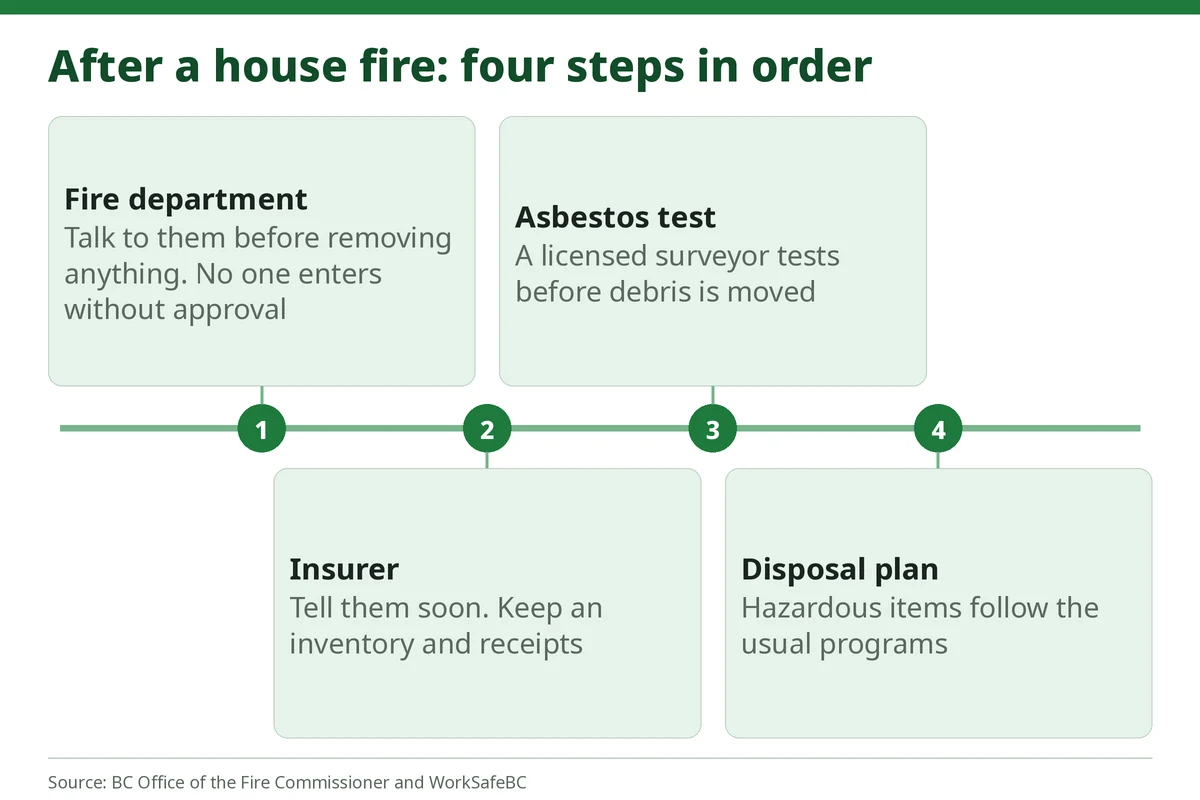
The BC Office of the Fire Commissioner's guide, What to Do After a Fire, says that if the fire department is investigating, you should talk to them before removing any items from your home. Nobody, including the owner, is permitted on the site without the express approval of the fire department investigator.
If you are insured, the guide says to inform your insurance representative as soon as possible. Ask what you need to do about an inventory of damaged personal property, with a description of each item and how much you paid for it, and keep all receipts for any money you spend. The guide also advises that if you are unable to stay in your home, you inventory what is removed.
Second: test for asbestos before anyone clears debris
Fire and water damage can disturb building materials. WorkSafeBC says if you are a homeowner, strata council or property manager, you need to get your building tested for asbestos before a renovation or demolition project, or before maintenance work that could disturb it. Asbestos was used in more than 3,000 building materials from the 1950s to the 1990s, and newer homes can contain it too if they were built with older materials. Hire a licensed surveyor and, if asbestos is found, a licensed abatement contractor. Do not move debris yourself until you know.
Third: salvage what you can
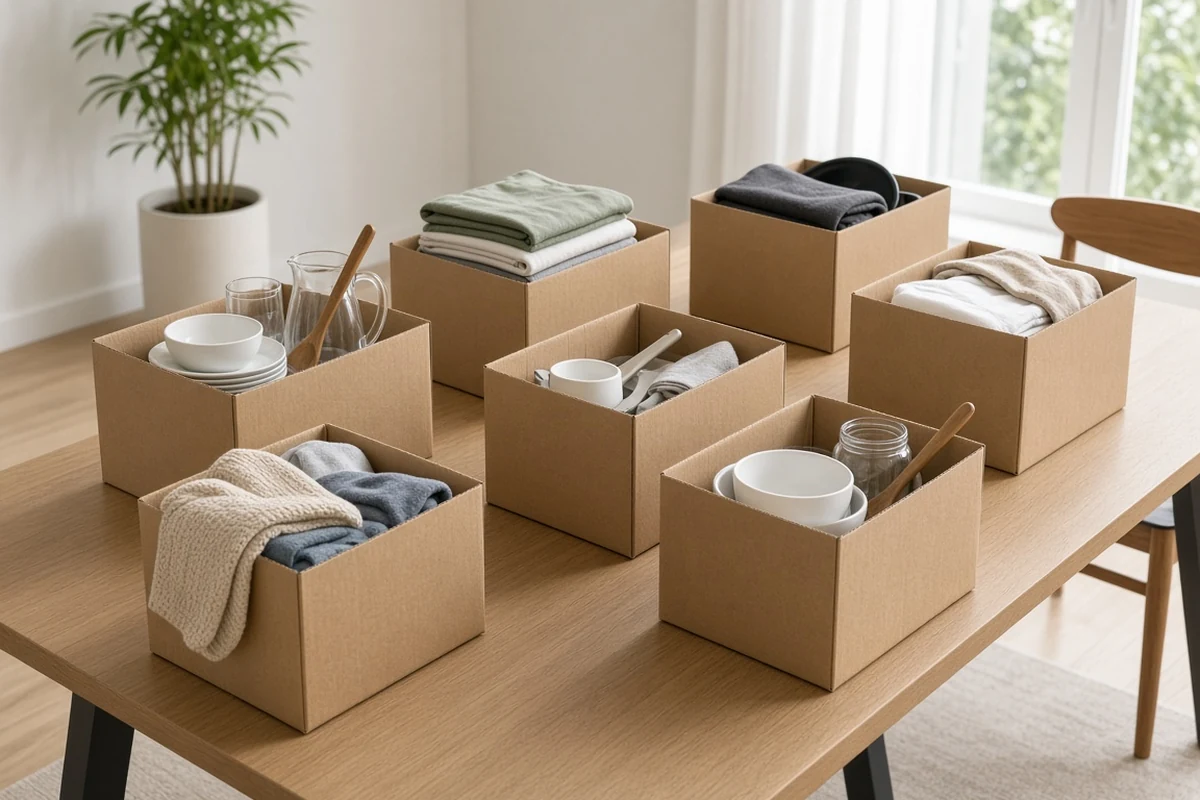
The OFC guide includes clean up and salvage tips. It says to discard any food products exposed to heat or smoke, and not to use appliances, electrical outlets or fuse breaker panels until a qualified electrician has checked them. If the electricity or gas has been disconnected, contact a licensed contractor.
Ask your insurer about contents cleaning, and ask whether it wants to see items before you throw them out.
Fourth: plan the disposal
Once the site is released and the insurer has seen what it needs to see, decide what goes where.
- Hazardous items. Paint, fuel, propane tanks, batteries and aerosol cans from a burned home still follow the usual programs. Our what not to put in a bin post has the list.
- Electronics and appliances. Metro Vancouver bans them from landfill disposal, so ask your city or a depot where they go.
- General contents. Furniture, soft goods and household items that are not salvageable.
A fire damaged load can go in one of our bins, but it usually has to go to a special facility, so call us first and tell us what the load contains. For more on how we handle household jobs, see our residential services page.
FAQ
Can I start clearing out right after a fire? Not until the fire department has released the site. The OFC guide says nobody is permitted on the site without the express approval of the fire department investigator.
Do I need an asbestos test? WorkSafeBC says to test before renovation, demolition or maintenance that could disturb asbestos. Do not assume a home is clear based on its age.
Should I keep damaged items before the insurer sees them? Ask your insurer before you discard anything.
Can fire damaged contents go in a Trash King bin? Yes, but the load usually goes to a special facility, so call and ask first.