
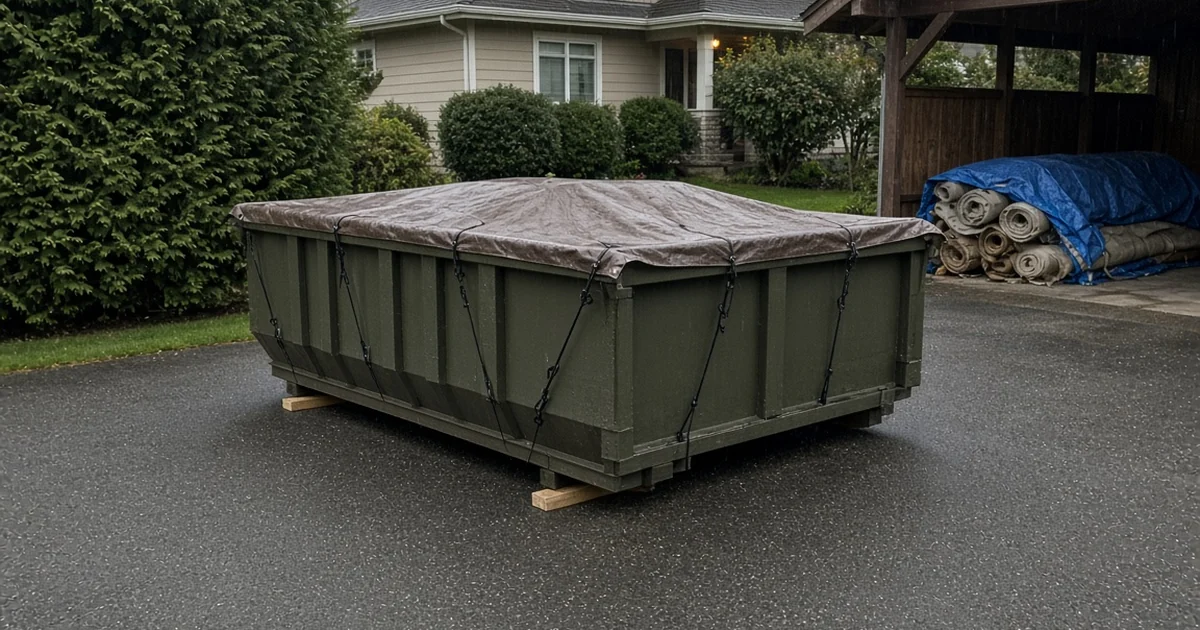
Metro Vancouver’s rainy season is long. Our bins have drainage holes built in, so ordinary rain drains out and most people don’t cover the bin at all. A few habits keep wet debris manageable.
The tips below are for the wet months, October to March. You fill the bin on your schedule, and Trash King delivers and collects it.
How wet the season gets
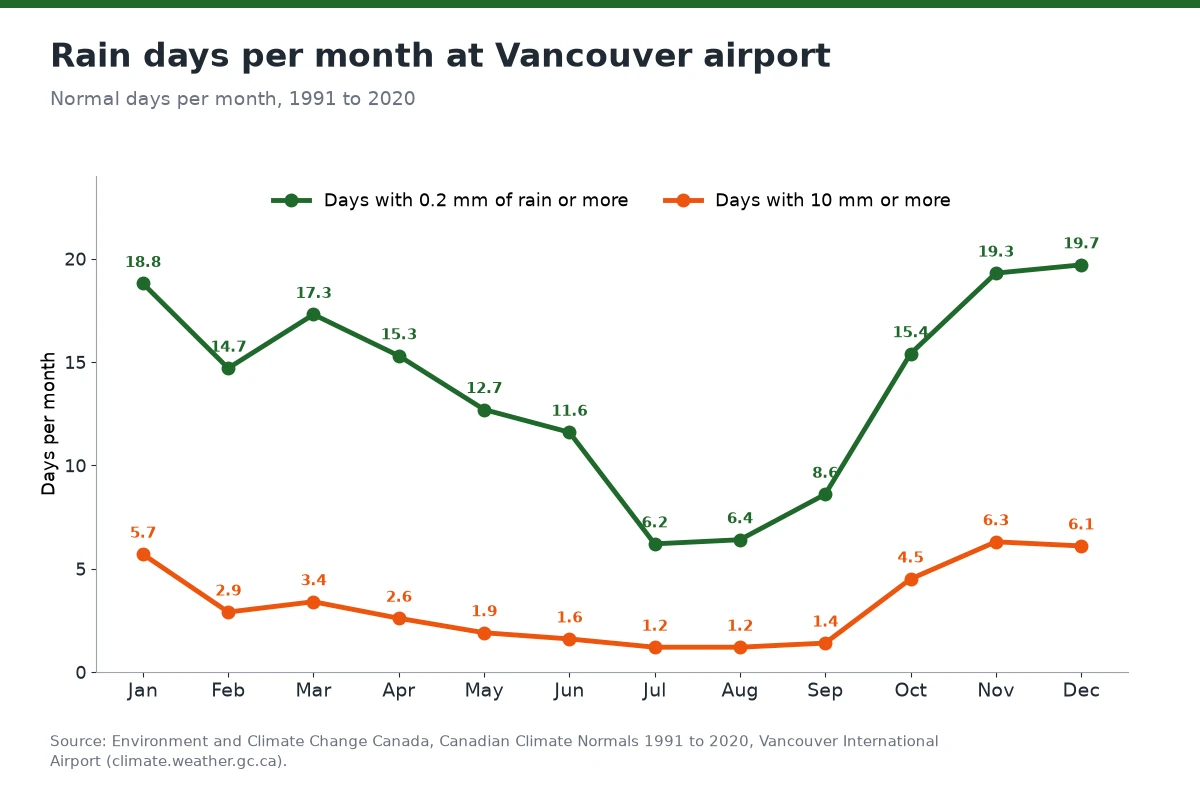
Environment and Climate Change Canada’s 1991 to 2020 climate normals for Vancouver International Airport show the pattern:
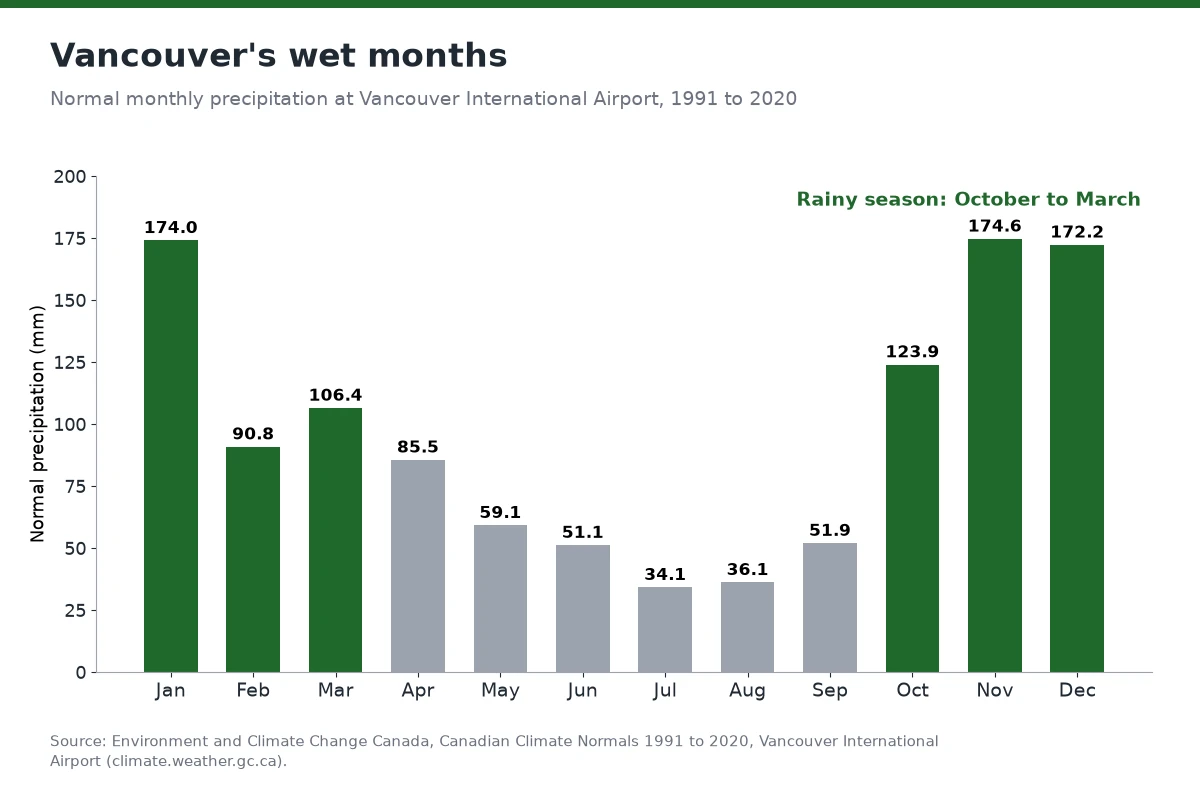
- Wettest months: November averages 174.6 mm of precipitation, January 174.0 mm and December 172.2 mm.
- Driest months: July averages 34.1 mm and August 36.1 mm.
- Rain days: November and December each average about 19 to 20 days with measurable rain. July averages about 6.
Most of the year’s heavy-rain days fall between October and January. If your project can move, a summer bin stays drier. If it can’t, plan for the rain.
Why water weight matters
Rain drains out through the bin’s drainage holes, but porous debris like carpet and cardboard still holds some water. A bin’s weight limit doesn’t change when it rains, so keep the most absorbent items dry until they go in. Our page on disposal bins explains that dense loads can hit weight limits early, and wet loads behave the same way.
Water also makes loads harder to handle. Soggy boxes tear, wet drywall crumbles and carpet becomes heavy enough to strain your back.
Materials that soak up the most
Some materials take on water and some shed it. Plan around the sponges:
- Carpet and underlay
- Drywall
- Cardboard and paper
- Upholstered furniture and mattresses (a mattress can be added to your bin for an extra fee)
- Yard waste, soil and sod
- Insulation
Concrete, tile, metal and plastic shed most of the rain, though water can still pool around them in the bin. Keep the sponges in a garage or under cover until they go in.
Cardboard is one of Metro Vancouver’s banned recyclables in garbage. Break it down and keep it dry for recycling instead of the bin. Drywall is gypsum, which Metro Vancouver’s Bylaw 379 lists in Schedule C, so it goes in its own separate bin, wet or dry. Tell us when you book, and see our drywall page.
Cover the bin only for big storms
Bins have drainage holes built in, so you don’t need to cover one in normal rain. A tarp only makes sense when a serious rainstorm is forecast.
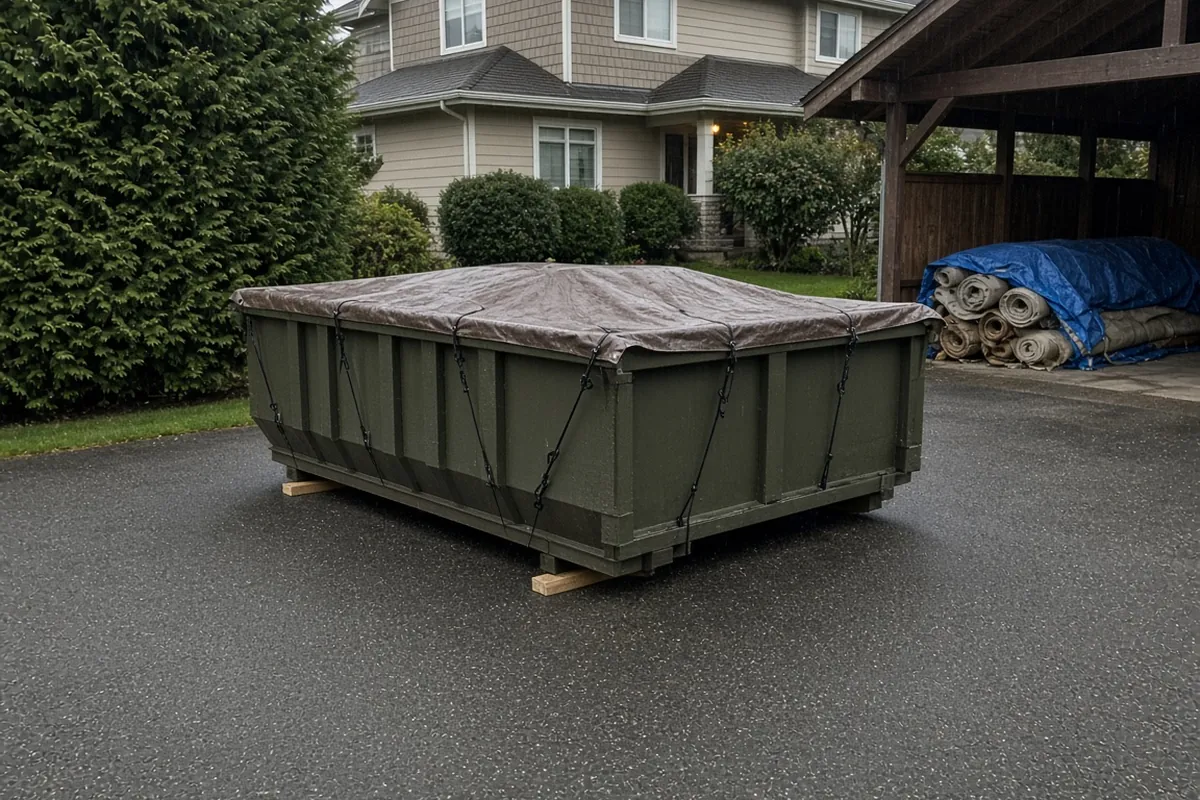
- Watch for storm warnings and cover the load if a serious rainstorm is coming.
- Secure the tarp so the wind can’t lift it, using something that won’t damage the bin or blow away.
- Let it shed water outward, not into a pool in the middle.
- Check after a storm that the tarp is still in place.
Take the tarp off before pickup, or our team will have to wait while you untarp.
The staging pile is a different story. Debris stacked on the lawn for a week holds water, so keep porous items in a garage or carport until you load them.
Stage under cover, load on dry spells
On a wet-season job, the order matters:
- Stage porous materials in a garage or under cover as you tear out.
- Watch the forecast and load during dry breaks.
- Load the porous materials first, low in the bin.
- Load rain-resistant debris like metal and broken tile in wetter weather.
Our loading guide covers the fill line and loading order in detail. For the delivery side, our full bin prep walkthrough helps you get ready.
Keep liquids out of the bin
A bin is for solid debris. Don’t pour buckets of water, mop water or paint into it, and don’t load pails with liquid in them. Trash King’s list of what not to put in a Metro Vancouver disposal bin includes liquids, paints, fuels and other hazardous products.
Paint, propane, fuel and tires go to drop-offs, not the bin. Take paint to a Product Care Recycling site and tires to a Tire Stewardship BC return-to-retailer site. Most Metro Vancouver recycling and waste centres, such as United Boulevard, take household barbecue propane tanks for free.
Time delivery and pickup around the weather
- Book the bin for the days you’ll actually load, so it isn’t sitting open for a week before you start.
- Call for pickup once it’s full, instead of leaving a loaded bin through a wet weekend.
- Tell us about a storm week when you book or reschedule.
Call 604-433-5865 or email quotes@trashking.ca. Hours are Monday to Friday 9 to 7 and weekends 9 to 5.
Protect the driveway and the approach
Wet ground is softer. Tell us about the driveway surface when you book, and ask about boards under the rails. Our post on protecting your driveway covers surface care. Keep gutters and downspouts from draining straight onto the bin pad.
FAQ
Does rain make my bin heavier?
A little. Rain drains out through the bin’s drainage holes, but porous debris like carpet and cardboard holds some water, so keep it dry until it goes in.
Should I cover my rental bin in the rain?
Usually not. Bins have drainage holes, so ordinary rain drains out. Cover it only if a serious rainstorm is forecast, and take the tarp off before pickup.
Can I drain water out of the bin?
You don’t need to. Bins have drainage holes built in, so rainwater drains out on its own.
When is the driest time to rent a bin in Vancouver?
July and August, based on ECCC climate normals for Vancouver International Airport.
Can I load wet drywall?
Drywall goes in its own separate bin, wet or dry. Tell us when you book.
Sources
- Metro Vancouver, GVS&DD Bylaw 379 (consolidated), Schedule C (gypsum) and Schedule D (corrugated cardboard as a banned recyclable): https://metrovancouver.org/boards/Bylaws/GVSDD_Bylaw_379_Consolidated.pdf (checked 2026-10-30)
- Environment and Climate Change Canada, Canadian Climate Normals 1991 to 2020, Vancouver International Airport, climate ID 1108447 (monthly precipitation, days with rainfall of 0.2 mm or more and 10 mm or more): https://climate.weather.gc.ca/climate_normals/results_1991_2020_e.html?climate_id=1108447 (checked 2026-10-30)
- Trash King, Disposal bins (dense materials can hit weight limits before the bin looks full): https://trashking.ca/disposal-bins/ (checked 2026-10-30)
- Trash King, How to load a roll-off bin (rain increases weight in porous loads, fill line): https://trashking.ca/how-to-load-roll-off-bin-metro-vancouver/ (checked 2026-10-30)
- Trash King, What not to put in a Metro Vancouver disposal bin (liquids, paints, fuels, propane, tires): https://trashking.ca/what-not-to-put-in-metro-vancouver-disposal-bin/ (checked 2026-10-30)
- Metro Vancouver, Disposal Ban Program (program overview, which points to Bylaw 379 for the material lists): https://metrovancouver.org/services/solid-waste/disposal-ban-program
- Metro Vancouver, United Boulevard Recycling and Waste Centre (free propane tanks): https://metrovancouver.org/services/solid-waste/united-boulevard-recycling-and-waste-centre
- Product Care Recycling, paint in B.C.: https://www.productcare.org/products/paint/british-columbia/
- Tire Stewardship BC, Recycle your tires: https://tsbc.ca/recycle-your-tires/